

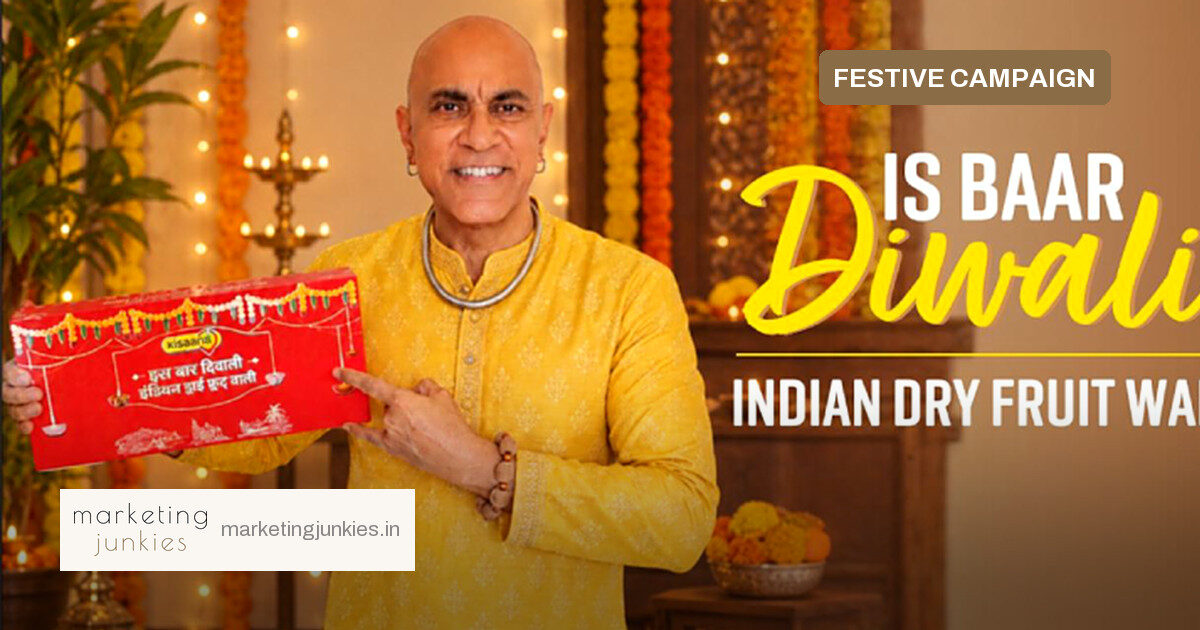
As Diwali approaches, food brand KisaanSay has taken a distinctly desi route to the festival gifting shelf. The Gurugram-based company has signed singer and rapper Baba Sehgal for “Iss Baar Diwali, Indian Dry Fruit Wali”, a campaign pushing consumers toward dry fruits grown in India rather than imported alternatives.
The campaign
Baba Sehgal has written and performed an original track that uses music and humour to make shoppers notice the origin of the dry fruits they gift. He will also lead a consumer contest around the theme, taking the conversation beyond KisaanSay’s own product range and into awareness for Indian-grown nuts and dried fruits.
The campaign highlights produce from identifiable regions: walnuts and mamra almonds from Kashmir, raisins from Nashik and cashews from the Konkan belt. KisaanSay has launched Diwali gift boxes built around these single-region products.
Why origin matters this season
The timing is not accidental. Industry estimates cited by the company put India’s annual dry-fruit and nut imports at more than $3 billion. Dry-fruit boxes stay popular as a festive gift, but consumers typically know little about where the contents were cultivated.
KisaanSay says the celebrity-led storytelling is intended to close that gap. The company expects demand for nuts and dried fruits to rise roughly 50% around Diwali, and dry fruits already contribute about 25% of its business, so the period is both a cultural moment and a commercial one.
Swadeshi as a marketing frame
Founder and CEO Nitin Puri framed the push as conscious consumerism: Indian families spend on dry-fruit gifting, but much of that spend still goes to imported produce despite the quality grown locally. In his view, choosing Indian-grown dry fruits can support farming communities and offer freshness, traceable origin and distinctive taste.
“Our produce offers freshness, traceable origin, distinctive taste and strong nutritional value,” Puri said.
The campaign extends the Made in India and Atmanirbhar narrative to agricultural produce, aligning with the government’s larger Swadeshi messaging. The business case goes beyond sentiment: KisaanSay argues stronger domestic demand can help farmer enterprises improve grading, processing, packaging and quality control, and eventually make Indian dry fruits more competitive in export markets.
What marketers can borrow
It is a useful example of turning product provenance into a seasonal campaign rather than a label claim. The brand’s assets line up neatly: a recognisable performer, a participatory contest, a policy-adjacent story, and local sourcing credentials as proof.
- Make the origin visible. Name regions and varieties on the gift box, not just the brand.
- Use entertainment first. A song and humour lower the barrier for an otherwise worthy message.
- Attach a participation loop. A contest gives buyers a reason to engage beyond the purchase.
- Connect to a bigger narrative. “Vocal for local” or Swadeshi gives the promotion a wider cultural hook.
The business behind the message
KisaanSay works with about 50,000 farmers across 11 states and serves more than 200,000 customers. It runs a co-branding and co-profit model that gives farmer enterprises a larger role in the value chain and a bigger share of consumer spending. The company raised ₹34 crore in 2026 in a round led by NABVENTURES, with plans to widen its farmer network and product portfolio.
Source: MediaNews4U