
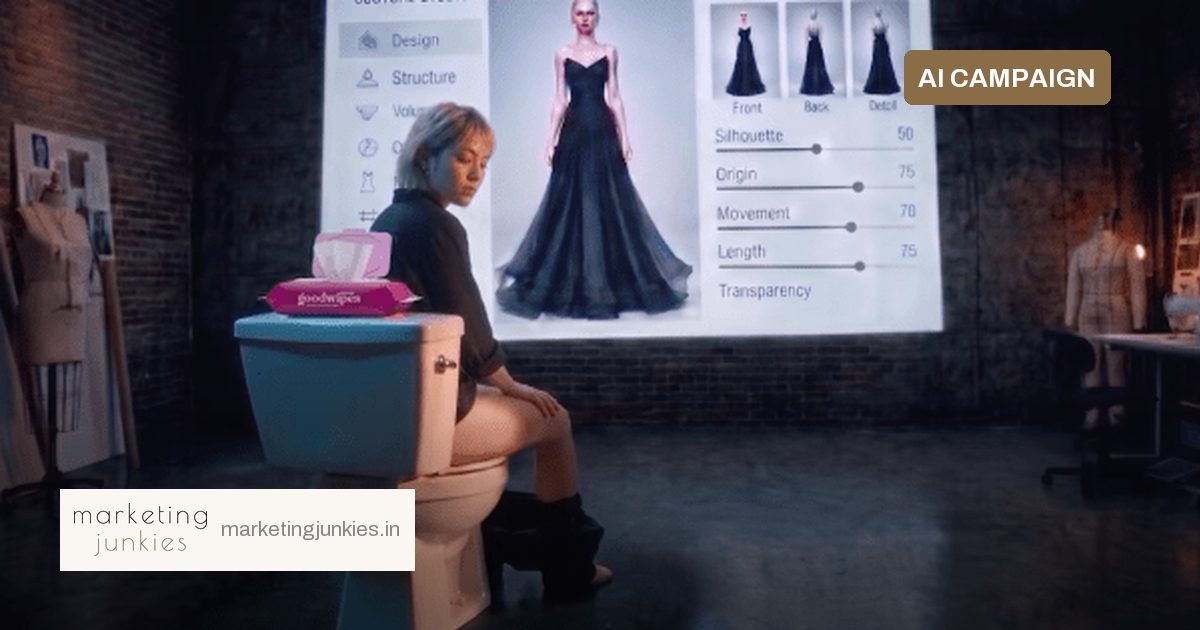
OpenAI’s Astra ad painted a future where people recline in armchairs and ask AI companions to order takeout or build video games. Goodwipes has now relocated that vision to the bathroom. The flushable wet wipe brand’s new minute-long spoof replaces Astra with “Asstra” and uses AI to show what the same future looks like from the toilet.
The film opens with a loud fart, then gradually pulls back to reveal that the people dictating commands at screens are all seated on toilets. “The future of butt wiping has arrived,” the voiceover says. The parody is glossy enough to pass as a polished tech ad, but the target is unmistakable.
Why the spoof works
Goodwipes’ message taps a real consumer insight: many people already use AI from the bathroom. At the same time, it reinforces the brand’s long-running point of view that while technology has raced ahead, everyday habits—like wiping—have barely changed since the 1800s.
The brand was founded by Sam Nebel in 2013 and has built equity through humor and taboo-busting collaborations, including a limited-edition Liquid Death tie-in. This film fits that tone while borrowing attention from an OpenAI ad that has already generated more than 135 million views on X.
Made in four days, not months
The campaign came from OK Future, the AI-native creative agency founded by former MullenLowe U.S. CEO Frank Cartagena. Goodwipes SVP of marketing Meredith Diehn saw the original Astra ad and texted Cartagena. The idea moved from text to finished film in four days, using a mix of AI platforms including ArtCraft and Astra itself.
Cartagena said the old process would have taken months to sell, fund and shoot the idea—and by then it would have missed the cultural moment. The AI process still included character studies, storyboards and set design, but the team did it from their living rooms instead of a set.
What the team learned
- AI tools can produce near-final creative quickly, but the last 10% often comes from human art direction.
- Brand assets need guardrails: the platforms initially added lids to Goodwipes packs and garbled on-pack copy.
- Odd AI bias can eat time—persuading the model to raise toilet seats took the better part of a day.
“It’s still not quite perfect, but that’s the discomfort you have to get comfortable with as a marketing leader. It’s 90% right, and it fits the funny and lighthearted execution we were going for,” Diehn said.
What marketers can steal
The campaign is less about toilet jokes than about speed to relevance. A useful frame is the “90% right now” test: if a piece of creative is good enough to join a live cultural conversation, shipping it fast can outperform waiting for perfection. That does not mean handing the brand over to AI. Goodwipes kept distinctive assets human-approved and treated AI as production support, not strategy.
Cartagena also noted the polarising nature of AI: “We live with it; it’s part of our lives, but people are scared of it. We can bring a little lightness to it.”
For marketing teams, the takeaway is to create guardrails around brand assets, time-box AI experiments, and let human judgment make the final call—especially when the brief is comedy.
Source: Adweek