
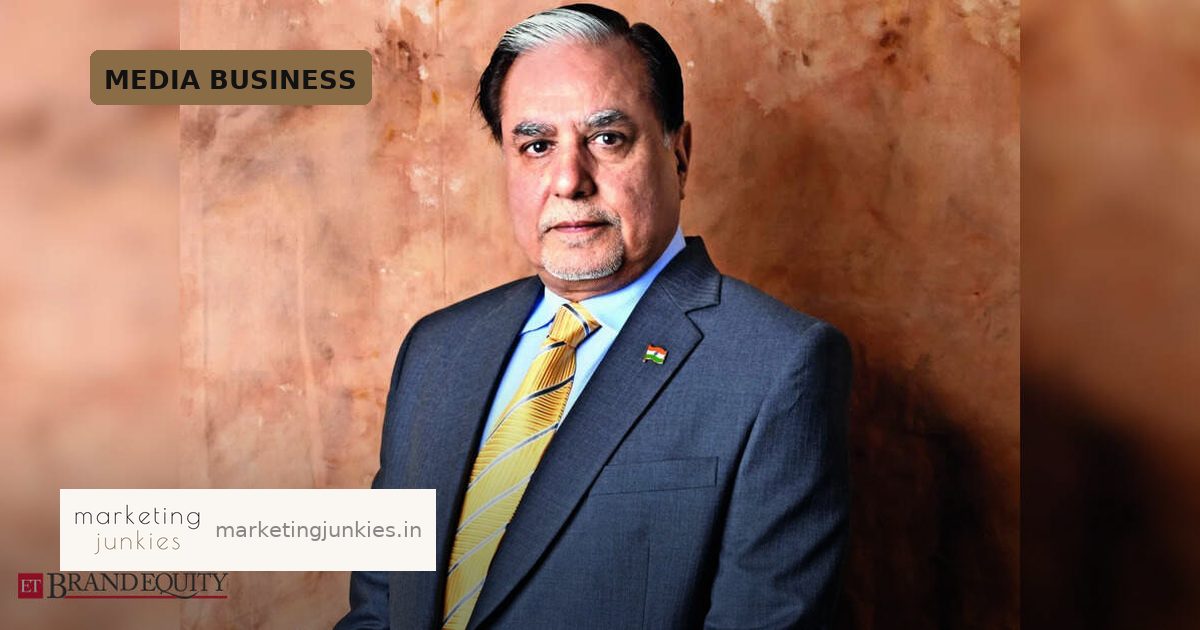
The Central Bureau of Investigation has registered an FIR against Essel Group chairman Subhash Chandra and eight other accused in connection with loans extended by LIC Housing Finance (LICHFL) in 2018, in a case where the lender has pegged its loss at more than ₹1,322 crore, according to a report by ETBrandEquity.com citing people aware of the matter.
Separately, the Directorate of Enforcement is expected to open a money laundering investigation and register an Enforcement Case Information Report under the Prevention of Money Laundering Act against Chandra and the co-accused, the report said.
What the complaint alleges
At the heart of LICHFL’s complaint is an alleged gap between the net worth Chandra declared when the loans were sanctioned and what was later stated during his personal insolvency proceedings under the Insolvency and Bankruptcy Code.
According to the complaint, a certificate dated March 28, 2018 put Chandra’s net worth at $6,197.62 million (roughly ₹59,113.21 crore) as of March 31, 2017. A second certificate dated July 6, 2018 pegged it at ₹40,562 crore. The lender says these declarations were the basis on which two loans totalling ₹980 crore were approved and disbursed.
LICHFL later found a sharply different position attributed to Chandra in insolvency proceedings, where his net worth in 2024 was stated as ₹31.79 crore and where it was claimed the figure had never crossed ₹40,000 crore even in 2017-18. That contradiction forms the spine of the criminal complaint.
The two facilities in question
- ₹500 crore to Vasant Sagar Properties Pvt Ltd, with Pan India Infraprojects Pvt Ltd as co-borrower — described as a takeover plus a top-up loan, backed by a continuing personal guarantee signed by Chandra on March 28, 2018.
- ₹480 crore to Digital Subscriber Management and Consultancy Services Pvt Ltd, with Spirit Infrapower and Multiventures Pvt Ltd as co-borrowers, under a rental-discounting arrangement. Chandra executed the continuing guarantee on August 10, 2018.
Both accounts subsequently defaulted, per the complaint. Named accused include Chandra, Pankaj Suroliya, Amish Pandya and Rajeev Dholakia, along with other entities. The FIR invokes Section 120B read with Sections 409 and 420 of the Indian Penal Code, along with provisions of the Prevention of Corruption Act. Charges cited include criminal conspiracy, cheating, criminal breach of trust and criminal misconduct.
The insolvency backdrop
LICHFL is among the major creditors in Chandra’s ongoing personal insolvency proceedings, with an admitted claim of about ₹1,322.39 crore. A repayment plan tied to that process reportedly offered the lender roughly ₹38.09 lakh — a fraction that drew objections from LICHFL and other creditors. The proceedings have also been litigated before the National Company Law Tribunal.
The complaint further flagged flight risk, stating the accused had publicly indicated an intention to leave India, and urged action to trace the loan proceeds. The CBI has registered a regular case to begin a formal investigation.
Why this matters to media and marketing
Subhash Chandra founded one of India’s most influential television businesses, and the Essel Group’s fortunes have been a recurring storyline in Indian media for years. For anyone working in or around broadcast, the case is a reminder that the commercial health of a media house sits upstream of everything the marketing world cares about — content pipelines, ad inventory, distribution deals and payment cycles.
A practical checklist for brand and agency teams tracking exposure to any promoter-led media group:
- Watch for changes in receivables terms or delayed make-goods on committed inventory.
- Build contractual continuity clauses into annual deals so campaigns aren’t stranded mid-flight.
- Diversify reach commitments across networks rather than concentrating GRPs with one group.
- Track regulatory and insolvency filings, not just ratings data, as an early-warning signal.
The allegations remain allegations at this stage; an FIR marks the start of an investigation, not a finding of guilt. But the numbers involved — and the parallel ED action — mean this story will keep running.
Source: ETBrandEquity.com