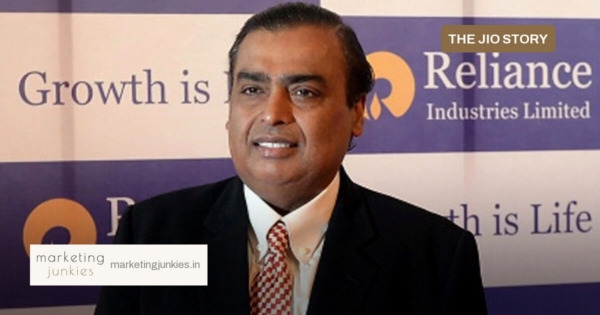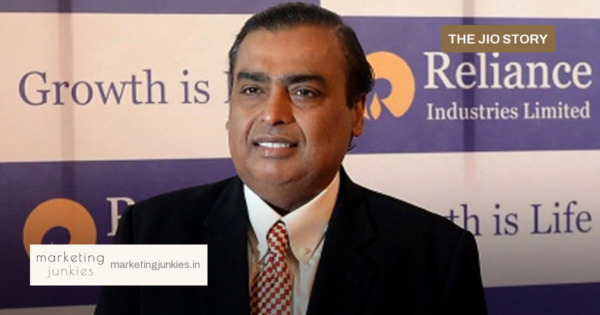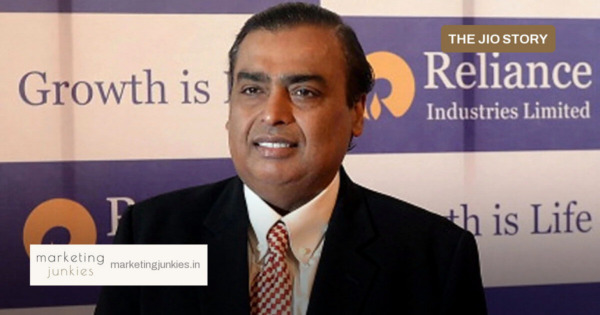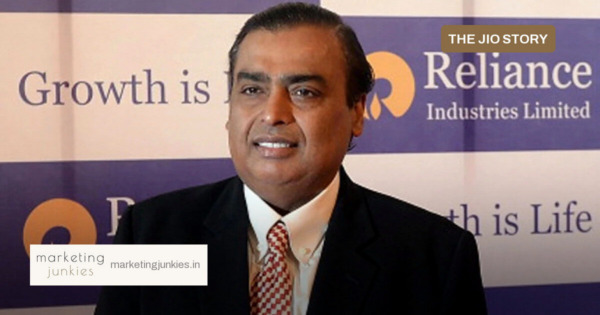
Most launch offers are remembered for the discount. Jio’s 2016 Welcome Offer is remembered for something larger: it changed the question customers asked. Before the launch, data was a metered utility. After it, data started to feel like a background habit.
That shift is why marketers still return to 2016 as a case study in category reset, not just telecom pricing.
The question India asked moved from “How much does data cost?” to “What can we do with data?”
The offer that made data feel abundant
In 2016 Jio launched with the Welcome Offer: unlimited 4G data, voice, video and apps (Reliance Industries). The word “unlimited” did the heavy lifting. For many users, it removed the mental arithmetic of checking balances, pausing downloads and rationing video calls.
Marketers often talk about lowering friction. This was an extreme version: remove the meter long enough for a new behaviour to become normal.
Speed of adoption became an audience signal
Jio reached 100 million subscribers within 170 days of launch (company-reported; Reliance Industries Integrated Annual Report 2016-17). The pace mattered, but the behavioural signal mattered more. Millions of people were suddenly streaming, app-downloading and video-calling as a default.
For creators, that was equally important. A viewer who no longer worries about data can watch a longer reel, finish a live stream, or download a regional film without doing cost-benefit math. Campaigns built for the new normal could expect attention that earlier plans could not.
What marketers took from the reset
The list below is the working takeaway many marketing teams later adopted, even beyond telecom.
- Remove the meter, not just the price, to change daily behaviour.
- Bundle the full experience so the habit forms before the trial ends.
- Position around everyday use cases, not headline speed.
- Treat rapid adoption as an audience signal for content and commerce.
Today, Jio serves 524 million+ customers (Reliance Jio Infocomm, March 2026; company-reported), and its ecosystem spans connectivity, entertainment, commerce, payments, devices, cloud and AI (Reliance Industries 48th AGM, August 2025). But the 2016 playbook remains a reminder that category-changing marketing starts with making the customer’s current worry disappear.
The habit became the brief
Some categories talk about “educating the customer.” Jio’s 2016 moment worked in the opposite direction: it let the customer learn by doing. The trial was not a teaser for the full experience; it was the full experience. That distinction is easy to miss and hard to copy.
For brands, the broad lesson is to identify the meter a customer is watching. Remove it for long enough, and the customer will start using the product for reasons beyond the free offer. That is when a launch stops being a promotion and becomes a new expectation.
Jio’s stated priorities today include connecting every Indian, bringing digital services home, digitising businesses, and “AI Everywhere for Everyone” (Reliance Industries 48th AGM, August 2025). The 2016 Welcome Offer showed how a well-designed trial can make a big infrastructure shift feel personal.