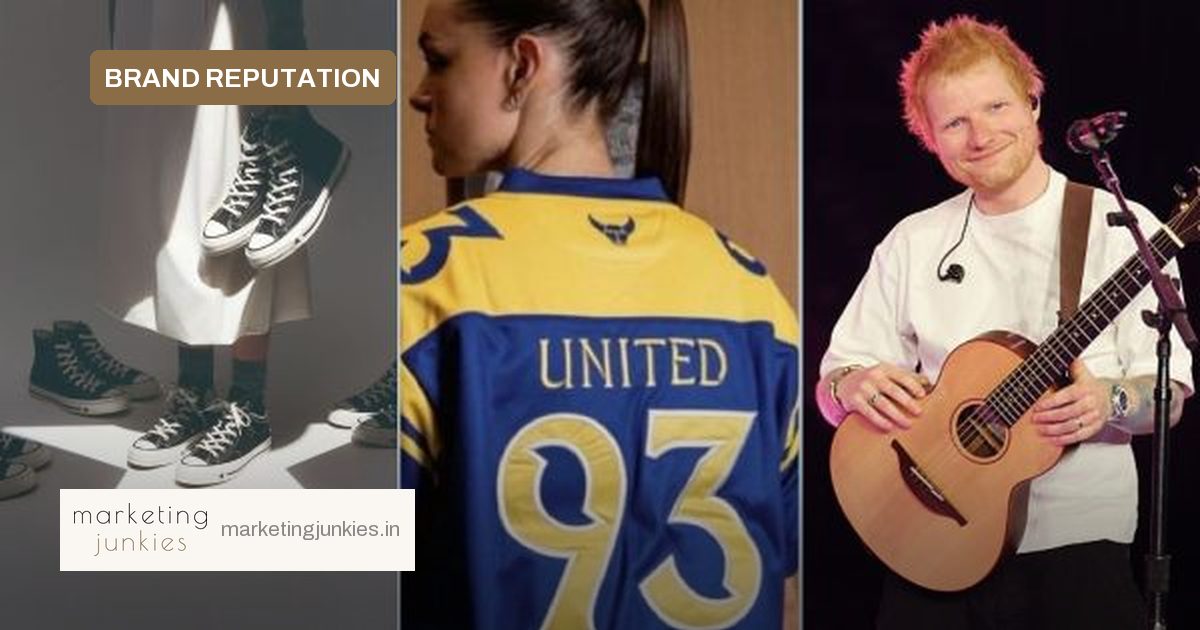
In the space of a week, a sneaker campaign, a football club’s anniversary range and a stadium concert all followed the same script: a mistake was made, the content was removed quickly, and a public confession still followed.
Converse’s Chuck 70 X backlash
Nike-owned Converse released a social campaign for the Chuck 70 X featuring Karina, the singer from K-pop group aespa. The Korean-market imagery showed her in a long white skirt under a star-shaped spotlight, holding a pair of sneakers in one hand. Weeks later, social users argued that the star’s edge resembled a Klan hood and that the shoes could be read as a body. A separate Converse Malaysia image of models reaching for sneakers strung from a tree branch fuelled the interpretation.
Online, the imagery was branded “the most racist ad of the season.” Converse apologized within a day, withdrew the work and promised to do better. That was not enough for U.S. Congressman Troy Carter, who demanded that Nike and Converse explain how the images passed approvals.
“Lynching is not a creative concept. The Ku Klux Klan is not an aesthetic.”
Yet no one seriously suggested the campaign was meant to evoke the Klan. It was an accident, created for a Korean audience. The correction was immediate—which raises the question of what more the brand could reasonably have done.
Oxford United and Ed Sheeran
Oxford United, a third-tier English football club, released an American college-style clothing range to celebrate its 1893 founding. The design had “UNITED” across the shoulders and a large 93. The collection went live on Sept. 11. Once the unintended link to United 93 and the 9/11 anniversary was flagged, the club removed the products and posts within two hours. It still faced coverage from CNN, ESPN and The Washington Post a week later and issued a full apology.
Ed Sheeran then took the pattern further. Before playing to 60,000 people in Philadelphia, he apologized on stage for a rapper’s politics, a stadium owner’s ban and a promoter’s decision—none of which he controlled.
Why the apology tour matters for marketers
Social media can bind unrelated images into a single narrative within hours. That creates enormous pressure to respond before the facts are clear. But over-apologizing can deepen the perception that a brand has done something deeply wrong, even when the evidence shows an unintended misinterpretation.
A practical framework is to separate a correction from a confession:
- Pause and verify the actual complaint before posting a statement.
- Remove genuinely problematic assets quickly, without loaded language that inflates the story.
- Reserve full apologies for cases involving real harm, intent or clear negligence.
- Keep records of approvals and cultural checks so the team can explain decisions factually.
- Treat “We’ve withdrawn it” as a complete response when no harm was intended or caused.
None of this means brands should avoid accountability. Deliberate harm or refusal to act after real damage should have consequences. But the current pattern treats every mistake as a moral failure, forcing people and brands to apologize for accidents they corrected within hours—or for decisions they never made.
The takeaway for marketing professionals is to define an apology threshold before the next backlash. Correct quickly, explain when necessary, and save the public confession for genuine harm.
Source: Adweek