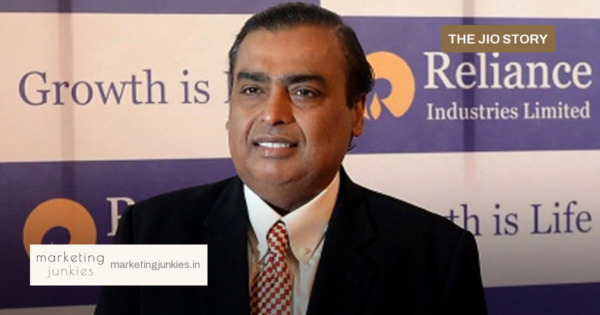
The data saver once knew the cost of a forty-minute video. Downloads waited for Wi-Fi, streaming was an event, and the data meter was checked like a fuel gauge. Then, in 2016, the Welcome Offer arrived. Reliance Industries described it as unlimited 4G data, voice, video and apps. The arithmetic quietly changed.
It did not change overnight. Early habits took time to fade: the automatic airplane-mode toggle, the “send when I reach home”, the polite request to lower the video quality on a family call. What disappeared was not the need to connect. It was the constant negotiation around it.
The saver who stopped calculating
The data saver became a background process. Phone settings once curated for scarcity turned into choices about convenience. The question India asked moved from “How much does data cost?” to “What can we do with data?”—the shift this series keeps returning to.
That shift also showed up in marketing signals: longer watch sessions, more live moments, fewer apologies about a poor connection. Behaviour changed before dashboards caught up.
The midnight binger and the kirana counter
The midnight binger no longer timed episodes to a Wi-Fi window. The kirana owner began recording orders on the phone, then payments, then customer preferences. Neither moment looked like a technology upgrade. It looked like the shop remembering more than the paper khata could hold.
The creator and Dadi
The first-generation creator built an audience from home, without first waiting for a broadcaster to offer a slot. Regional voices travelled further, not because brands planned it, but because the tools became ordinary.
Dadi’s first video call was not a product demonstration. It was a family gathering on a screen. The second call was easier. By the tenth, it was routine.
Here is the same story from five angles:
- The data saver: turned optimisation into a background setting.
- The midnight binger: chose content by mood, not by balance.
- The kirana owner: let the phone carry memory the khata once held.
- The first-generation creator: found an audience without a studio.
- Dadi: made video calls feel like home.
What this means for marketers
These are not five separate segments. They are the same person at different hours—a saver at noon, a binger at night, a shopkeeper’s digital assistant when the store opens. Jio reached 100 million subscribers within 170 days of launch, a company-reported figure cited in Reliance Industries’ Integrated Annual Report for 2016-17. The number explains scale, not the texture of the change.
Jio now serves 524 million+ customers, a company-reported figure from Reliance Jio Infocomm as of March 2026. Its ecosystem spans connectivity, entertainment, commerce, payments, devices, cloud and AI, as Reliance Industries outlined at its 48th AGM in August 2025. At the same event, the stated priorities stayed human: connect every Indian, bring digital services home, digitise businesses, and “AI Everywhere for Everyone”.
The marketing takeaway is smaller than a strategy slide. When data stops being the plot, the real story becomes everyday utility. The people in this piece did not adopt a platform. They absorbed it into meals, shop counters, late-night queues and family calls.