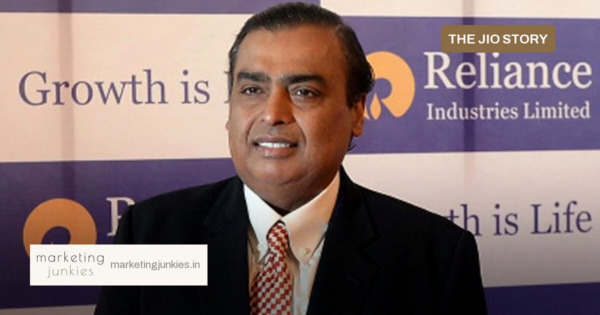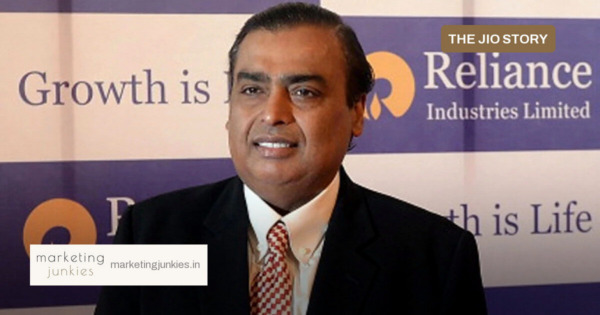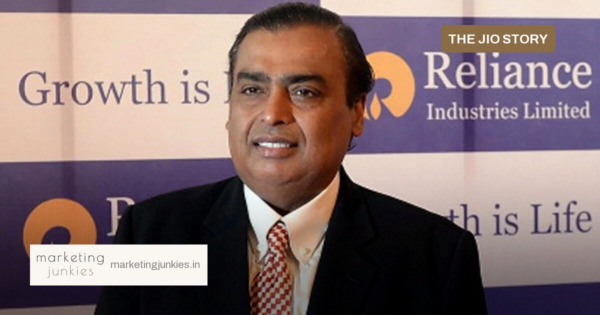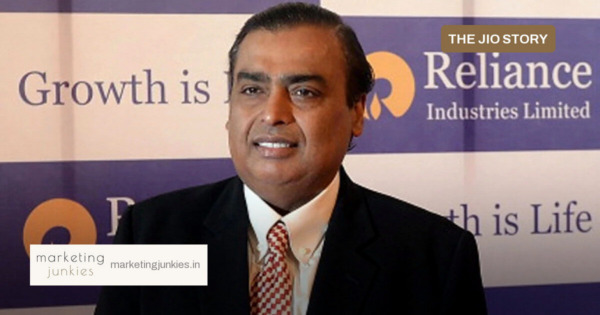

In India, a local voice is not a fringe audience. It is the afternoon call from a village kitchen, the hostel room that turns one phone into a shared screen, the festival song that travels faster than the procession. The marketing story behind Jio’s build-up is that these voices became visible, searchable and shareable at scale.
The starting point was ordinary. In 2016, Jio launched with the Welcome Offer: unlimited 4G data, voice, video and apps (Reliance Industries). It reached 100 million subscribers within 170 days of launch (company-reported; Reliance Industries Integrated Annual Report 2016-17). By March 2026, Jio serves 524 million+ customers (Reliance Jio Infocomm, March 2026; company-reported). The number made the audience impossible to ignore, but the cultural shift showed up in smaller moments.
Village-to-city calls changed the message
The first video call home was rarely about the technology. It was about being present for a birthday, a hospital update, a kitchen recipe or a father’s first look at a new city. The camera did not make the moment sharper; it made distance feel temporary.
For marketers, that changed the meaning of local content. A regional audience was no longer a soft-focus afterthought. It was a live, interactive layer across languages, festivals and daily routines. The question India asked moved from ‘How much does data cost?’ to ‘What can we do with data?’—and brands had to answer through use, not just reach.
Hostel Wi-Fi and the shared screen
Hostel culture added its own grammar. One connection, many devices, collective decisions about what to watch, skip or replay. The shared screen turned individual metrics into group consumption: a cricket final, a late-night movie, a regional creator’s new upload.
For young viewers, Wi-Fi was less a utility and more a social setting. The person holding the phone often set the evening’s agenda. That behaviour—shared, conversational, local—forced media planners to think beyond solo impressions.
- Village-to-city video calls made distance feel smaller and family time more routine.
- Hostel hotspots turned personal data into a shared, co-viewed experience.
- Festival streams and regional creators gave local languages a visible, real-time audience.
Regional creators and festival moments
Regional creators became the connective tissue. A food short in Marathi, a folk musician’s live set, a temple-town vlogger or a local comedian’s festival upload could find an audience far beyond the district. They did not need to explain their context; the audience already lived it.
Festival moments amplified the pattern. A Ganpati visarjan stream, a Pongal recipe, a Chhath morning update or a local fair’s reel travelled in real time. The content was hyperlocal, but the distribution was national. This is the kind of everyday habit that makes a platform feel less like infrastructure and more like public space.
What the next layer looks like
Jio’s ecosystem now spans connectivity, entertainment, commerce, payments, devices, cloud and AI (Reliance Industries 48th AGM, August 2025). Its stated priorities—connect every Indian, bring digital services home, digitise businesses, and ‘AI Everywhere for Everyone’ (Reliance Industries 48th AGM, August 2025)—point to a utility layer that is wider than streaming or data packs.
The marketing takeaway is not that local is a niche. It is that local voices are the creative layer. When the village call, the hostel hotspot and the festival stream sit on the same everyday connection, reach becomes behaviour, and behaviour becomes culture.