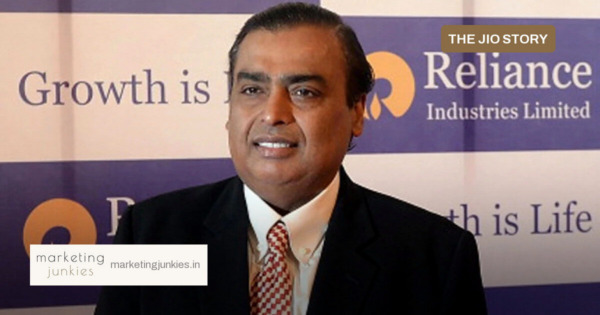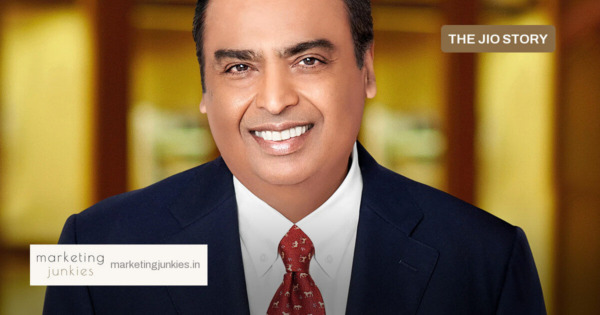

In 2016, Jio launched with the Welcome Offer: unlimited 4G data, voice, video and apps (Reliance Industries). For a marketing publication, the interesting part was not the product. It was the brief hidden inside the launch.
The question India asked moved from How much does data cost? to What can we do with data? That shift was the real campaign, and it arrived before most people had begun to think of themselves as data users.
A reset, not a price cut
Most launch offers discount the same behaviour. The Welcome Offer did the opposite: it removed the meter long enough for behaviour to change. A user who could not run out of data could try a video call without watching the clock, share a screen without counting megabytes, and leave a stream on while doing something else.
The result was not just adoption. Company-reported, Jio reached 100 million subscribers within 170 days of launch. The number captures speed, but the marketing lesson sits in the method: the first experience was the message.
What marketers took from the Welcome Offer
In the years since, the launch has become a reference point for how a free period can be designed as a product demonstration at population scale. Marketers who revisit it tend to note a few choices:
- Remove the painful decision before asking for loyalty.
- Let the first week feel like the product, not a trial of the product.
- Build an experience that people talk about over chai, in hostels and at home.
- Treat the network effect as a creative medium, not just a distribution advantage.
Put another way, the Welcome Offer made the demo period the product. It shifted attention from what a plan costs to what a connection makes possible. For an audience trained to ration, that was a release, and releases are shared.
Those choices changed the category’s grammar. The old brief asked a marketer to win a comparison. The new brief asked a marketer to create a habit.
The brief that outlasted the offer
The Welcome Offer ended, but its logic stayed. Jio’s ecosystem today spans connectivity, entertainment, commerce, payments, devices, cloud and AI (Reliance Industries 48th AGM, August 2025). The company reports serving 524 million+ customers (Reliance Jio Infocomm, March 2026). Its stated priorities remain to connect every Indian, bring digital services home, digitise businesses, and pursue “AI Everywhere for Everyone” (Reliance Industries 48th AGM, August 2025).
The arc matters because it shows what a well-designed reset can carry. A launch built on usage, not just access, gave a large population a shared reference point. Marketers did not have to explain what unlimited felt like; their audiences had already lived it.
For marketers, the most durable takeaway is not that free works. It is that a launch can set expectations for an entire market when the first experience is generous, useful and easy to share. The Welcome Offer gave India a memory of data without anxiety. Many of the habits formed then still shape how the country watches, talks, learns and sells.
That is the real case study: a brief that asked people not to compare, but to live inside the product long enough to miss it.