

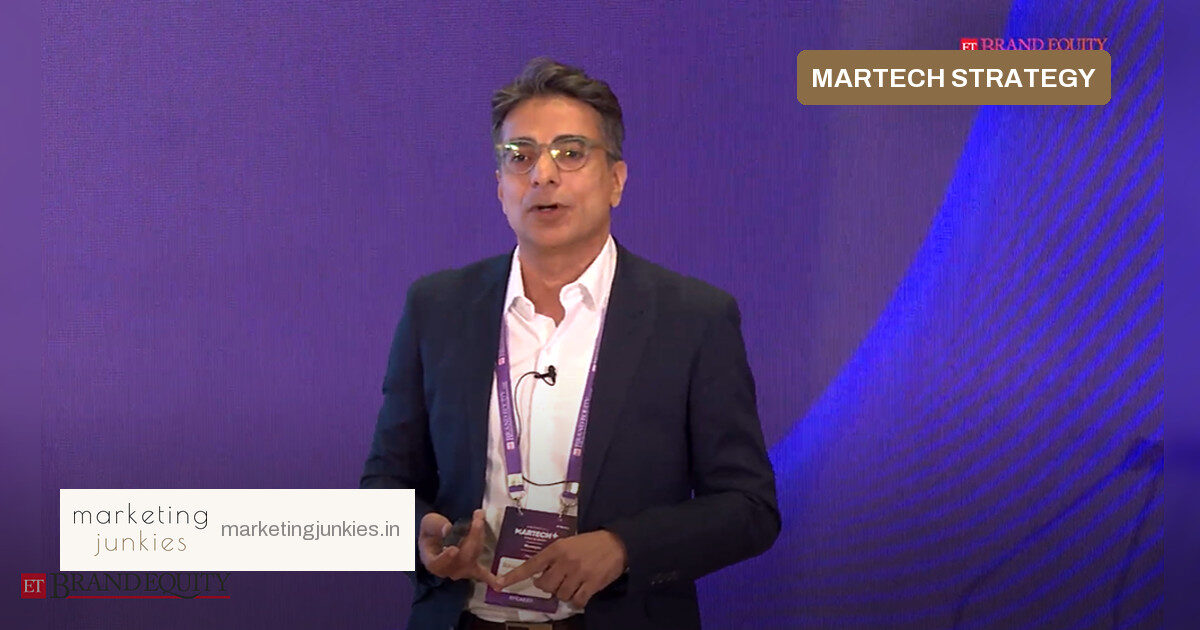
Marketers have long planned campaigns weeks in advance. But Rahim Penangwala, senior vice president of product at CleverTap, says that approach now runs into a hard retention reality: only 26 per cent of users stay on an app by day two. Speaking at the ET MarTech+ Summit 2026, he put the gap in simple terms. “By the time you’re launching your scheduled campaigns, the customer has already gone,” Penangwala said.
His larger point is that customer engagement needs to become more responsive. Instead of pushing pre-scheduled messages to broad cohorts, brands should build systems that can sense a customer’s moment, decide on an appropriate response and learn from the result. That shift may lead to autonomous engagement, but Penangwala cautioned that brands must “earn the right to get there safely.”
A ladder, not a leap
Penangwala framed this move as a four-rung trust ladder rather than a one-time switch. Most brands, he said, are at the second or third rung today and should be aiming for the fourth within six months. For marketing teams, that reframing matters: it separates automation maturity from hype and suggests decision rights should expand only as data quality, guardrails and results improve.
The 26 per cent day-two retention figure is a useful pressure test for every lifecycle programme. If most new users do not survive the first 48 hours, a campaign planned for the next week is being aimed at an audience that has already changed. That makes the case for event-triggered journeys stronger than another promotional push.
The business impact is concrete. CleverTap customer examples shared at the summit include:
- A BFSI customer reduced acquisition cost by 23 per cent using personalised offers.
- A food delivery company improved operational efficiency by 38 per cent in delay and refund workflows.
- An e-commerce platform lifted cart recovery conversions by 27 per cent.
- An OTT customer achieved a 34 per cent increase in customer lifetime value with AI-driven lifecycle decisions.
Strong data foundations are the gating factor
Moving up the ladder depends on how brands handle data, Penangwala argued. Sensitive information does not always have to leave a brand’s systems to drive a decision. He pointed to tokenisation, encryption and clean rooms as ways to act on signals from sources such as transaction histories while limiting access to raw personal data. “Not all data has to be exported for it to be useful,” he said.
That is a useful guide for marketing and martech teams: the path to autonomy is not about buying a new AI feature and switching it on. It is about building consumer trust and internal data trust so that real-time decisions can be made without creating risk.
What this means for teams
Start by mapping current campaigns against the four rungs. A manual, scheduled blast sits at the bottom; a system that senses, decides and learns sits at the top. Next, choose the data path: can tokenised signals or clean rooms power personalisation without moving raw personal data? Finally, measure the existing workflows where automation could produce the same kind of lifts CleverTap reported.
Source: ETBrandEquity.com