
India’s media and entertainment sector has never been short of scripts, stars or streaming demand. What it has lacked is patient, regulated capital. Orenda Group is trying to change that with the announcement of the INR 100 crore Orenda Media Growth Fund, an Alternative Investment Fund (AIF) built to back films, media start-ups and original intellectual property.
The fund is promoted by Orenda Group’s Tarun Shah, a Chartered Accountant-turned-entrepreneur, alongside National Award-winning actor-producer Manasi Parekh, singer-performer-producer Parthiv Gohil and Los Angeles-based actor-producer Rashaana Shah. Orenda Group already manages a multi-sector fund of $120 million.
What the fund will invest in
The AIF is designed with a four-year tenure and a projected internal rate of return of 30%. Its indicative allocation is spread across three buckets:
- 50% to motion pictures — feature films, prestige productions and cross-border projects
- 30% to media and entertainment start-ups — including media technology and AI-led ventures
- 20% to original intellectual property — including live event IPs
Beyond films, the mandate covers premium streaming formats and documentaries, with a stated preference for content that can travel across markets. The SEBI licence is expected within a month, after which the scheme opens for subscription.
Why the structure matters
Indian film financing has historically been project-by-project: one title, one set of investors, one binary outcome. A diversified AIF spreads that risk across formats and stages, which is the same logic venture funds apply to start-up portfolios.
Tarun Shah, Co-Promoter of Orenda Group, said creative businesses in India have never lacked talent or ambition but have lacked “structure and discipline”, adding that the fund’s aim is to bring the governance, reporting discipline and transparency of regulated fund management to a sector built largely on individual project financing. He described it as one of very few institutional funds in Indian media and entertainment.
Parthiv Gohil framed the creative side of the thesis, saying great stories transcend borders, languages and cultures, and that prestige content is both culturally valuable and a meaningful commercial opportunity in a shifting global entertainment landscape.
The track record behind it
Soul Sutra, the production house run by Gohil and Parekh, produced Kutch Express, which won three National Film Awards including Best Actress for Parekh. It also backed Lalo, which crossed INR 130 crore at the box office to become the first Gujarati film past that mark. The company has distributed Gujarati films in 41 countries — a useful signal for a fund pitching cross-border reach rather than single-market hits.
Three films, revealed at Venice
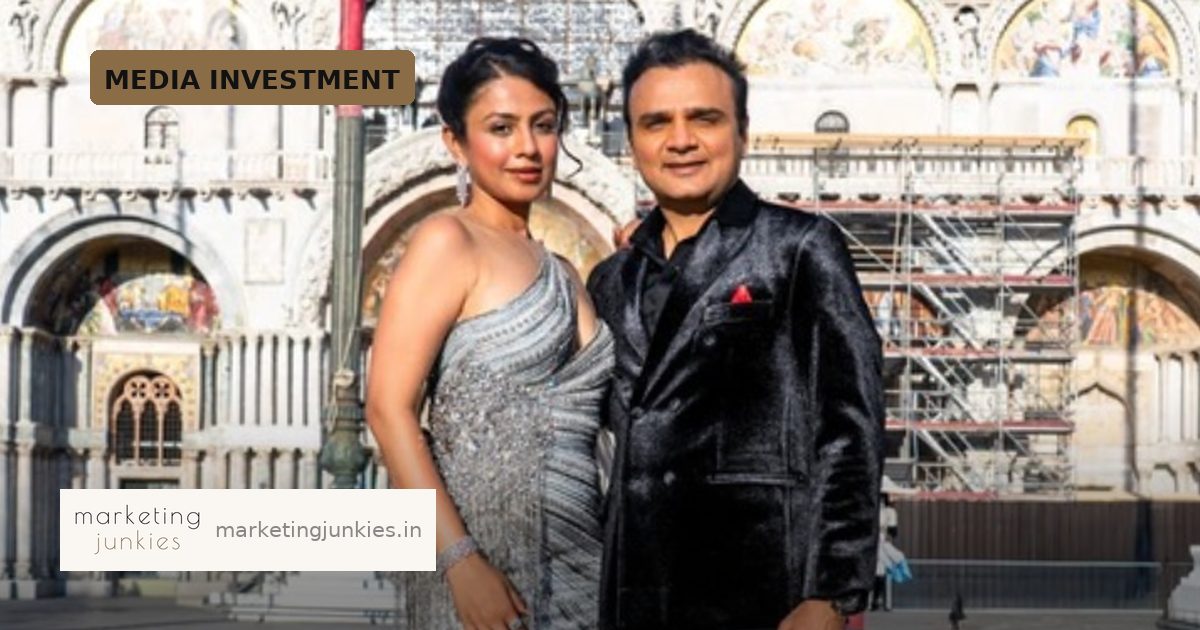
At the Venice Film Festival, Parekh, Gohil and Rashaana Shah unveiled the fund’s first slate of three international films, each at a different development stage:
- Purple America — adapted from the novel by American author Rick Moody, dealing with family, mortality, trauma and love
- Nanda Devi — a high-concept international mystery thriller set in the Himalayas
- Laxman — the story of a young boy whose dream of caring for abandoned cows grows into a movement
What marketers should take from this
For brand and media teams, the interesting part is not the corpus size but the signal. Institutional capital entering content production tends to bring reporting rigour with it — clearer budgets, clearer performance tracking, and clearer conversations about audience and distribution before a project greenlights. That is a friendlier environment for brand integrations, co-productions and IP partnerships than ad-hoc project financing.
Three practical implications:
- Regional-to-global is now a funded thesis. The Lalo and Kutch Express examples show regional-language titles can carry both awards prestige and box office weight. Brands chasing regional audiences should be watching these slates.
- Live event IP is in the portfolio. Twenty percent allocation to original IP including live events points to more ownable properties for sponsorship — not just media buys.
- Media tech and AI ventures get capital too. A 30% start-up allocation means new production, distribution and AI tooling vendors will be pitching agencies soon enough.
The immediate milestone to watch is the SEBI licence and the subscription window. After that, execution on the first slate will decide whether institutional film financing becomes a template in India or stays an exception.
Source: MediaNews4U