
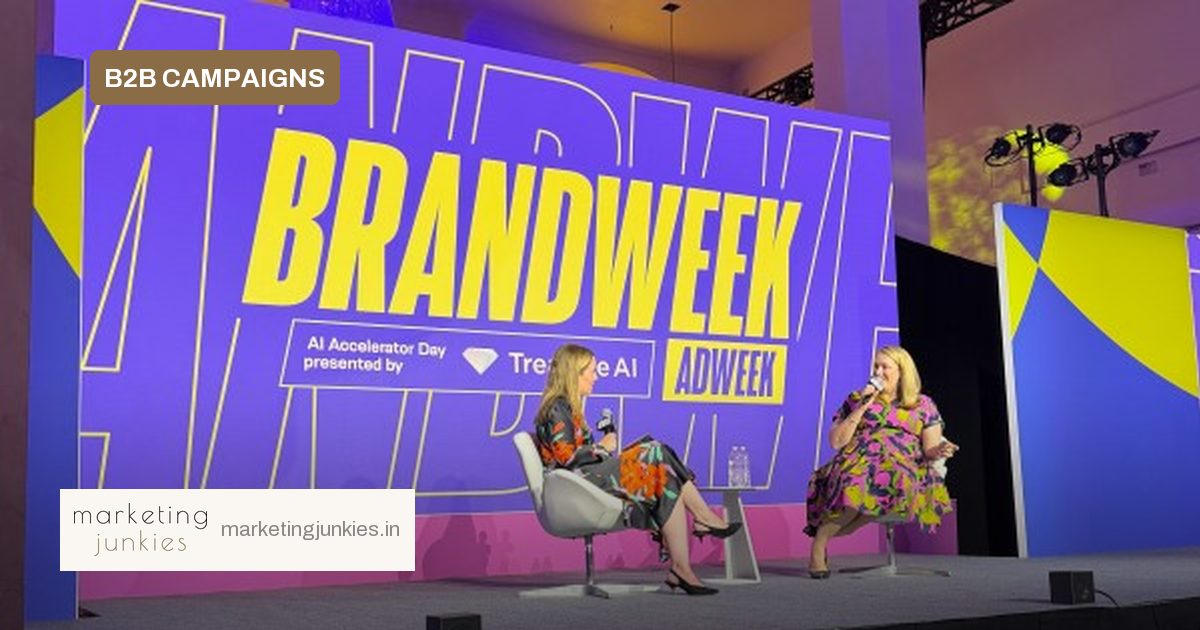
Zoom has one of the strongest brand names in workplace software, but its equity has been stuck in a single lane: video calls. At ADWEEK’s Brandweek conference, the company made the case that comedy—specifically with comedian and SNL alumnus Colin Jost—can help it break out.
Moving from video calls to a broader platform
Zoom’s recognition is enviable, but Whitney Magnuson, head of brand and activation, said the brand is still narrowly tied to video conferencing even as Zoom has expanded into contact center software, AI tools, and sales and revenue products. Instead of leaning on emotion like Google or features like Microsoft, Zoom decided to “go iconic.”
“We really leaned into the value that Zoom was already part of culture, the fact that people were using Zoom as a verb, the way people relied on Zoom in movies and TV shows to advance plot points,” Magnuson said. “We felt like we had permission to lean in in a way that a lot of brands didn’t.”
Why Colin Jost and No Notes
That thinking led to Jost’s production studio, No Notes, which launched to give brands direct access to comedy craft. Jost said the studio grew out of his years writing commercial parodies at SNL and a desire to pitch ideas directly to brands rather than through a traditional agency route.
“The biggest leap is making something that you think is funny,” Jost said. “That’s such a relentless process to get right.”
Zoom first worked with No Notes on its “Zoom Ahead” campaign last December. The newest spot goes further: it comedically plots Zoom’s own destruction, an approach that sparked internal debate before it aired.
Why self-deprecation is a real brand risk
Magnuson acknowledged the discomfort. The team had multiple meetings over the concept, but ultimately chose to trust Jost’s vision and the comedy itself rather than hedge internally.
That willingness matters. B2B marketers often talk about being bold but default to safety in final approvals. Zoom’s example shows that cultural permission can be a practical creative filter: if a brand already appears in everyday language and entertainment, leaning into that can feel more authentic than a conventional product story.
What marketers can borrow
The campaign’s strategic takeaway is less about hiring a comedian and more about identifying where a brand already holds cultural space.
- Audit whether your product is used as a verb or a plot device, not just whether it has awareness.
- Separate brand recognition from brand meaning; broad awareness can still leave growth categories unexplained.
- Find a creative partner who can commit to a clear comedic idea, then protect that idea through internal reviews.
- Decide in advance which brand risks are acceptable, so a bold concept doesn’t get softened late.
For B2B teams, the Zoom-Jost partnership is a reminder that humor doesn’t have to weaken credibility. In a category filled with feature lists, a distinct voice can make a platform feel more human—and more memorable—without abandoning the product story.
Source: Adweek