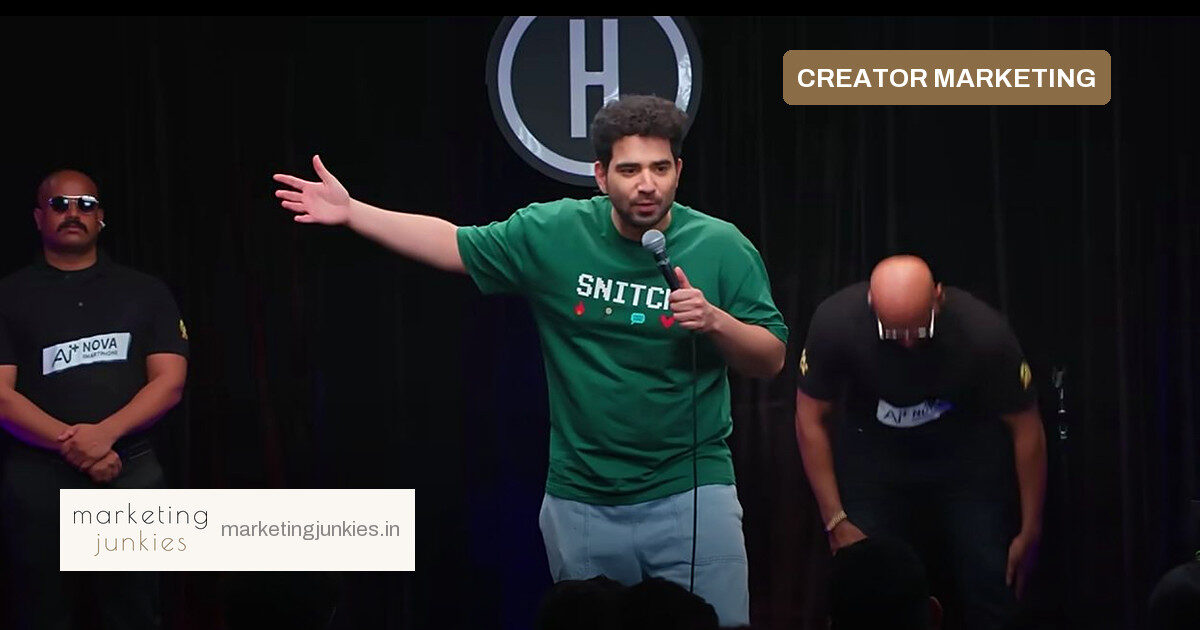
Samay Raina never once said the word “Snitch.” That was the strategy, not a slip.
The Bengaluru menswear label put its clothes on Raina for India’s Got Latent and asked for nothing more than wardrobe presence. In a LinkedIn post, Snitch founder Siddharth Dungarwal said the brand estimates around 1.5 billion views came along for the ride across episodes, clips and reels.
No plug, no pitch
“All we asked Samay Raina to do was wear Snitch,” Dungarwal wrote. There was no scripted mention, no product held to the camera and no forced grin. The question behind the campaign: can a brand build awareness without barging into the content people actually turn up to watch?
Dungarwal admits it was a punt. Snitch was paying for visibility with no guarantee viewers would remember whose shirt the host had on. But every episode splintered into clips and reels that are forwarded across phones in India, and the label travelled with them.
Why the timing landed
The placement came after a rough patch for the show. India’s Got Latent was pulled off YouTube in February 2025 after guest Ranveer Allahbadia’s remarks triggered FIRs and rounds of questioning with the Maharashtra Cyber Cell. Neither the show nor its host stayed down for long: Raina returned with a second season this year, and audiences followed. Snitch was waiting with a wardrobe.
Dungarwal frames the tie-up as a case study in “silent marketing.” Wardrobe placement is nothing new in films and television. Applying it to a creator’s show and letting the internet do the distribution for free is the newer piece that has the marketing community talking. He credited Monk Entertainment’s Viraj Sheth and Snitch chief marketing officer Chetan Siyal for backing and executing what he called an unconventional idea.
The bigger shift
The episode signals how D2C labels are treating creator IP as a media surface in its own right. Instead of a sponsored post that demands attention, Snitch bought context: the label lived inside content audiences already trusted and replayed. That shifts influencer marketing from explicit endorsement toward ambient visibility.
What marketers should borrow
The takeaway is not “mail a shirt to a celebrity and wait.” The structure matters:
- Borrow attention instead of interrupting it: the content stayed exactly what viewers tuned in for.
- Ride clip culture: short reels and memes compound the placement’s reach well beyond the main episode.
- Treat reach and recall separately: 1.5 billion is an estimated view count, not proof of label recognition or sales.
For brand teams, that means partnering with creators whose content gets chopped and shared, negotiating visible-but-silent wardrobe presence, and measuring brand lift or search interest instead of expecting last-click attribution.
The caveat
Silence is not a measurement framework. Dungarwal’s post does not say what the tie-up did for sales, and views are not the same as people who noticed the logo. Still, a founder willing to go public with the estimate suggests the exposure justified the bet.
He signed off with a line worth pinning up in a marketing room: marketing is sometimes less about telling people who you are and more about giving them a reason to go find out. For a brand called Snitch, keeping its mouth shut turned out to be rather good business.