
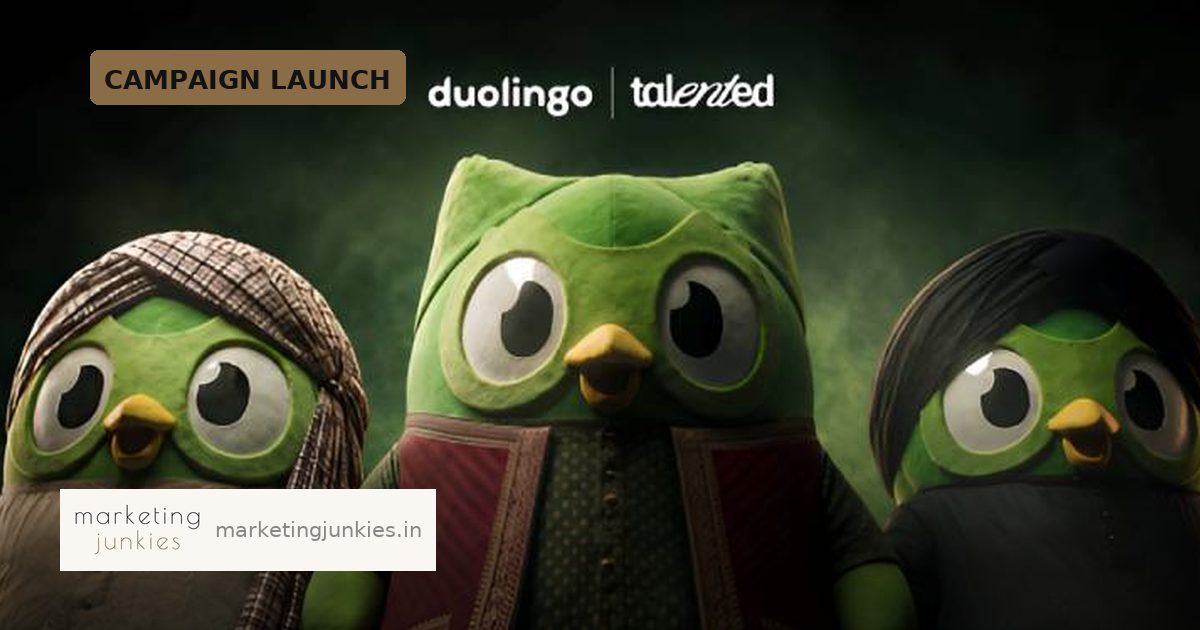
Duolingo has rolled out a new ‘Learn English from Punjabi’ literacy course, giving Punjabi speakers a way to learn English starting from Gurmukhi. The launch is being supported by a campaign titled ‘Ullu Da Pattha’, created with Talented and produced by Calm Kaam.
The course is free and positions English as an access route to education, jobs and global communication — a familiar promise, but one Duolingo is now delivering in a script and idiom that North Indian learners actually think in.
Why Punjabi, and why now
Punjabi is spoken by more than 100 million people globally, with sizeable communities in India, Canada, the UK, the US and Australia. That diaspora footprint makes it an unusually high-leverage language for a learning platform: the same course serves both an aspirational learner in Punjab and a recent migrant in Toronto or Birmingham.
With this launch, Punjabi becomes Duolingo’s second North Indian regional language course after Hindi. It joins Bengali, Telugu and Tamil in the platform’s growing Indian-language stack.
Karandeep Singh Kapany, Regional Marketing Director, India and South East Asia, called launching the course in his mother tongue “a moment of real pride”, framing the effort as removing language barriers so more people can access the opportunities English unlocks.
The creative idea: a reprimand turned into a badge
Instead of translating a generic learning message into Punjabi, the campaign builds from inside the culture. ‘Ullu Da Pattha’ — the affectionate-but-scolding phrase used in Punjabi households for someone being silly or mischievous — is flipped into something closer to a badge of belonging.
The films drop mascot Duo into recognisably Punjabi settings, using everyday humour to show English slipping into familiar moments. Notably, Duo is dialled down from his usual unhinged internet persona into someone more likeable, gradually winning people over and “turning them into Ullu Da Patthas”.
Talented creatives Ankush Sabharwal and Leena Gupta described being called an Ullu Da Pattha as “a rite of passage” in a Punjabi home, and said the phrase let them show a warmer side of the mascot. Director Anant Sharma pointed to the mix of “whacky, silly humour” and Duo’s signature snark landing in Punjabi contexts. The films were produced by Bushra Shariff’s Calm Kaam.
What marketers can take from this
Duolingo’s India playbook is a useful case study in vernacular marketing that goes beyond subtitles. A few transferable moves:
- Start with the script, not just the language. Teaching English through Gurmukhi removes a real friction point — product localisation doing the heavy lifting before advertising even begins.
- Borrow an existing phrase instead of coining one. ‘Ullu Da Pattha’ already carries emotional memory. Reframing it costs less attention than educating audiences on a new tagline.
- Flex the mascot, don’t freeze it. Duo’s global personality is snarky; here he is affable. Character consistency matters less than cultural fit.
- Design for diaspora reach. A language with global spread means one campaign can travel across markets with minimal rework.
- Sequence your regional rollout. Hindi, Bengali, Telugu, Tamil and now Punjabi — a language-by-language cadence builds a defensible regional moat.
The bigger picture
Vernacular is no longer an add-on line item in India. The competitive edge is shifting from “do you have a regional version?” to “does the regional version feel native in product, humour and casting?” Duolingo’s answer here is a mascot that acts like a new neighbour rather than a visiting brand.
For brands building regional plans, the test is simple: strip out the logo and the language, and ask whether a local audience would recognise the joke as theirs. On that measure, ‘Ullu Da Pattha’ clears the bar.
Source: MediaNews4U