
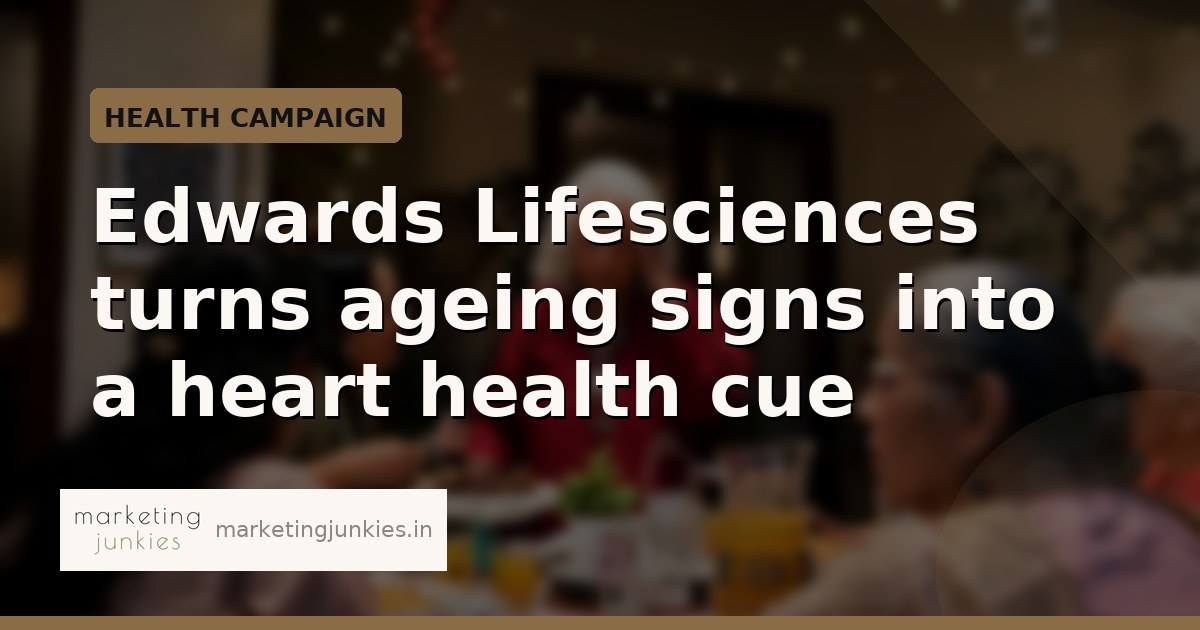
Medical technology company Edwards Lifesciences has rolled out a nationwide disease awareness initiative in India called Stay Young at Heart — carrying the Hindi line Dil Ka Khayal Rakhen, Dil Se Young Rahen — designed to improve public understanding of heart valve disease and prompt earlier conversations with doctors.
The central insight is a familiar one in health marketing but rarely executed at scale: the symptoms people write off as “just getting older” may point to something clinical. Heart valve disease can compromise the heart’s ability to pump blood effectively, and its signs — breathlessness during routine activity, fatigue, dizziness, swelling in the feet or ankles, palpitations and a general drop in physical activity — tend to build gradually. That slow onset is precisely why they get normalised, and why evaluation gets delayed.
The campaign build
Edwards Lifesciences plans to push educational content and patient stories to help individuals and families identify symptoms and understand what heart valve health actually involves. The campaign also flags the diagnostic route a clinician may recommend — specifically 2D echocardiography, a non-invasive test used to assess how the heart and its valves are functioning.
On media, the brand is skipping the obvious digital-first playbook in favour of high-attention and high-reach environments:
- Cinema theatres — messaging placed before feature screenings, a captive, lean-back audience
- OTT streaming platforms — reaching family co-viewing moments across metros and beyond
- Radio channels — high-frequency, low-cost repetition that works well for symptom recall
It is a deliberately “everyday settings” mix, taking a clinical subject into contexts where people are relaxed rather than actively searching for health information.
What the spokespeople said
“Recognising symptoms early and seeking medical advice can help individuals make more informed decisions about their health,” said Dr Ravinder Singh Rao, Interventional Cardiologist, adding that a 2D echocardiogram can help clinicians assess heart and valve function when further evaluation is needed.
“Growing older is a natural part of life, but symptoms that affect everyday activities should not simply be accepted as normal ageing.” — Ravinder Singh Rao, Country Leader, Greater India and SEA, Edwards Lifesciences
The company positions the initiative as part of a wider effort to build awareness around valve health and encourage earlier symptom conversations.
Why marketers should pay attention
Disease awareness campaigns sit in a tightly regulated corner of Indian marketing. Medtech and pharma brands cannot advertise prescription products directly to consumers, so the unbranded awareness route — educate on the condition, point to the diagnostic, let the doctor do the rest — has become the primary growth lever. Stay Young at Heart is a clean example of that model.
Three takeaways worth borrowing:
1. Attack the belief, not the ignorance. The barrier here isn’t that people don’t know about heart disease. It’s that they’ve already explained away their symptoms. Reframing an existing belief is harder — and more valuable — than delivering new information.
2. Give the audience one concrete next step. The campaign names a specific test. Awareness work that ends at “be aware” rarely converts; awareness work that ends at “ask your doctor about a 2D echo” gives families a script.
3. Match the medium to the mindset. Cinema, OTT and radio reach older audiences and their adult children in shared, unhurried moments. For a category where the decision-maker is often a family member rather than the patient, that co-viewing dynamic matters more than click-through rates.
For brand teams in health, insurance, wellness and even financial services targeting older cohorts, the underlying construct travels well: find the thing your audience has quietly accepted as inevitable, and question it credibly.
Source: MediaNews4U