For marketers, the most revealing consumer shift of the last decade is not a single campaign. It is the moment data stopped feeling like a product and started feeling like plumbing. A normal Tuesday now runs on dozens of quiet calls: a payment at the tea stall, a group study call, a map recalculating on a highway. This Jio Story looks at three ordinary moments that explain why the marketing brief has changed.
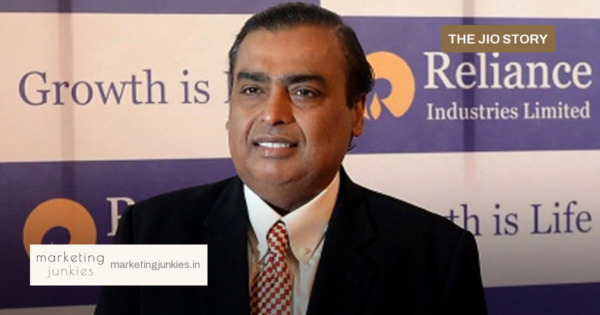
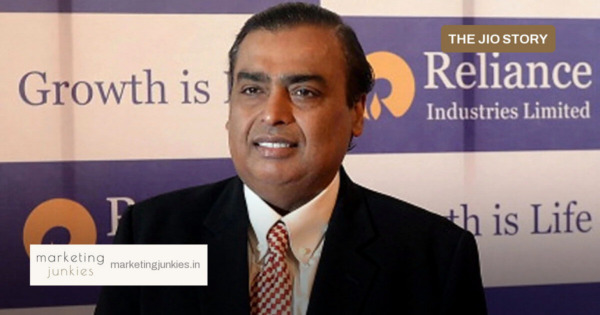
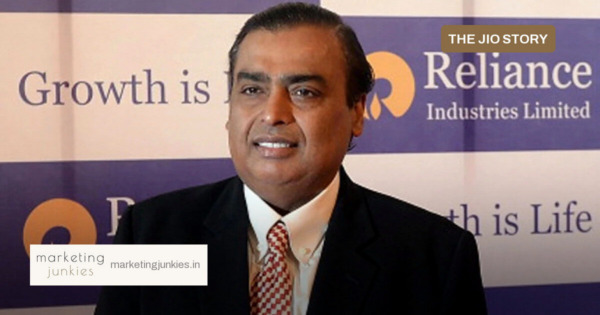
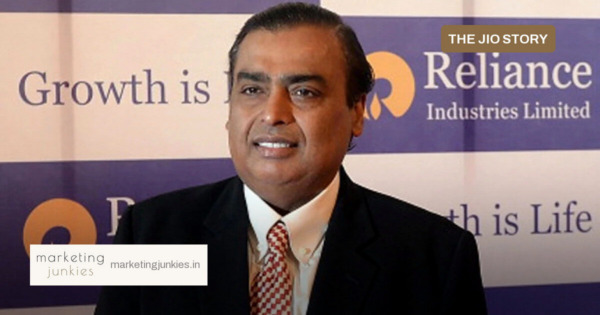
In 2016, Jio launched with the Welcome Offer: unlimited 4G data, voice, video and apps (Reliance Industries). The immediate story was scale. Jio reached 100 million subscribers within 170 days of launch (company-reported; Reliance Industries Integrated Annual Report 2016-17). But the longer story is what happened after the data stopped being counted. Jio now serves 524 million+ customers (Reliance Jio Infocomm, March 2026; company-reported), and that layer sits inside a wider ecosystem spanning connectivity, entertainment, commerce, payments, devices, cloud and AI (Reliance Industries 48th AGM, August 2025).
The chai stall’s second conversation
The first transaction at a neighbourhood chai stall used to be about cash and change. Now it is often a UPI payment made mid-conversation, without anyone checking whether the network is strong enough. The phone disappears, the payment does not. For a marketer, that is a quiet but significant change: local commerce has become a digital surface. The point of sale is no longer only a place to exchange money; it is a moment where habit, identity and service meet.
The study group no longer needs a room
Students now form study groups on video calls, sharing screens, notes and exam anxiety without asking whose data pack can handle it. The cost of data rarely enters the conversation; the quality of the explanation does. Media time, attention and learning are blending into one screen. For brands, the takeaway is not that students watch video—it is that video has become a utility tool, not just entertainment.
The road trip that runs on maps
On a family road trip, maps now handle the route, the tolls, the fuel stops and the dhaba reviews. The family argues about music, not about data roaming charges. The question India asked moved from “How much does data cost?” to “What can we do with data?” (the series’ framing line, not a statistic). That shift is the real creative brief.
What marketers should notice
When connectivity recedes into the background, the next marketing opportunity is not bigger awareness. It is smaller, more useful moments. Some signals stand out:
- Utility creates habits faster than ads: consumers adopt features that remove daily friction.
- The always-on consumer is real but quiet: brands must fit between tasks, not interrupt them.
- Local commerce is now a digital surface: payments, maps and video calls create new touchpoints.
- The next battleground is context and convenience, not just attention.
That reading also lines up with the stated priorities behind the network: connect every Indian, bring digital services home, digitise businesses and work towards ‘AI Everywhere for Everyone’ (Reliance Industries 48th AGM, August 2025). The marketing implication is not that every brand needs AI, but that the underlying direction is usefulness.
For marketing teams, the practical shift is to study the unremarkable. The chai stall payment, the study call and the road trip map are not tech stories. They are consumer behaviour stories. The brands that win will be the ones that disappear into the day.