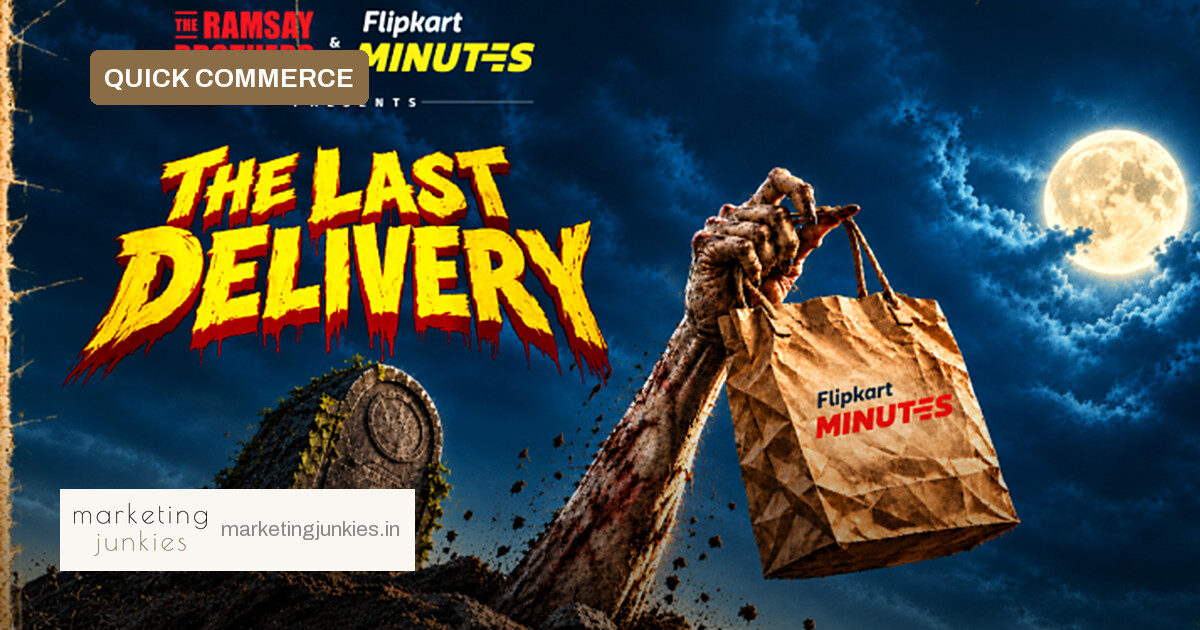
Flipkart Minutes is using the wait after checkout as a stage for a Halloween horror story. The quick-commerce service has tied up with McCann India and the Ramsay Brothers, the family behind a long run of Indian horror cinema, to create an original miniseries called The Last Delivery.
What the campaign is
The campaign is timed around Halloween and mixes Indian horror nostalgia with the convenience of quick commerce. A teaser has already been released, and it leans on a familiar image: a chudail, or witch from Indian folklore, is shown riding pillion behind a Flipkart Minutes delivery agent. The agent seems not to notice his passenger, a moment built to spark curiosity and get people talking online.
The series has been written and directed by the Ramsay camp. Deepak Tulsi Ramsay is the director and Gopal Ramsay has written the series, with production credited to Ramsay House of Horror and Potli Baba Media House. McCann India, part of Omnicom Advertising India, led the creative and business side of the collaboration.
Built for the 10-minute wait
What makes this more than a branded short film is the format. The Last Delivery will have three episodes, and each one runs for 10 minutes. That is deliberate: it matches the platform’s order-tracking window. After a customer places an order, they can open the Play screen in the Flipkart Minutes app and watch a full episode while the delivery is on its way.
Each episode ends with a cliffhanger, so the waiting period is not just filled once. It becomes a reason to return for the next instalment and the next order.
The quick-commerce content surface
Quick-commerce platforms have spent heavily on speed and reliability. The Last Delivery points to a different kind of differentiation: turning the app into a place where entertainment lives alongside shopping. The series does not compete with long-form streaming. It competes with the customer’s idle scroll during the 10 minutes after checkout.
That is a narrow but repeatable slot. The cliffhanger structure gives the campaign a serialised pull, and the platform’s existing order flow supplies a natural distribution point. In that sense, the miniseries is not a standalone film; it is content placed directly inside the customer journey.
Why this matters for marketers
Flipkart Minutes is not asking busy consumers to find extra time for a film. It is meeting them in a moment they are already living through, and making the length of the story fit that moment exactly.
The Ramsay Brothers bring a strong cultural shorthand: haunted havelis, supernatural characters and eerie background music are already familiar grammar for Indian audiences. By putting those elements in a modern digital format, the campaign gives a new content format instant recognition while tapping into Halloween’s growing popularity among younger consumers.
What to do with the idea
- Map the forced pauses in your own product, such as order tracking, loading screens or delivery windows.
- Produce content that is exactly the length of that pause, not a campaign that demands extra attention.
- Use a cliffhanger or other open loop to pull users back into the app for the next session.
The teaser has already gone out ahead of the miniseries launch, so the next test is whether a three-part horror story can make quick commerce feel like appointment viewing rather than just a transaction.
Source: MediaNews4U