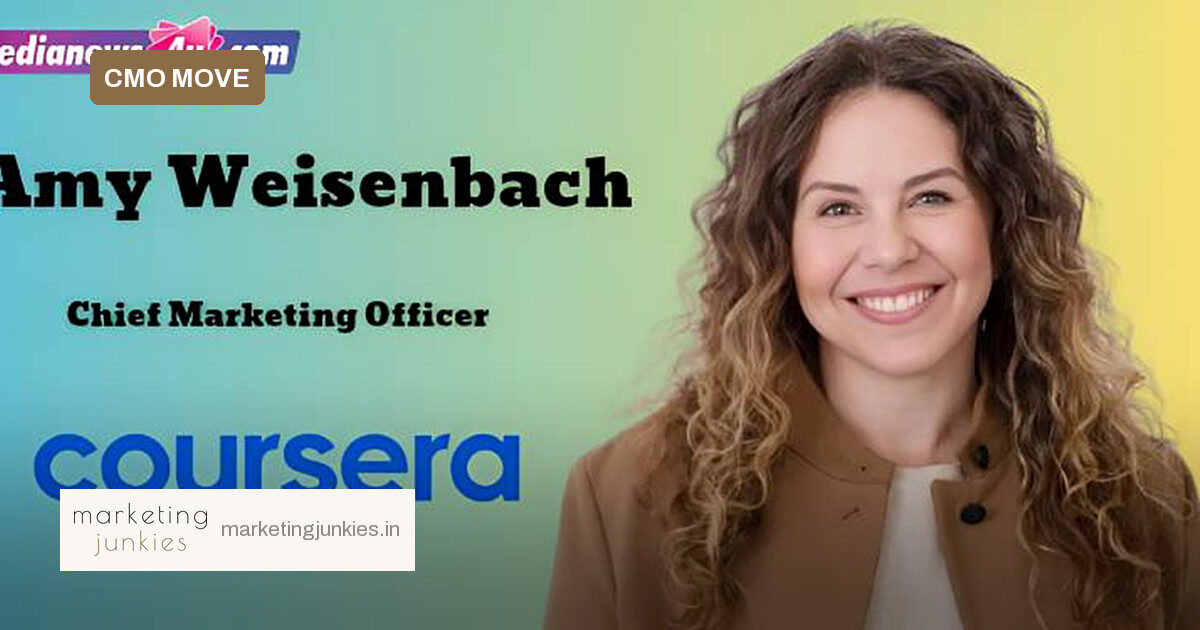
California-based online learning platform Coursera has appointed Amy Weisenbach as its chief marketing officer, effective November 30, 2026. Weisenbach joins from The New York Times, where she led marketing across the publisher’s portfolio: News, Games, Cooking, Audio, Wirecutter and The Athletic.
The appointment lands as Coursera prepares to bring Coursera and Udemy together, a move aimed at expanding access to skills and learning opportunities.
Why this hire signals a consumer play
Weisenbach’s record sits where brand and performance marketing meet. At The New York Times, she helped grow engagement and subscriptions by pairing brand storytelling with targeted performance activity—an approach Coursera will likely lean on as it markets a larger, combined catalogue.
For edtech, that pairing matters. Learning purchases are high-consideration decisions: buyers want a brand they trust and clear evidence a course will pay off in skills or career growth.
What Weisenbach brings
- Multi-product subscription experience from The New York Times portfolio.
- Brand marketing leadership at Wilson Sporting Goods and roles with Beam Suntory and Unilever.
- Academic credibility as an adjunct assistant professor at NYU Stern and a DePauw trustee.
That mix of commercial execution and education perspective explains why CEO Greg Hart called her record of “helping turn trusted content into a thriving digital business” a fit for Coursera’s next chapter.
The transferable lesson
Weisenbach’s work at the Times is a modern case of brand-plus-performance marketing: emotional, trust-led creative for discovery, and precise, outcome-focused marketing for conversion and renewal. For course, subscription or content businesses, the sequence matters—earn trust broadly, then convert with proof.
What marketers should watch
The key question is how Coursera positions two education brands under one roof. Expect a trust-led consumer push that builds credibility first, layered with performance campaigns that convert and retain learners. Weisenbach’s own framing is direct: “Trusted content can have an extraordinary impact on people’s lives, and Coursera brings that promise to learning.”
The open test is whether a subscription-media playbook translates to skill-buying audiences who often judge success by job outcomes. If Coursera gets the positioning right, it could set a template for content-led edtech marketing in a rapidly changing workplace.
Source: MediaNews4U