Korean storytelling has stopped being a niche streaming habit in India. New Ormax data puts monthly K-drama viewership at 107.8 million, up from 72.9 million in 2025—a 48% jump in a single year. Brands are moving quickly to speak that cultural language.
A bigger, broader audience than expected
The audience is not the narrow, premium streaming crowd many marketers assume. According to the Ormax figures cited by Storyboard18, 45% of K-drama viewers are connected-TV viewers, and 58% watch ad-supported video. That means the fandom reaches free, ad-funded tiers, not just paid subscriptions. It also skews 60% female.
The scale is no accident. Korean drama exports generated US$167 million in 2013, four times the value a decade earlier. By 2015, broadcast licences had crossed non-Asian markets, with the United States taking 4,291 titles. The roots go back to South Korea’s late-1990s policy of treating cultural industries as economic strategy.
From screen to shelf in ten minutes
The quick-commerce layer is what makes this a commerce story. Ritika Taneja, Senior Vice President, E-commerce at WPP Media, points to the short gap between cultural discovery and consumption: a viewer discovers Korean food through entertainment, then finds the same ramen on a 10-minute delivery platform.
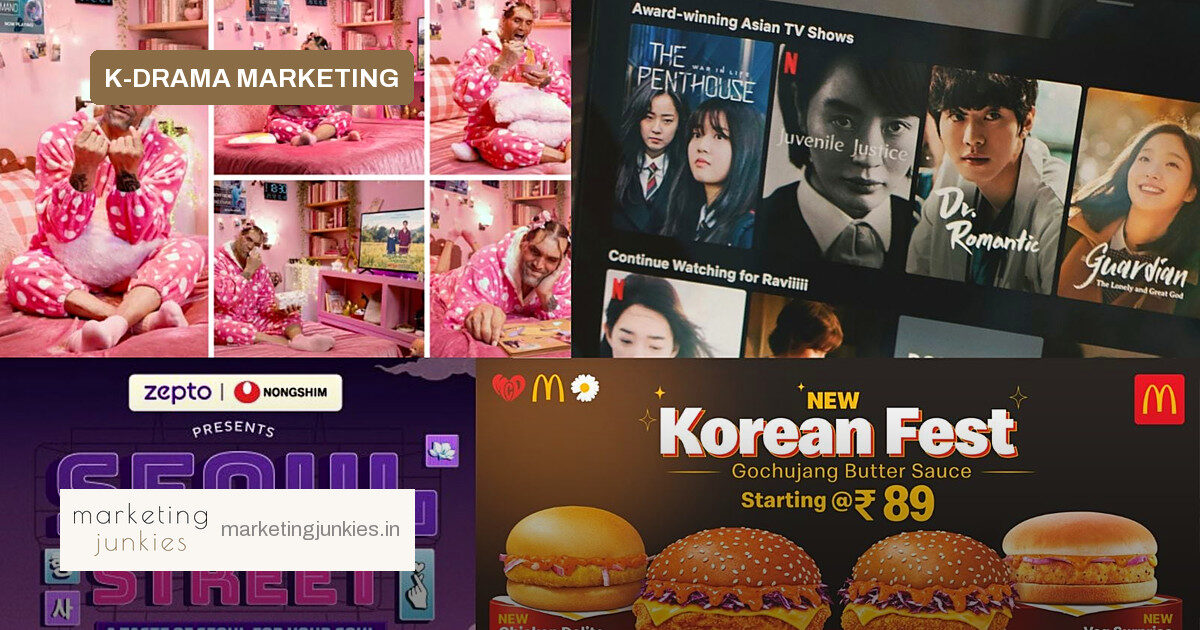
Zepto’s data shows the demand. The platform logged more than 4.6 lakh ramen searches and over 1 lakh Korean noodle searches, which set up Seoul Street, an invite-only immersive event in Delhi that recreated a Korean street with food, music and fandom.
Chandan Mendiratta, Chief Brand Officer at Zepto, described the playbook as culture hacking—spotting what audiences already love and building new experiences around it. He said the natural connection between Korean and Indian culture around food, family, music and community showed that the interest has moved beyond screens.
Mass brands go Korean on purpose
McDonald’s India North & East has started its Asia Chicken Campaign in collaboration with 13 Asian countries. It partnered with global icon G-Dragon in an ICON X ICON association and anchored the menu on Gochujang Butter Sauce, a K-flavour created by McDonald’s Korea from Korean fermented sauces.
Sushmita Kashyap, Director, Integrated Marketing, Corporate Communications and Strategy at McDonald’s India, said Gen Z accounts for 45% of quick-service restaurant consumption. She added that Korean is layered, so people can choose what fits their taste and pricing, allowing the brand to make a democratic impact across price points.
Netflix took a comedic route, dressing WWE legend The Great Khali in a pink polka-dotted onesie in a Korean-themed room, eating ramen and crying while watching When Life Gives You Tangerines. The joke works because the audience already knows the references.
What marketers should take away
- Entertainment creates the fan base; quick commerce captures the first sale; mass brands scale the taste.
- Treat Korean culture as an enduring consumption shift, not a one-off hashtag campaign.
- Use commerce search signals—like ramen queries—as real-time demand data before committing to wider distribution.
For Indian marketers, the lesson is that relevance no longer has to be borrowed from Western cues. A K-drama audience of 107.8 million monthly viewers, with strong ad-supported reach, offers a ready cultural bridge—if brands use it for more than a gimmick.
Source: Storyboard18