Teams are moving at different speeds
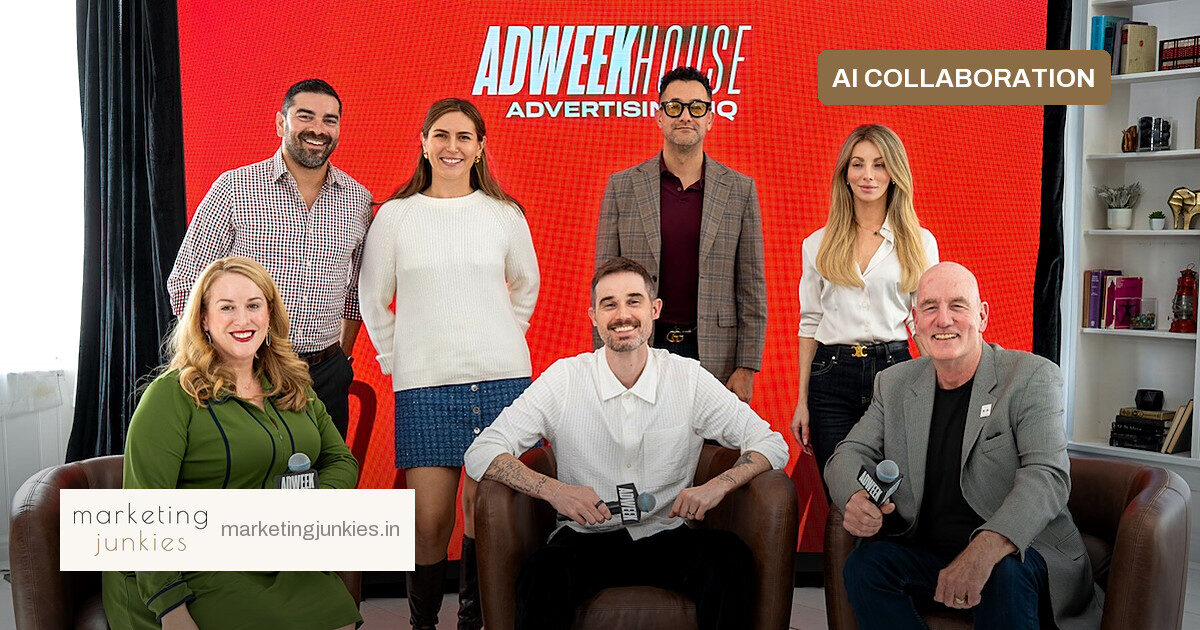
At a recent ADWEEK House session co-hosted with Monks, marketing and technology leaders described a familiar tension: the tools now allow faster building and iteration, but the people and processes around them have not always caught up.
James Stephens, EVP of North America at Monks, said teams are under strain from frequently rethinking how they work. Consumer attention still follows a basic desire for connection, but the pace at which audiences move on has accelerated, forcing brands to sharpen how they communicate product benefits.
Whitney Magnuson, head of brand and media at Zoom, framed the shift as permission to take bigger swings. Zoom’s expansion beyond video conferencing already forced a marketing rethink; changing discovery and behavior is now making room for unexpected brand moves.
Adobe’s Eric Matisoff noted the asymmetry: engineering can build and iterate faster, while product marketing and product management often lag. The practical fix, he said, is overcommunication and proactively seeking information rather than waiting for alignment to happen.
Breaking data silos changes what dashboards can see
For Nikolett Vilmos of Christie’s International Real Estate Dubai, the biggest unlock came from joining previously separate sources: government transaction data, product information and performance analytics. Campaign dashboards are useful, but they only reflect decisions teams have already made. Combined with market and product data, they expose opportunities those choices missed.
- Shared data lets teams see missed opportunities beyond their own campaign choices.
- Consistent product data helps large language models trust brand information.
- Human judgment keeps AI-generated variation on brand.
When AI sits between brands and buyers
Magnuson said her team has had to explain falling website traffic in a zero-click environment to stakeholders outside marketing. Consumers still research and arrive with stronger buying intent; they just no longer do that research on the brand’s own domain. That changes how conversions are modeled and demand is interpreted across the enterprise.
Joe McCambley, CMO at Saatva, described a similar shift in affiliate marketing. Large language models now recommend products directly, so shoppers skip affiliates. His team’s response is to focus on schema, sharing product, pricing, FAQ and review details in a structured way. Consistency matters: if schema pricing does not match the page, or an affiliate describes a product differently, LLMs may distrust the brand.
Manny Flores of Ipsos added that brands are losing control over distribution, making relevance more important than reach. Because algorithms assemble audiences from real-time behavior, the insight, media and distribution cycles that once ran separately now overlap.
Predictability needs a shared dictionary, not just better AI
The group split on how predictable AI can make marketing. Flores said faster learning improves forecasts, but humans still surprise systems. “I think human behavior has an uncanny way of humbling large language models,” he said.
McCambley argued marketing is more predictable than most people think, once silos stop blocking the view. Teams often hold separate data sources and define terms like “revenue” or “conversion” differently. Step one is consolidating data and agreeing on a shared dictionary. He added that a dictionary alone is not enough: departments must also explain how they use each term, a process that can take a year or two, but can make a business surprisingly predictable.
Vilmos made the case for keeping human judgment close. AI can generate a thousand personalized variations for different personas in minutes, but personalization is not brand safety. “It still needs to stay on brand,” she said.
Flores said data has never been more valuable because it is the grounding AI needs. Synthetic data still depends on real, evolving human behavior, so marketers need an always-on read of actual people. Matisoff added a newer job requirement: taste, the ability to recognize quality in analysis, campaign plans and creative. Magnuson said the lasting advantage is an elevated brand experience, which people remember longer than an ad.
For marketing teams, the takeaway is less about adopting more AI tools and more about the plumbing around them: shared data, agreed definitions, consistent schema and a clear role for human judgment. The brands that treat these as infrastructure, not housekeeping, are the ones likely to get more predictable results from AI.
Source: Adweek