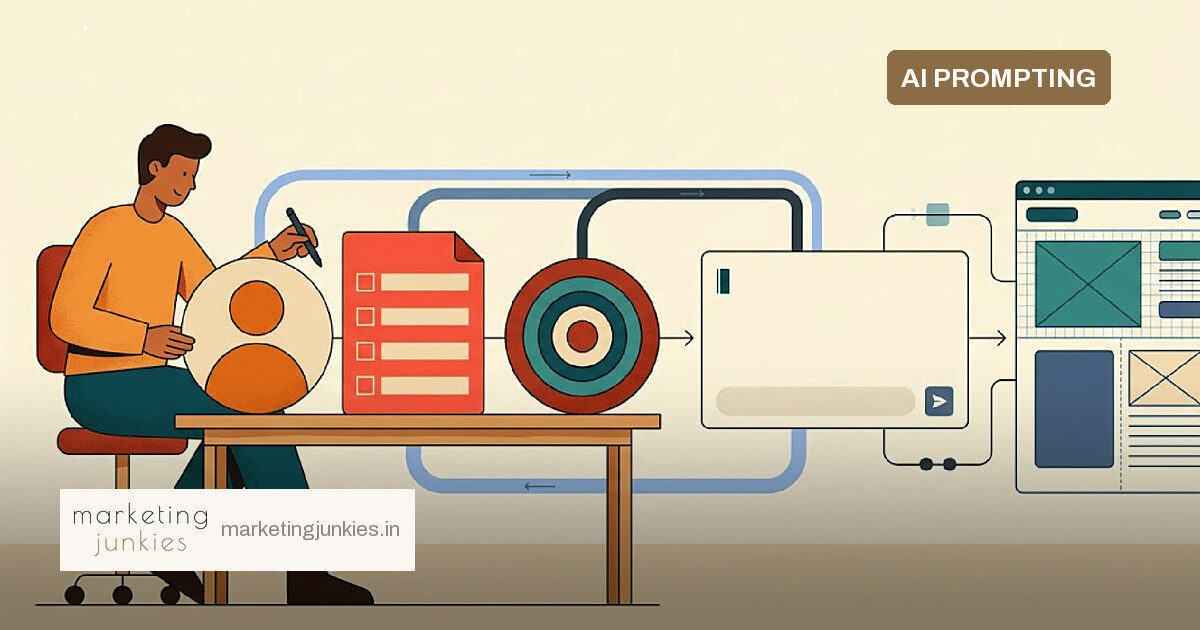
AI can generate martech code in minutes, but that speed becomes expensive when the output misses the business need. The fastest fix is not another clever prompt. It is defining the user, the task and what success looks like before generating anything.
The hidden cost of prompting too early
Without clear direction, marketers fall into revision loops: prompt, review, re-prompt, repeat. Each cycle consumes time and AI credits without necessarily moving the project closer to its goals, as MarTech points out. Established software development practices can reduce that waste by forcing clarity upfront.
Steal a page from software development
Several lightweight artifacts already help teams define intention. Most everyday martech tasks will not need all of them:
- Business requirements documents (BRDs) for large initiatives that need a high-level business vision and success metrics.
- User stories to break work into manageable who-what-why chunks.
- Acceptance criteria to specify what ‘done’ looks like without dictating how to build it.
- Prompt frameworks such as TAG — task, audience, guardrails — to structure instructions before generating output.
- Prompt logs to record wording that works and avoid patterns that do not.
Changing the order of fields on a form may need only a user story and acceptance criteria. A platform migration or a large initiative may justify a BRD.
User stories and acceptance criteria in action
A user story follows a simple structure: as an actor, I want a functionality so that a reason. As the MarTech article illustrates, one example would be: “As a customer, I want autofill functionality in the address field so that I don’t need to type my entire address into the form.”
Acceptance criteria then describe what the user expects. For the same autofill feature, criteria might require populating the street address, city, state and ZIP code fields, allowing freeform entry for apartment or unit details, and offering an option for non-US addresses that do not use autofill.
Make good prompts repeatable
Prompt frameworks and logs turn one-off luck into a repeatable process. A framework like TAG asks marketers to define the task, audience and guardrails before writing the prompt. Logs capture the wording that consistently produces secure, performant and sustainable code — phrasing that IT and security teams can supply directly to marketers.
Marketers become the editor
AI can now help draft BRDs, shape user stories and pose clarifying questions before writing code. That makes requirements gathering faster, but it does not remove human judgement. The marketer’s job shifts to editor: identify gaps, refine acceptance criteria, and confirm that generated output matches the business goal.
As AI accelerates development, requirements gathering has to keep pace. Clear direction before the prompt is what separates useful AI-built software from fast but irrelevant code.
Source: MarTech