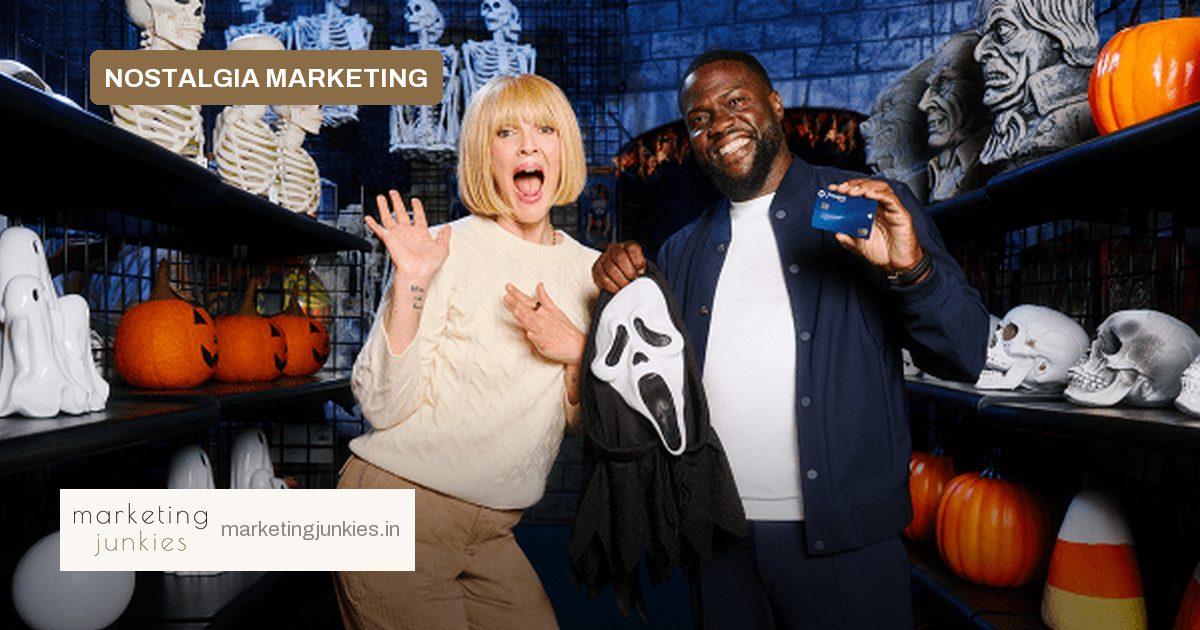
Chase is kicking off Halloween season with a nostalgic twist on a horror classic. The brand has brought back Drew Barrymore and cast Kevin Hart as Ghostface in a comedic reimagining of Scream, timed to the original movie’s 30th anniversary.
What happens in the spot
Barrymore picks up a phone call that mirrors the famous opening scene from the 1996 film. This time, however, the masked caller is not threatening. Instead, he delivers good news: the actor has earned cash back through Chase Freedom, the company’s cash back credit card program.
From there, the ad flips the horror setup into a seasonal shopping spree. Hart’s Ghostface and Barrymore trade excitement about the rewards rather than alarm, turning a famously tense moment into a lighthearted payoff.
Why Chase is doing it now
The campaign arrives as Halloween viewing picks up and as Chase card users begin planning fall shopping and travel. It also comes as Chase Freedom adds new benefits to the Freedom Flex card, a point Wittney Rachlin, general manager at Chase Freedom, emphasized.
“It felt right to go big with this one,” Rachlin said. “We’re also celebrating the addition of new benefits to the Freedom Flex card, so we need to make that impact.”
The Scream campaign follows other recent Chase work featuring Hart, Stephen Curry, and A’ja Wilson, as well as a partnership with Julian Shapiro-Barnum. For Chase, the goal is to connect a rational product message—cash back—to a culturally shareable, seasonally timed moment.
Nostalgia is doing real advertising work
Chase is not the only brand mining the 1990s this fall. Dunkin’ recently released an ad featuring two of the Spice Girls to promote the return of pumpkin spice beverages. The shared pattern is clear: nineties nostalgia offers immediate recognition for audiences who lived through the decade, while giving younger viewers a window into a pre-algorithm pop culture moment.
Rachlin explained the strategy in social terms. “When something from your past suddenly shows up in a new way, it gets a reaction. People want to talk about it, trade memories and share it with someone who will instantly get the reference,” she said. “We wanted the commercial to create that kind of moment.”
What marketers can borrow
The campaign is a useful example of a familiar-with-a-twist structure. Establish a widely recognized scene, disrupt it quickly, and tie the surprise to a concrete product detail. That makes the ad feel entertaining rather than simply informative.
- Anchor a campaign to an external cultural milestone such as an anniversary to earn attention beyond paid media.
- Use a celebrity or character casting choice that serves the story, not just a recognizable face.
- Keep the product message simple and visible: in this case, cash back rewards become the “good news” in a famous scary moment.
- Extend the idea across TV and social throughout a season instead of treating it as a one-off placement.
For marketing and media professionals, the takeaway is that nostalgia is not just a reference; it is a distribution strategy. When execution is strong, the audience does part of the media work by sharing and remixing the cultural callback.
Droga5 created the campaign, which begins airing on TV this week with social content rolling out through Halloween season.
Source: Adweek