
The campaign
In 1989, Bajaj Auto and Lintas launched “Hamara Bajaj” for the Chetak scooter. The phrase translated to “Our Bajaj,” and it did something clever: it framed a manufactured product as a shared possession. The line was not about the company; it was about the buyer and the family.
The scooter was already a symbol of aspiration in India, where long waiting periods made ownership feel like a milestone. Lintas took that real-world tension and gave it a voice. The agency that created the campaign later evolved into MullenLowe Lintas Group, but the 1989 work still stands as a reference point in Indian advertising.
What the film said and how
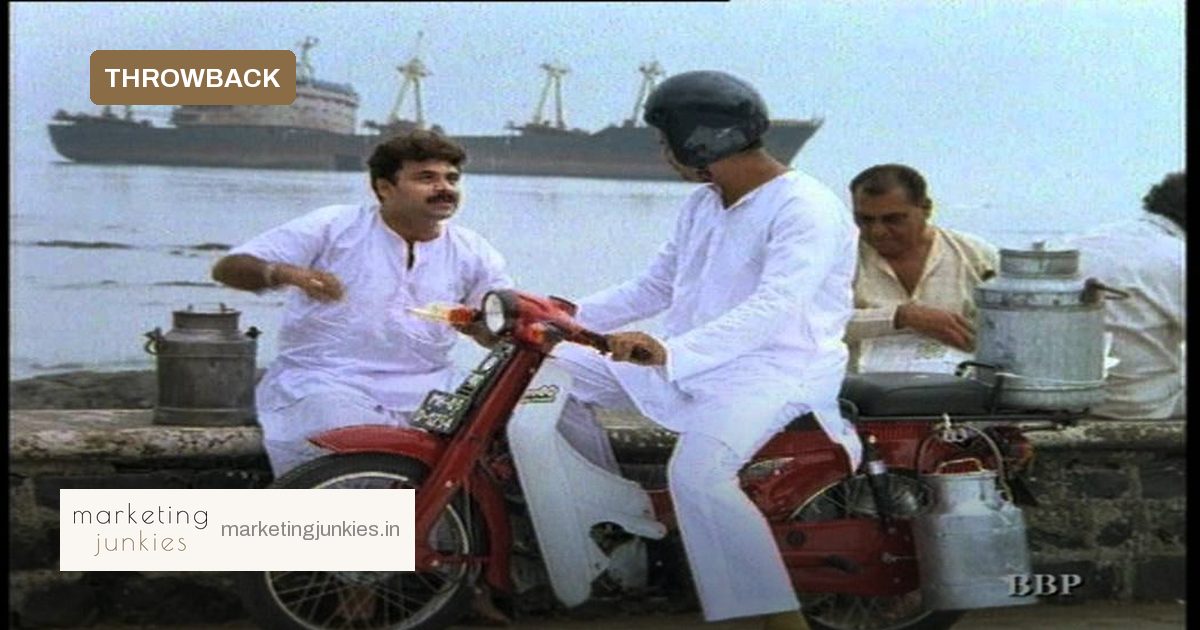
The film argued that a Bajaj Chetak was not just transport. It was the reliable presence behind everyday achievements: a first job, a wedding, a child’s school run, a family’s sense of self-reliance. It used affection rather than horsepower to make its case.
The tagline became the film’s refrain. Short, possessive and easy to sing, “Hamara Bajaj” let ordinary viewers place themselves inside the story. The ad did not have to explain the product’s specifications; it only had to remind people what ownership felt like.
- It treated ownership as an emotional rite of passage, not a transport decision.
- It used the possessive “Hamara” to make a large company feel like a family asset.
- It kept the scooter as a companion to human moments rather than the ad’s only hero.
The response it got
The jingle entered everyday speech. Buyers used the line while waiting for their scooters, and the campaign gave shape to middle-class confidence in a period of economic aspiration. Industry conversations still treat it as an early example of Indian advertising that spoke the consumer’s language instead of importing a global template.
The campaign is credited with deepening Bajaj’s bond with its buyers at a time when the scooter market was crowded. It made the brand feel less like a manufacturer and more like a family name.
What it changed in the category
Before campaigns like this, two-wheeler advertising often led with mileage, price and maintenance. “Hamara Bajaj” shifted the centre toward identity and pride. Rivals noticed, and emotional storytelling became a more accepted route in the category.
It also changed what marketers asked of a scooter ad. The goal was no longer only to explain the product; it was to make the product feel inevitable in the viewer’s life.
Where the brand and the idea are now
Bajaj Auto grew into a global two-wheeler and three-wheeler manufacturer. The Chetak badge has been revived as an electric scooter, carrying the same emotional pull into a new category. The brand’s later work still leans on legacy, belonging and Indian aspiration, even as its portfolio has broadened far beyond the classic scooter.
The phrase “Hamara Bajaj” remains a benchmark for advertising that sells a sense of self. It is a reminder that a short line, placed inside a true cultural moment, can outlive the product it was made to sell.
Watch the original: Bajaj Auto on YouTube