
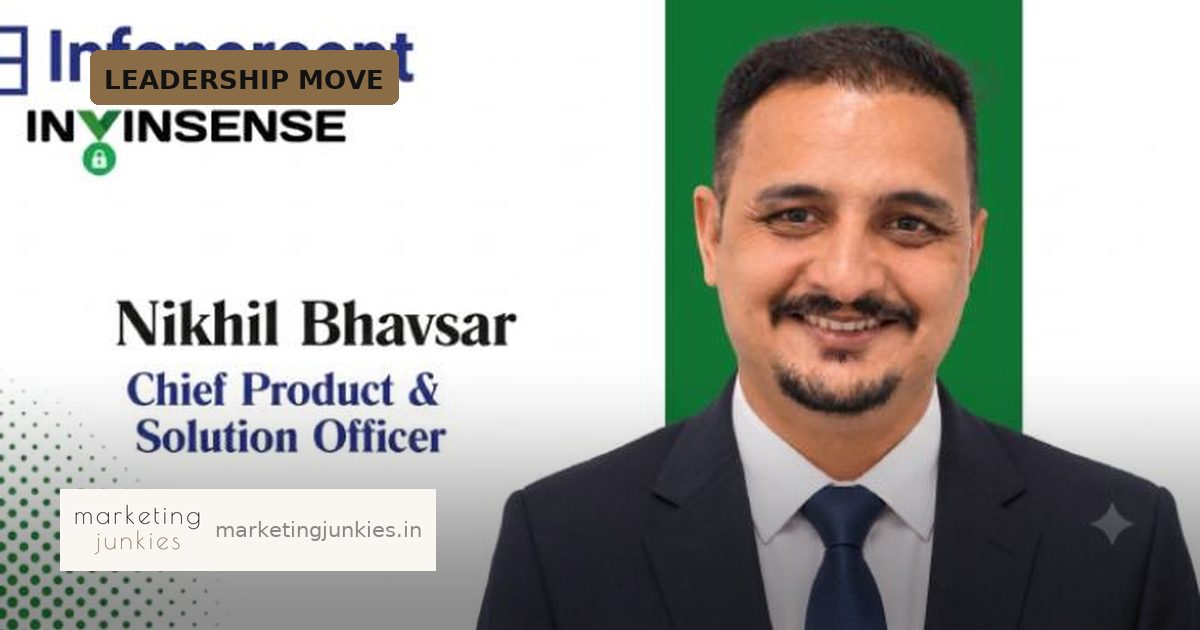
Ahmedabad-headquartered cybersecurity platform company Infopercept has appointed Nikhil Bhavsar as its Chief Product & Solution Officer, a hire aimed squarely at accelerating the global expansion of its Invinsense platform.
Bhavsar’s remit is unusually broad for a product role. According to the company, he will oversee product development, customer success, partner enablement, solutioning, use-case development and go-to-market strategy — effectively stitching together engineering, customers, partners and market adoption under one leader.
Who is Nikhil Bhavsar
Bhavsar arrives with more than 20 years across cybersecurity, cloud, AI and enterprise platforms, having held leadership and technical roles at Google, IBM, Checkmarx and Trustwave. His background spans security architecture, strategic ecosystems, work with global system integrators and managed security service providers (MSSPs), solution engineering and partner-led growth. He holds a U.S. patent and a CISSP certification.
That partner-led track record is central to the appointment. At IBM, he worked with global system integrators to build and grow security practices and developed an MSSP service catalogue covering QRadar, Guardium, IAM and MaaS360. At Checkmarx, he built a global MSSP programme that let partners deliver application security as a service.
The AI-at-the-design-layer pitch
A defining part of the mandate is embedding AI into the design layer of Invinsense rather than bolting it on as a standalone feature. Infopercept says intelligence is being woven through the platform’s architecture and workflows to support offensive security, defensive security and compliance in a single unified stack.
“AI is changing how technology platforms are designed, and cybersecurity cannot be an exception,” said Bhavsar, adding that the opportunity is to build a security platform from India that can compete globally.
Founder and CEO Jaydeep Ruparelia framed the ambition as building Invinsense into a “security transformation layer” across the enterprise technology stack, and said Bhavsar’s understanding of products, partners and market adoption would matter as the company takes an India-built platform to global markets.
Why marketers should care
This is a cybersecurity story on the surface, but the positioning playbook is one every B2B and martech marketer will recognise.
- Category creation over feature lists. Calling Invinsense a “security transformation layer” rather than a tool is a deliberate attempt to own a category rather than compete on specs.
- AI as architecture, not a badge. With AI claims now table stakes across martech and adtech decks, the differentiator is showing where intelligence sits in the product, not that it exists.
- Partner ecosystems as a growth channel. Hiring someone who has built MSSP and SI programmes signals that distribution — not direct sales alone — is the route to global scale. The same logic applies to martech vendors leaning on agency and systems-integrator partners.
- Made-in-India, sold globally. The explicit framing of an India-built platform competing worldwide is a narrative more Indian SaaS and martech companies are adopting in their brand messaging.
- One owner for the full funnel. Putting product, solutioning, customer success and go-to-market under a single leader reduces the classic gap between what engineering ships and what marketing promises.
The broader signal
Senior hires that fuse product and go-to-market responsibilities are becoming more common as enterprise software companies chase international revenue. For marketing teams, it changes who they work with: messaging, use-case libraries and partner collateral increasingly originate from a single office rather than being negotiated between product and marketing.
If your organisation sells complex technology, the takeaway is practical. Audit whether your product story, your partner enablement material and your customer success narratives are telling the same story. If they are not, the market will hear three different pitches — and remember none of them.
Source: MediaNews4U