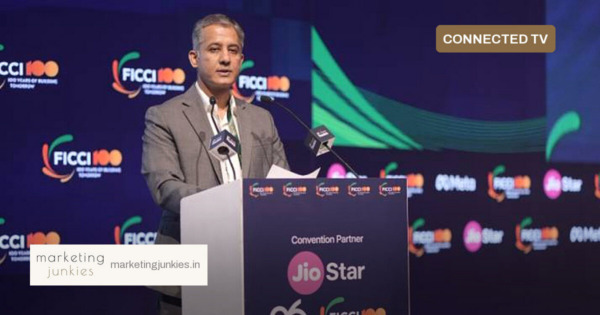

India’s biggest broadcaster is asking the Ministry of Information & Broadcasting to bring back the audience numbers marketers rely on. At FICCI FRAMES 2026 on Tuesday, JioStar CEO Kevin Vaz urged an immediate restoration of BARC audience ratings, warning that missing measurement has created uncertainty across the TV buying chain just as festive budgets are finalised.
Why the timing matters
The festive quarter is when television spends rise and brands lock channel mix, reach and frequency. Vaz told the inaugural session that without credible, verifiable audience data, broadcasters, advertisers and agencies are left guessing. He called reliable measurement “essential for brands to plan campaigns and reach audiences efficiently.”
From ratings to a lighter TV rulebook
Vaz also called for a tangible roadmap to reduce the regulatory burden and cost of linear broadcasting. The sector has long asked for forbearance, he said, because innovation needs room to evolve. The pitch is that linear TV should evolve alongside digital and give consumers more choice across screens.
The numbers driving the argument
- India’s media and entertainment industry grew 9% in 2025 to ₹2.78 lakh crore.
- Digital crossed ₹1.1 lakh crore, while live events grew 47%.
- Connected TV is estimated at more than 200 million viewers, with over 80% watching with family or friends.
- Micro-drama was a ₹650 crore category in 2025 and is projected to grow more than 50% annually by 2028.
That growth story is why Vaz framed the shift from distribution to attention. “Attention is the new currency,” he said, adding that the magic lies in creating work that makes the thumb stop. For media planners, the implication is clear: budgets should chase verified attention signals, not just platform volume.
CTV, micro-drama and content commerce
Vaz pointed to connected TV as a major transition marker. With most CTV viewing shared, campaigns have to be designed for co-viewing rather than assuming a solo mobile viewer. JioStar has also entered micro-drama through TADKA and is working with more than 50 production houses. Vaz identified content commerce as an emerging value pool alongside advertising and subscriptions, citing JioHotstar’s work during TATA IPL 2026 and the live stream of Dhurandhar The Revenge.
For brand teams, the address is effectively a planning checklist: demand verified audience data before committing budgets, treat CTV as a shared-viewing channel, and test short-format and commerce-led formats while measurement and AI rules catch up.
AI safeguards for creators
On AI, Vaz said the technology is reshaping production, storytelling, workflows, analytics and personalisation, but he stressed safeguards around copyright, consent, attribution and fair value for creators. As he put it, the goal is “not to slow innovation down but to ensure technology and creativity grow together.” For marketers testing AI-assisted creative, that is a nudge to build rights and attribution checks into campaign workflows now.
Source: ETBrandEquity.com