
Some ads sell features. ‘Neighbour’s Envy, Owner’s Pride’ sold the glance over the fence. Onida’s green devil didn’t just launch a television; it captured a feeling Indian families knew well: the quiet thrill of owning something the neighbours had not yet brought home.
The campaign
Onida, then a young Indian television brand, commissioned Ogilvy & Mather to create a campaign that would give it a distinct identity in a market filling with imported and local sets. The work broke in 1982 with a line that has outlived most of the televisions it first sold: ‘Neighbour’s Envy, Owner’s Pride.’
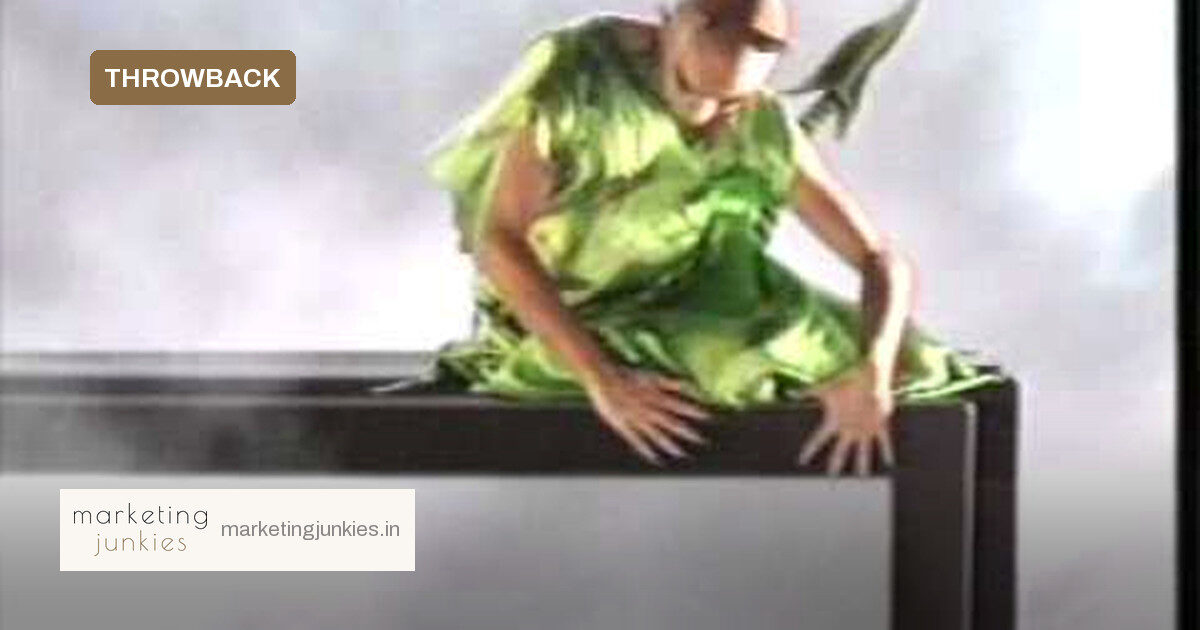
At its centre was a green, horned devil with a pointed tail and an unapologetic smile. The character was not the product’s problem; he was the owner’s alter ego, saying aloud what polite consumers would not.
What the film said and how
The film’s argument was simple. Buying an Onida was not really about picture quality or buttons; it was about crossing a social line. The devil positioned the purchase as proof that you had arrived, and that others had noticed.
- It turned envy from a social flaw into a buying signal.
- It gave Onida a distinctive visual asset no competitor could copy without looking derivative.
- It kept the message to one thought: ownership is a form of status.
The beauty was the inversion. Most advertisers tried to make consumers feel generous or admired. Onida made it safe, even fun, to admit that being envied felt good.
The response it got
The tagline became one of Indian advertising’s most quoted refrains. Onida’s devil entered household vocabulary, and the campaign is remembered as a rare instance where a mascot was not an add-on but the whole strategy.
Hard sales figures from that early period are difficult to pin down. What is clear is that the campaign gave Onida an image far larger than its media budgets might suggest. It is widely credited with helping the brand hold a premium position through the 1980s and 1990s, even as bigger players fought for distribution and price.
What it changed in the category
Before the devil, television advertising in India leaned heavily on features: screen size, remote control, tuning, warranty. Onida shifted the conversation to emotional ownership. It showed that consumer durables could be sold like lifestyle brands.
The campaign also proved that a well-drawn mascot could do the work of a long media plan. It set a template for later consumer electronics and appliance brands that wanted a character to carry their promise through line extensions and market changes.
Where the brand and the idea are now
Onida still exists as a consumer electronics and home appliance brand, though its category dominance has faded with the arrival of Korean and Chinese giants. The devil has been revived, softened and reinterpreted over the years, but the original line never completely left the brand’s identity.
The campaign’s lesson is still taught in Indian advertising schools: find the unsaid social emotion behind a purchase, give it a face, and stay with it long enough for the market to believe it.
Watch the original: Onida on YouTube