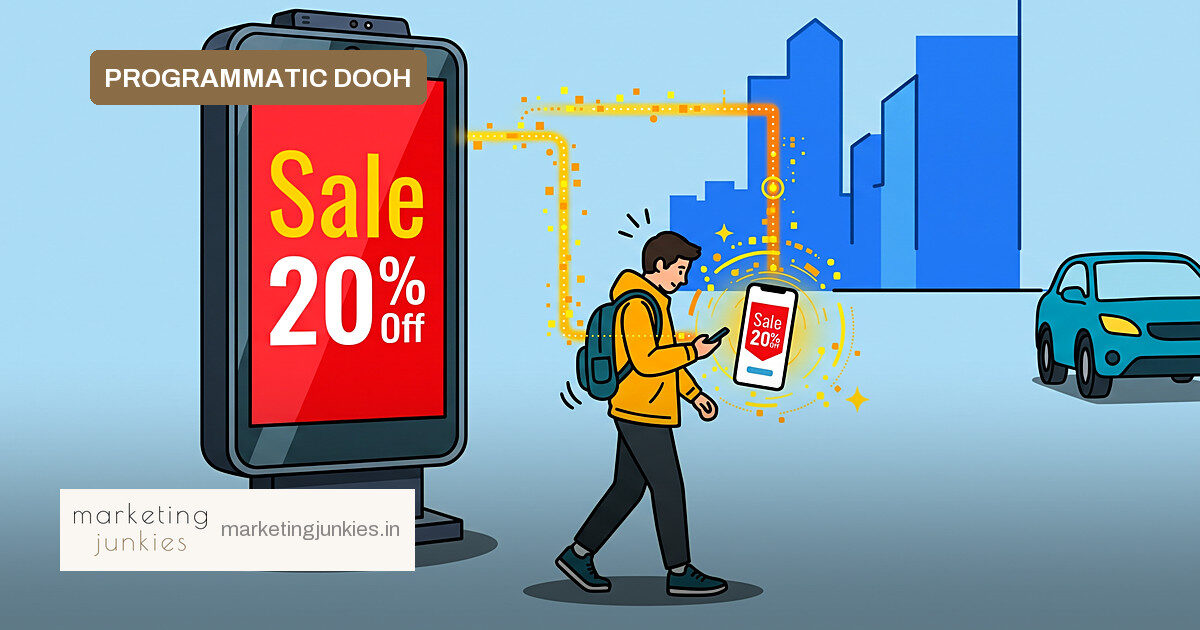
Programmatic digital out-of-home is getting a retargeting layer. Vistar Media has introduced a capability, built with data partner Spotzi, that lets advertisers serve a second message to people who were near a pDOOH screen when an ad played. The move pulls OOH away from being a standalone awareness buy and into the connected media plan.
How the street-to-screen loop works
During a live campaign, Vistar pulls weekly ad play logs showing which screen played an ad, on what day, at what time, and for how long. Spotzi then uses mobile location data to identify devices that were within a set radius of that screen at the moment of play.
Vistar does not see the mobile IDs. Spotzi passes the matched devices to the advertiser’s own demand-side platform, such as DV360, and the DSP decides which devices it can actually action. The process is designed to sit within GDPR requirements.
The output is a retargeting segment that appears in the client’s DSP under the label Vistar Media retargeting. In typical results, if Spotzi identifies 100 devices near a screen, about 40% are matched in the DSP and become actionable.
Where it works best
Mobile and display are the strongest follow-up channels today. Connected TV is more variable: some DSPs target CTV with a mobile ID, while others rely on IP or postal-code data. Vistar says it can send postal-code data when a device ID will not work, so the second touchpoint is still available.
Annelijne Brouwer, Data Strategy Manager EMEA at Vistar Media, frames the shift: “pDOOH is no longer sitting on the sidelines.” The early tests in April and May, and a larger UK campaign now under way with a foot-traffic study, point toward stronger budget commitment from clients.
Three planning notes for marketers
- Sequence the channels. Ad logs are processed weekly, and Spotzi needs roughly another week to deliver the segment. Launch social or display after, or alongside, the DOOH flight.
- Build in setup time. Expect one to two weeks to confirm which DSP you are retargeting into and how the accounts connect. After that, the ongoing work is mostly selecting a ready-made segment.
- Point it at conversion goals. The strongest use case is where a second exposure closes the gap: store visits, product purchases, and other lower-funnel actions.
The bigger strategic change is sequencing. Some advertisers are now starting pDOOH earlier in the plan simply to build an audience they can retarget later. The street impression becomes the first step in a connected journey, not the end of one.