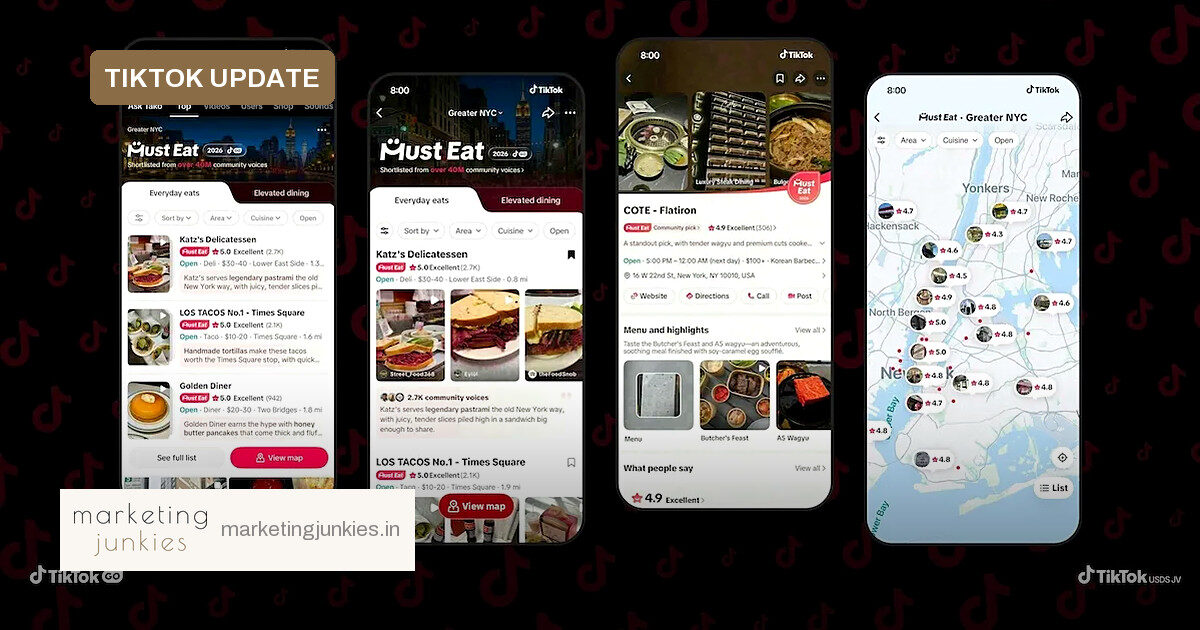
TikTok has spent years shaping where people discover food, one viral video at a time. On Wednesday it formalised that role with “Must Eat,” a community-driven restaurant guide that turns platform chatter into a structured local discovery tool.
The feature pulls from more than 40 million posts and comments to surface restaurants gaining attention on the platform. It is launching first in New York City, Los Angeles and San Francisco, and users can find it through the search bar, the Local feed, restaurant pages and location links attached to videos from participating restaurants.
How Must Eat works
Rather than relying on conventional star ratings, the feature curates recommendations from what users are already posting and discussing. Diners can browse by city and apply filters for cuisine, price, rating and location, making it easier to compare options before heading out.
- Everyday Eats: casual favourites and neighbourhood go-tos.
- Elevated Dining: spots for celebrations, special occasions or a night out.
- Direct booking: select restaurants can be booked through TikTok via OpenTable.
- Multiple entry points: search, Local feed, restaurant pages and linked video locations.
Why this matters
The rollout puts TikTok into more direct competition with Yelp and Google Maps. Those platforms are built around search, maps and traditional reviews; TikTok is building on what it already does well: connecting people with restaurants through recommendations shared by other users.
For restaurant and hospitality marketers, the shift is significant. A single viral video has always been valuable, but Must Eat turns food content into a persistent, browsable recommendation layer. Comments, location tags and creator videos become inputs for a native discovery engine built on social proof rather than star ratings.
That changes the marketing calculation. Yelp and Google Maps reward review volume and local listings discipline; TikTok rewards content velocity and cultural relevance. A dish can go from unknown to sold out in days, and Must Eat packages that momentum into a browsable guide. The feature is young, but it gives brands a reason to treat short-form food content as durable local inventory rather than disposable reach.
What marketers should watch
The feature is US-only for now, but it is a useful signal of where local social commerce is heading. Brands with venues or food partnerships should treat TikTok as a discovery channel, not just a top-of-funnel video platform. Accurate location tags, venue-specific creator content and active comment sections are likely to matter more as the feature scales.
The initial city list is small, but TikTok has a pattern of testing locally and expanding fast. If Must Eat proves sticky, expect more cities and more commerce links to follow.
Source: TechCrunch