
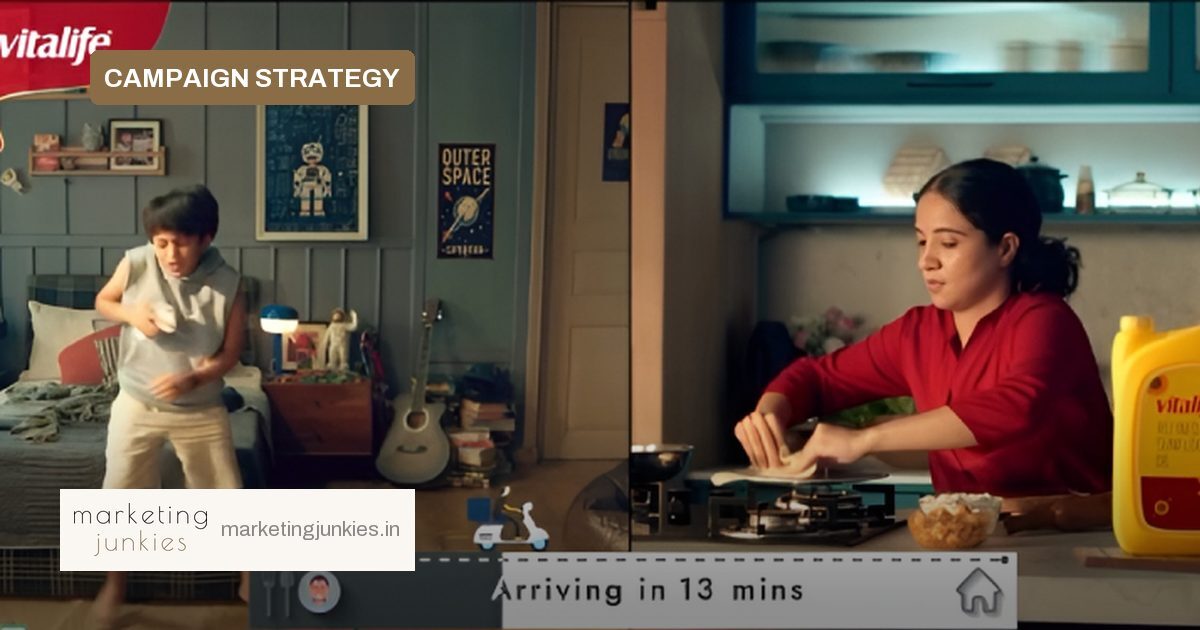
Gokul Agro Resources has launched a national campaign for Vitalife that shifts the edible oil conversation from product attributes to everyday food behaviour. The campaign, conceptualised by Glassbox, is built around what the brand calls “Modern Chaos”—busy routines, online ordering and convenience-led eating that have made home-cooked meals less frequent.
What the campaign changes
The central proposition is “Swaad Swaad Mein Sehat.” Three regional films in Hindi, Gujarati and Bengali take familiar foods that consumers often order from outside and bring them back into the home kitchen, nudging Indian families to cook at home more often.
Geetanjali Bhattacharji, co-founder of Glassbox, described the shift as the first time the category has taken on a behaviour instead of a competitor. That is a deliberate departure in a category that has historically competed on oil attributes.
Why the timing is relevant
The campaign arrives amid changing dietary patterns. NFHS-6 data cited by the brand shows 30.7% of Indian women and 27.3% of men are overweight or obese, up from 24% and 22.9% in the previous round. Meanwhile, India’s online food delivery market has grown from USD 55.6 billion to an estimated USD 67.9 billion, according to IMARC Group.
Those numbers make the creative territory more than a wellness cliché: convenience is rising just as public-health concerns around processed food are becoming harder to ignore.
A system designed to outlast the launch
Vitalife is not running a standalone film-led push. The integrated ecosystem includes:
- Three regional films in Hindi, Gujarati and Bengali
- A Home-Cooked Food Index, an annual study tracking home-cooked meals
- A creator programme across Gujarat, Punjab, Bengal and Maharashtra
- Media activation across Meta, YouTube, OTT and CTV
Anil Nair, co-founder of Glassbox, said creativity here is a system, not a campaign. The films, the index, the creators and the shelf are meant to work as one engine so the idea keeps working long after the launch noise fades.
What marketers can take away
For marketing professionals, Vitalife is a useful case study in owning a cultural tension rather than a product claim. The campaign uses regional storytelling to land a national idea, pairs paid media with an owned research property, and gives creator partnerships a defined role. It also connects a commercial category to a public-health issue without becoming preachy.
Arun Harne, Chief Business Officer at Gokul Agro Resources, summed up the intent: “We want to encourage families to choose home-cooked food more often. For us, if Vitalife can play a small part in bringing more wholesome, home-cooked meals to the table, we’ve done our job.” Pankaj Gupta, Category Manager, added that the edible oil category has long competed on product attributes, and Vitalife is shifting the conversation to everyday food choices.
Source: MediaNews4U