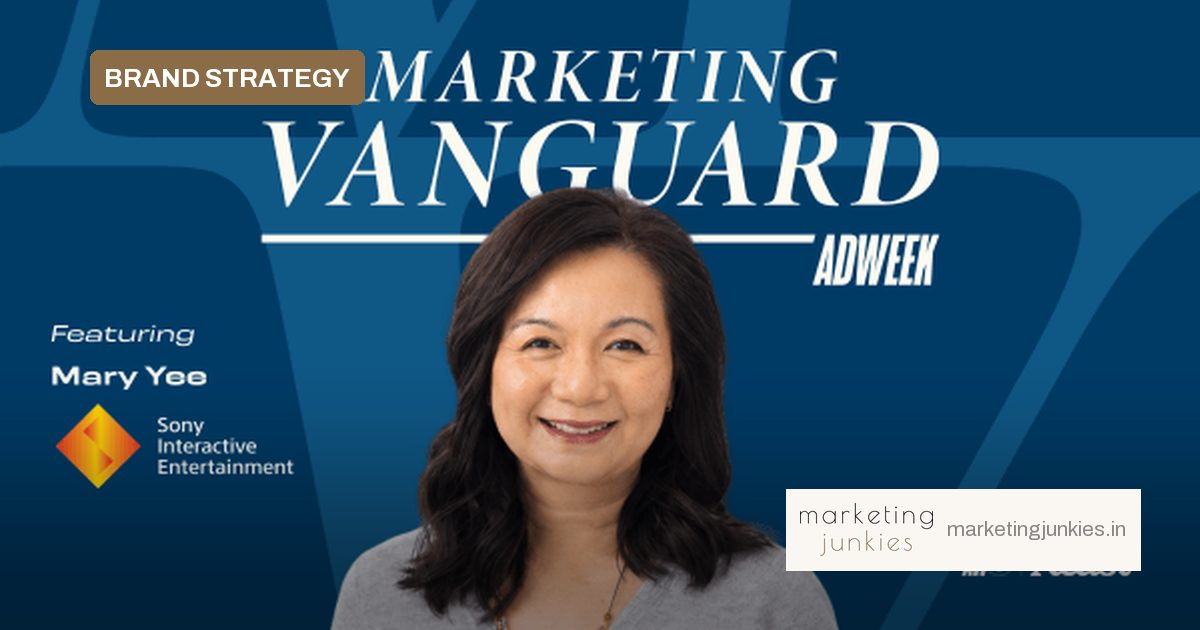
Sony Interactive Entertainment’s Mary Yee did not start in marketing. She began in public accounting, and that early detour became the foundation for a career that has spanned Clorox, PlayStation, Tatcha and now the global PlayStation brand again.
On Adweek’s Marketing Vanguard podcast, host Jenny Rooney asked Yee how a finance-first career shaped her approach to brand building. The answer is a timely prompt for marketing teams still treating business fluency and creative craft as separate disciplines.
Learn the business before the brand
As an auditor, Yee learned how companies operate through financial statements, revenue models and operating structures. By the time she moved into brand marketing at Clorox, she already understood that brand decisions have to create value. That fluency means creativity does not have to fight analytics for influence.
Her working sequence is a simple framework: analytics gives strategy its grounding, creative work makes that strategy felt, and the strongest campaigns attach to a human value or belief. It is the same pattern whether the product is a household essential, a luxury skincare line or a console.
One master brand, many doors
At PlayStation, Yee oversees hardware, peripherals, network services, subscriptions, digital retail and games. Her view is that these are not disconnected product lines, but one brand experience anchored in what play means emotionally.
The Last of Us is her example of cross-media IP widening the brand. Some viewers watched the HBO series without ever playing the game. The opportunity is not just to market to existing players, but to build layers of engagement that keep widening the community.
For marketing professionals, the insight is not that everyone needs an accounting degree. It is that commercial literacy changes the conversation with finance, procurement and the C-suite. When a marketer can frame a campaign in terms of customer acquisition, margin structure or lifetime value, the creative idea gets a stronger seat at the table.
What marketers can borrow
- Start with business value. Know the revenue model and the consumer before creative work fires.
- Use analytics as grounding, not as a brake. Data shapes strategy; creativity makes it memorable.
- Anchor extensions under one promise. Games, shows, retail and partnerships should all feel like the same brand.
- Let IP open new doors. Entertainment formats can reach people who never touch the original product.
Yee’s 2021 stint as CEO of Tatcha tested the playbook in another category. She helped expand the luxury skincare brand across channels and into 34 countries, using communities, creators and retail to drive growth before returning to Sony Interactive Entertainment.
Adweek sums up the common thread as “understand the business, understand the consumer and build brands around real human connection.” That matters for global and Indian teams alike, where brand extensions increasingly span digital content, e-commerce, live events and retail. A coherent master brand keeps those bets from diluting what the consumer already trusts.
The broader lesson for marketing leaders: a marketer who can read the business becomes a stronger brand builder, not a less creative one. Financial literacy, a clear brand architecture and a human idea can turn multiple formats into one coherent growth engine.
Source: Adweek