Axis Bank has released the latest chapter of its ‘open’ digital banking campaign, ‘open’ ki aadat pad jaayegi, and it marks a deliberate shift: the bank is no longer selling app features. It is selling the habits and expectations those features create.
From product demo to behaviour change
When ‘open’ launched in 2023 as part of the Axis 2.0 transformation, the communication was built around what the platform could do. The new work reverses the lens. It starts with everyday consumers who have grown used to a certain level of convenience, personalisation and control, and asks what happens when those expectations leak into other parts of their lives.
The campaign reinforces the proposition ‘Dil Se Open, 24×7’. Each film ends with the protagonist asking, “Agar mera bank aisa kar sakta hai, toh aap kyun nahi?” — if my bank can do this, why can’t you? — followed by the sign-off, “Aadat toh padegi na?”
Seven films, one behavioural hook
The campaign comprises seven films, each pairing an app capability with a familiar non-banking setting:
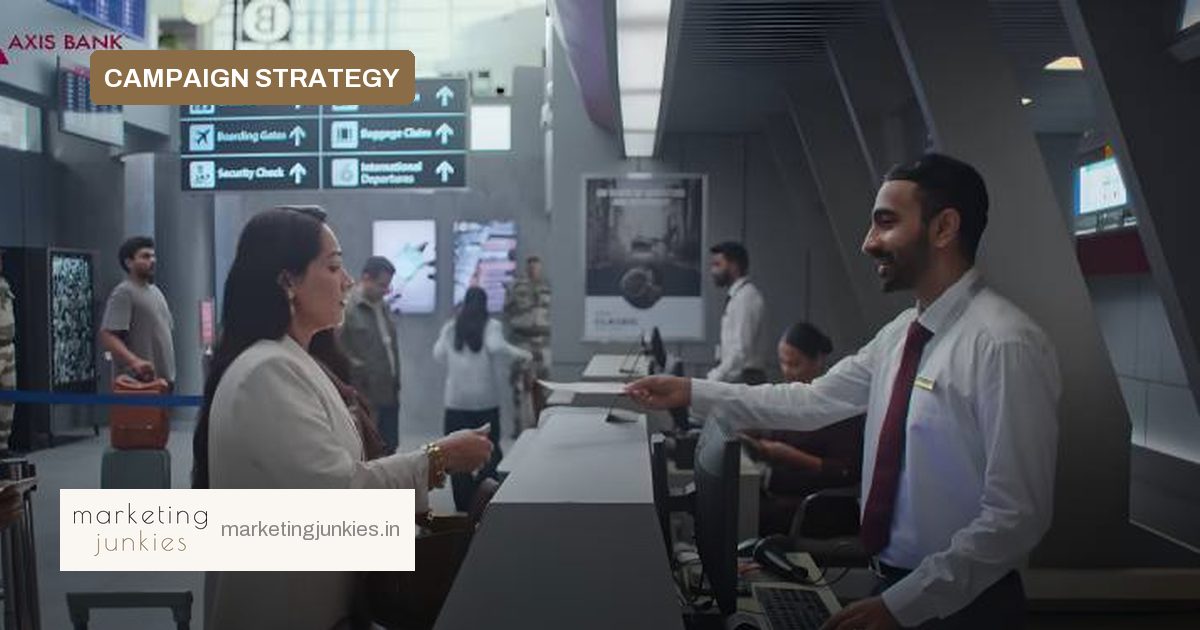
- One View, Many Banks – airport check-in mirrors multi-bank account aggregation.
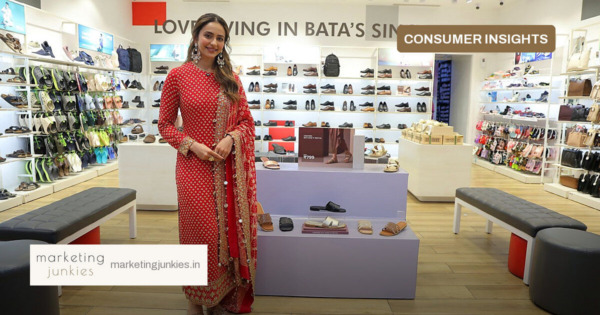
- Everything in One Place – a shoe store stands in for unified investments, loans, deposits and payments.
- Knowing Where Your Money Goes – a gym membership counter showcases real-time Spend Analyser.
- Control, Your Way – a luxury hotel reflects card controls, PIN changes and card blocking.
- Security in Your Hands – a diagnostic centre highlights Mobile App Code.
- Safety Beyond Transactions – a scuba diving school demonstrates the Safety Centre for UPI, SMS and funds-transfer blocks.
- Protection Against Fraud Pressure – a locker store shows FD Lock restricting fixed-deposit withdrawals to the branch.
The common thread is expectation transfer. The protagonist applies the standard of her banking app to places that do not meet it.
Why this matters for marketers
Axis Bank Group Head Sameer Shetty frames digital experience as a key differentiator, not a support function. CMO Anoop Manohar is more direct: once customers get used to convenience, personalisation and control, they naturally begin to expect it everywhere. That is a textbook habit-based positioning move, and it is especially useful in categories like banking, where product features are easy to copy but customer expectations are sticky.
Rather than listing capabilities, the campaign uses category-adjacent analogies to make each feature memorable and emotionally legible. The seven-film structure also gives the bank a modular asset: individual films can be cut by product, audience or platform without losing the central idea.
What you can borrow
If you manage a feature-heavy product, you can transplant the campaign’s logic. Choose one capability, place it in an unrelated everyday service encounter, and build the story around a single question that flips the comparison back to your brand. The creative device here is the customer as the benchmark, not the product spec sheet.
Curativity, the creative agency behind the work, was tasked with making a feature-heavy banking app feel human. The films’ humour is the delivery vehicle, but the strategic core is the raised expectation.
The campaign will roll out nationwide across TV, digital, social and integrated media.
Source: MediaNews4U