
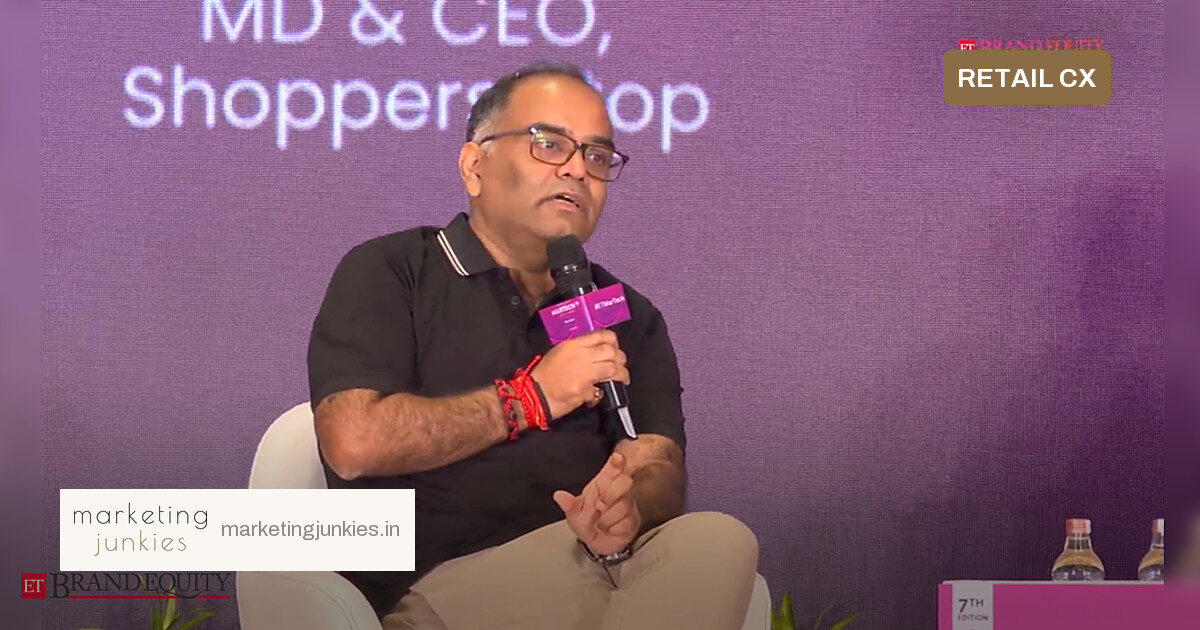
Shoppers Stop has kept average transaction value moving in one direction for 15 consecutive quarters. At the ET MarTech+ Summit 2026, managing director and CEO Kavindra Mishra said the streak is the result of stronger brand assortment and a more personalised shopping experience, enabled by technology.
In conversation with Prasad Sangameshwaran, editor, ETBrandEquity.com, Mishra described personalisation as a question of understanding shoppers better rather than a separate online or offline problem.
“The customer journey is not a function of being online or offline, but of understanding the consumer better,” he said.
Each year, more than 55 million shoppers visit Shoppers Stop stores. The opportunity, Mishra said, is to use the customer data already available to make each of those visits more relevant.
The store as an experience
Experience starts with store design and a brand assortment customers cannot find everywhere. In some locations, that extends to cafés, children’s play areas and gaming arcades.
The loyalty programme, First Citizen, is central to the model. It has millions of members who pay for exclusive benefits and experiences. Mishra suggested that the programme’s staying power depends on giving those members an experience they value enough to renew each year.
The sharpest use of data happens with personal shoppers. Every personal shopper has an AI and machine learning-powered app that can review a member’s past purchases and recommend products.
“If you’re my Black card customer and you’re coming to my Personal Shopper, every personal shopper has an app with the details of your past purchases, and it will recommend,” Mishra said. “So, I’m not spraying and praying.”
The phrase points to the shift: instead of broad offers sent to everyone, the retailer is trying to make a narrower, more informed suggestion at the moment of service.
Scaling experience without losing the human layer
Mishra acknowledged that a single store can create a special experience through individual effort, but doing it consistently across 120 stores in 70 cities needs a formula that technology helps execute.
Shoppers Stop is also working on technology that recognises customers arriving together may have different shopping behaviours and should receive different prompts. However, Mishra stressed that the technology is only a platform.
“The maximum experiential value still comes from people-to-people engagement. First, we invest in our people and then in tech.”
Local relevance adds another layer. Consumption patterns can differ between stores even within the same city. When opening a store, the company studies shopping behaviour in surrounding pin codes to tailor merchandise and offers, while keeping customer data use from becoming intrusive.
What it means for marketers
- Personalisation can be a transaction driver, not just a loyalty metric.
- Data is most useful when frontline staff can act on it in real time.
- Scale needs a repeatable technology formula, but human service still sets the experience apart.
For marketing teams, the Shoppers Stop example shows that martech works best when it supports a conversation. The app can surface the recommendation, but the personal shopper still builds the relevance.
Source: ETBrandEquity.com