
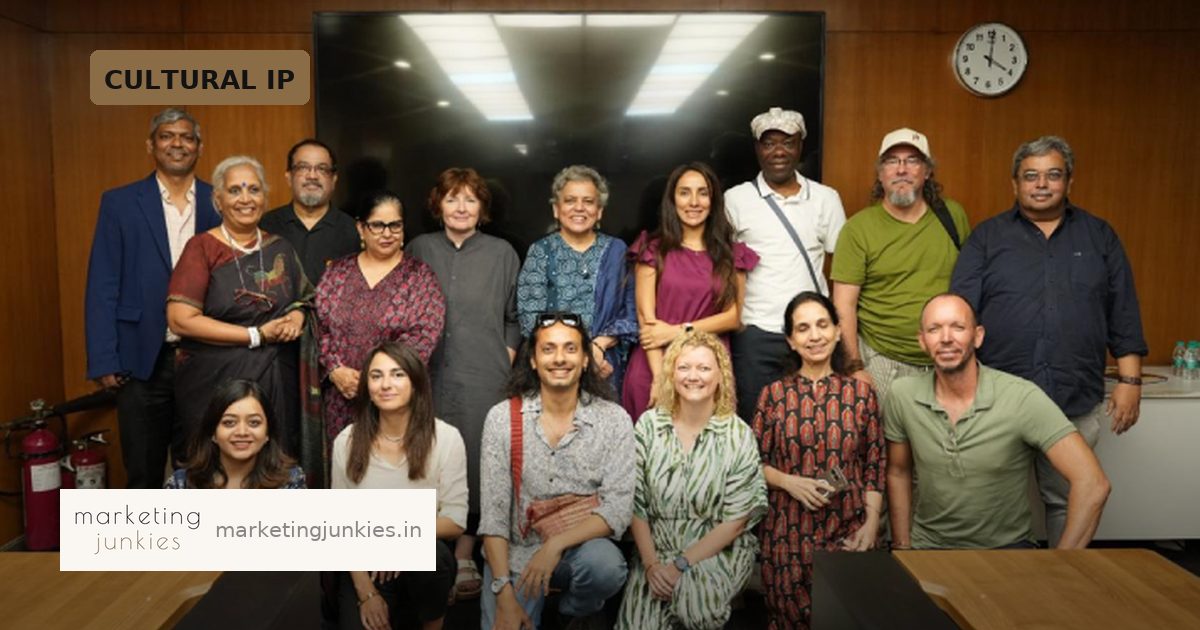
India’s music industry got a rare three-day window into the global market this season, as Soundscapes of India (SOI) Season 3 wrapped in New Delhi with more than 150 artists from over 15 Indian states and delegates from more than 20 countries in attendance.
Organised by The Indian Performing Right Society Ltd (IPRS) in association with MusiConnect India, the festival ran from August 29 to 31 at the Dr Ambedkar International Centre. The format mixed evening music showcases with conference sessions, workshops, one-on-one pitching and business meetings — a deliberate attempt to make the event a marketplace, not just a stage.
The big idea: music as an export category
The clearest shift in Season 3 was positioning. Rather than treating Indian music as a domestic content play, the programming framed it as a cultural export with economic upside. Sessions covered cultural exports, international festival partnerships, music tourism, the festival economy and the opportunities open to independent artists.
One session, ‘Cultural Export as an Economic Driver: Building India’s Global Music Presence,’ featured tabla maestro Bikram Ghosh and Serendipity Arts Foundation Director Smriti Rajgarhia. Country-focused conversations examined the UK’s live music industry, while another brought together industry leaders from Tanzania, Eswatini, Egypt and South Africa to unpack export lessons from Africa.
Roundtables tackled cultural diplomacy, mapping India’s music ecosystem, and the role festivals play in tourism and local economies. In the session ‘Music Festivals as Engines of Place: Tourism, Local Economies & Cultural Identity,’ Theja Meru, Chairman, TAFMA, Govt. of Nagaland, spoke on state-backed cultural initiatives driving local growth and creative entrepreneurship, while Koji Sato, Director General, Japan Foundation, addressed government-supported cultural exchange and place-making.
Why marketers should care
For brand and media teams, SOI is a useful case study in how an industry body builds an owned IP. IPRS is a royalty organisation, not a promoter — yet it has created a platform that generates artist pipeline, international relationships and a policy conversation at once. That is the same logic behind brand-owned festivals, awards and summits: the event is the media channel.
Three things stand out for anyone building or sponsoring cultural IP:
- Design for transactions, not just footfall. SOI ran pitching sessions connecting Indian artists with festival programmers, bookers, agents, labels, publishers and talent managers from the UK, Australia, the Netherlands, Poland, Spain, Japan, Nepal and Africa.
- Borrow credibility from global names. ‘In the Spotlight’ sessions featured Ethno Port Festival (Poland), Fuji Rock Festival (Japan), Bushfire Festival (Eswatini), Hong Kong Arts Festival, SXSW, Iceland Airwaves, The Great Escape, MAMA Festival and WOMEX.
- Show outcomes, not impressions. Organisers point to past participants who have since played Fuji Rock, Rainforest World Music Festival in Malaysia, Sziget in Hungary and the Gwangju Busking World Cup in South Korea.
Regional depth as the differentiator
The showcase lineup leaned hard into range — classical, folk, tribal, Hindustani and Carnatic, pop, rock and fusion. Acts included Abhijeet Pohankar’s The Global Varkari, Meghalaya’s Da-La-Riti, tabla artist Anuradha Pal, Carnatic-jazz act Lakkshya, Nagaland pop-punk band Street Stories, Barmer’s Desert Kats, Ladakh’s Da Shugs and vocalist Varijashree Venugopal. Sitar virtuoso Purbayan Chatterjee and his band closed the festival. International performers included Egypt’s Noha Fekri, Indonesia’s Ngartini Huang, Nepal’s Zhuma Limbu and London-based guitarist Kapil Seshasayee.
On the final day, ‘Journey through the Living Roots’ — curated by Chief Mentor and Music Producer Dr. Upali Chattopadhyay — presented musicians from four indigenous communities: the Jenu Kuruba of Coorg, the Ho of Jharkhand’s Kolhan region, the Koch-Rajbanshi of North Bengal and the Chakhesang Naga of Nagaland, treating tribal music as a living practice rather than archive.
Voices from the floor
Stani Goma, Founder of Beats of Any Nation Downunder (BAND), Australia, said he came to discover talent and explore collaborations, adding that he would like to bring some of these artists to Australia and help promote Indian music there. Philip Grefer, Founder & CEO at WISE, said he wanted to understand how India’s music ecosystem works and found what he was looking for at the event.
Composer-producer Abhijit Vaghani, who led creative sessions under The Discovery Room, offered artists a blunt reminder: keep hope alive, use your time, and keep collaborating. It is not bad advice for marketers chasing cultural relevance either — the festival economy rewards those who show up consistently.
Source: MediaNews4U