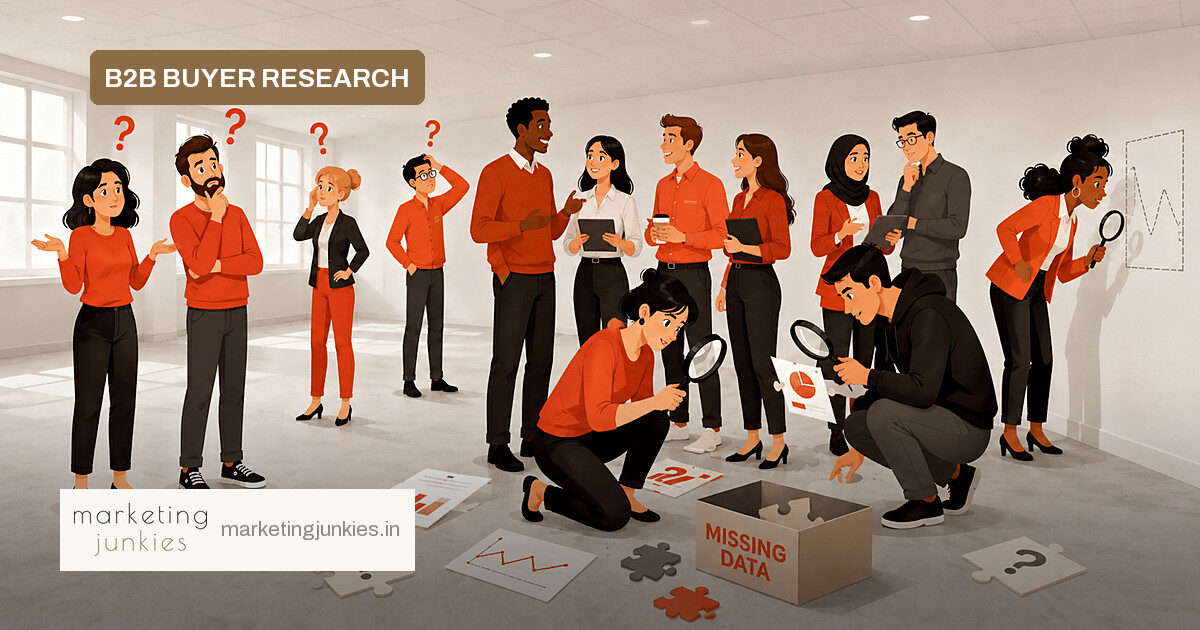
B2B marketing has never had more data. Clicks, downloads, video views, engagement scores—the martech stack captures them all. But a fresh wave of research makes one point uncomfortable: all that activity tells you what a buyer did, not what they are trying to accomplish next.
The funnel is an operating model, not a map
McKinsey’s 2026 Global B2B Pulse, based on nearly 4,000 decision-makers in 13 countries, found buyers now use an average of 10 channels during a purchase journey. They move between in-person, remote and digital touchpoints, and inconsistent information across teams is the leading reason they switch suppliers. A CRM stage may say “consideration” while the buyer is already building a business case, checking competitors and aligning internal stakeholders.
That does not make funnels useless. They still give marketing and sales a shared language for pipeline, forecasting and handoffs. The problem starts when a stage is treated as shorthand for buyer intent.
Much of the journey is invisible
Gartner’s 2026 research puts a number on it: 67% of B2B buyers prefer a rep-free experience. The same study, which surveyed 646 B2B buyers in August and September 2025, found 45% used generative AI in a recent purchase. Forrester’s 2026 Buyer Insights, built from more than 17,500 global buyers, draws a similar conclusion: buyers are researching and narrowing choices long before a seller enters the conversation.
So the first visit your martech stack records may be closer to a shortlist decision than to “awareness.” The stage reflects when you became aware of the buyer—not when the buyer’s journey began.
Self-service is not “no humans allowed”
The temptation is to conclude that buyers never want to talk to sales. The data argues otherwise. Gartner reported in May that 70% of B2B buyers prefer a completely digital, self-service buying experience—yet 69% in the same research said they prefer to validate AI-generated insights with a sales rep. Buyers used an average of seven information sources in a recent purchase.
That is not contradiction; it is context. Buyers want independence while researching and expertise when uncertainty rises. The useful question is not “digital or human?” but “which experience helps this buyer right now?”
Better interpretation, not more collection
Salesforce’s 2026 State of Marketing, based on nearly 4,500 marketers, found 83% say customers increasingly want two-way conversations—but only one in four marketers is completely satisfied with how their organization unifies and uses customer data. Knowing someone visited the pricing page three times is not the same as knowing why: they could be ready to buy, budgeting for next year, or comparing you with a rival.
Marketing leaders can pressure-test their stack with a few questions:
- Do marketing and sales see the same customer context?
- Does information survive when a buyer switches channels?
- Are we reaching out because it is helpful, or because automation says it is time for email four?
The next advantage is not another signal. It is carrying meaning from one interaction to the next, and replacing “what stage are they in?” with “what is this buyer trying to accomplish now?”
Source: MarTech