
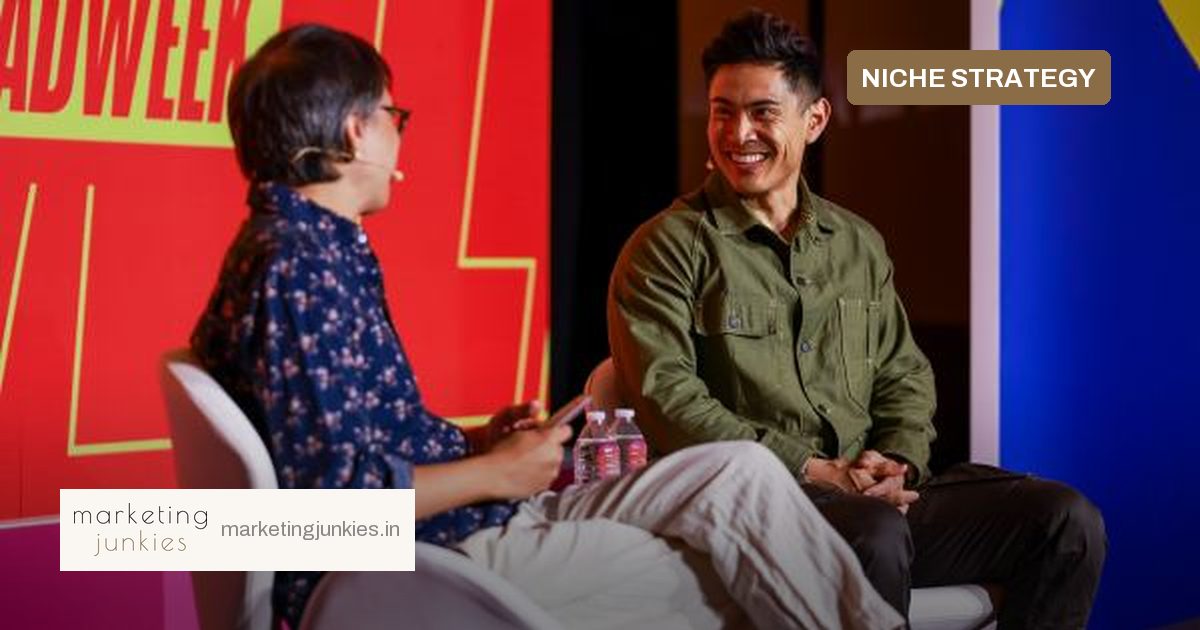
The era of one blockbuster campaign shaping everyone’s culture at once is fading. At Adweek’s Brandweek, Bing Chen, co-founder and CEO of Gold House, argued that the fragmented media landscape has broken monoculture into what he calls a “polyculture” of niche communities.
That shift, Chen said, demands a fundamental change in how brands show up. Instead of trying to react to every cultural moment, marketers should identify their core values and build sustained conversations around those principles.
The customer is no longer just an individual
Chen’s framing is worth sitting with: “The product is the customer,” he said. But it is not only the individual buyer. It is the community of customers a brand can activate through networks and relationships.
In practice, that means finding niche communities that, with time and attention, can evangelize on a brand’s behalf. These groups may be smaller than a national audience, but they are often more influential inside their own orbit.
Give before you receive
The line between authentic participation and parachuting in is thin. Too many brands treat a niche community as inventory—showing up only when there is a launch or a product to push.
Chen was blunt: “You have to give before you receive.” That means contributing useful content, access or recognition before asking for attention, let alone sales.
What superfans actually want
Chen outlined four pillars that superfans crave. These are less campaign tactics and more relationship design:
- Access to the brand
- Exclusive content
- Status designation
- Experiences money cannot buy
Once a brand has identified its primary niche, the next step is to map adjacent communities. For example, a buyer eager for a new Nintendo Switch Zelda game may also be drawn to adjacent entertainment and comic-book fandoms. Adjacent mapping helps brands find natural growth paths without forcing relevance.
The rise of the expert economy
Chen also cautioned against relying on global influencers as the default reach play. Mega creators can be “too dilutive” for niche work. Instead, he pointed to microinfluencers with real expertise in a specific area.
“We’re moving to the expert economy now,” he said. The most credible voices are credentialed leaders inside a niche—not generalists commenting on everything.
What marketers should do next
For marketing teams, the practical shift is smaller but sharper: reduce dependence on broad awareness buys and build a portfolio of community relationships. Start by identifying where your highest-intent customers already gather, then define a genuine value exchange before launching any promotion.
The brands that win in a polyculture will behave less like broadcasters and more like community operators—present, reciprocal and specific.
Source: Adweek