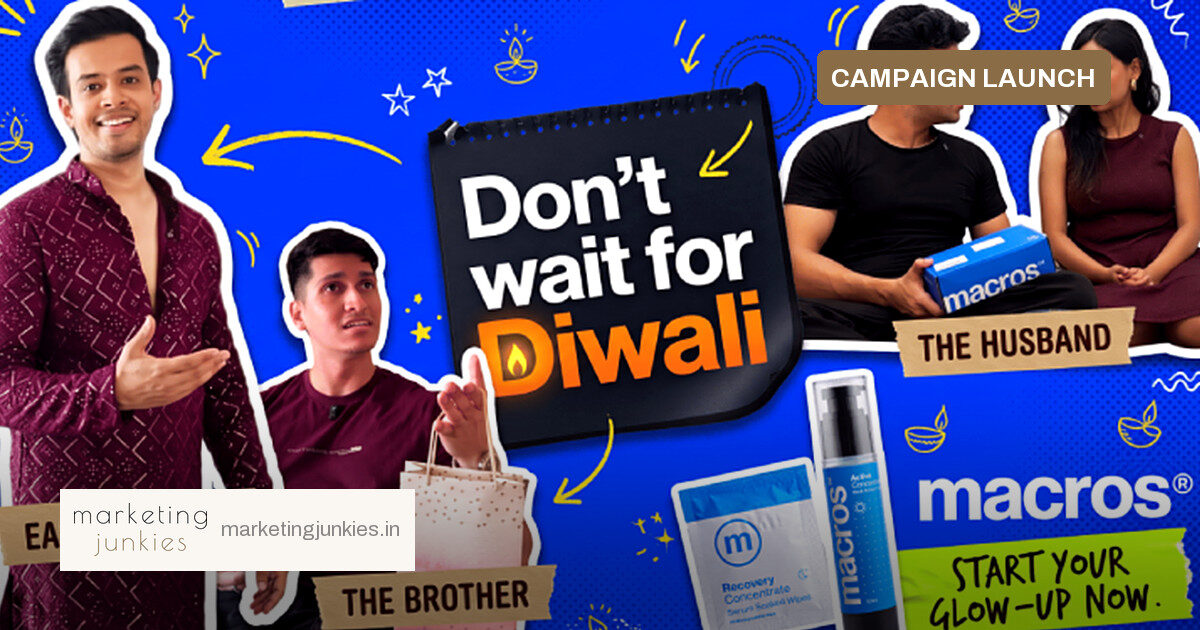
Macros, a men’s skin fitness brand, has launched its first festive Diwali digital campaign, “Don’t Wait for Diwali. Start Your Glow-Up Now.” The ask is behavioural as much as commercial: men should start a simple skincare routine about four weeks before the festival, not days before.
Most festive marketing chases the final shopping window. Macros is doing the opposite—moving the trigger earlier and turning the pre-Diwali period into a runway for a habit.
The last-minute skincare problem
The campaign calls out a familiar pattern: skincare often becomes an occasion-led practice, with routines beginning right before a celebration. That leaves little time for the skin to respond and makes the product feel like a chore.
Macros is asking men to give themselves a 30-day window instead. The digital film and influencer-led engagement bring the message through everyday festive situations: getting ready for a celebration, a sister gifting skincare for Bhai Dooj, and a wife encouraging her husband to pay more attention to his skin.
Two steps, one morning, one night
The routine is deliberately simple and easy to repeat:
- Morning: Active Concentrate Gel—a moisturiser, sunscreen and serum in one step.
- Night: Recovery Concentrate Serum-Soaked Cleansing Wipes.
The habit message is paired with a Buy 1 Get 1 Free festive offer, live exclusively on Macros.live, so the campaign can convert interest immediately.
What the founder is betting on
Founder Vivek Kaimal says skincare “still tends to take a backseat in their daily routines,” even as men become more conscious of how they look and feel. He frames Diwali as an opportunity to make it “a more approachable and integral part of how men show up for themselves.”
The campaign’s real insight is not the discount. It is the timing: a 30-day habit invitation, delivered through familiar family moments, can outlast the festive window that most brands fight over.
What marketers can use
For any product bought mainly before events—grooming, fashion, gifting—the Macros approach offers a simple framework. Shift the call-to-action from “buy before the festival” to “start the routine before the festival.” Then make the routine low-friction and attach it to a relationship people already have, whether a sister, a partner or a friend.
The campaign also shows how a D2C brand can use influencer-led storytelling to normalise a new behaviour instead of relying on a product demo. The pay-off is a longer consideration window and a stronger reason to buy.
Source: MediaNews4U