

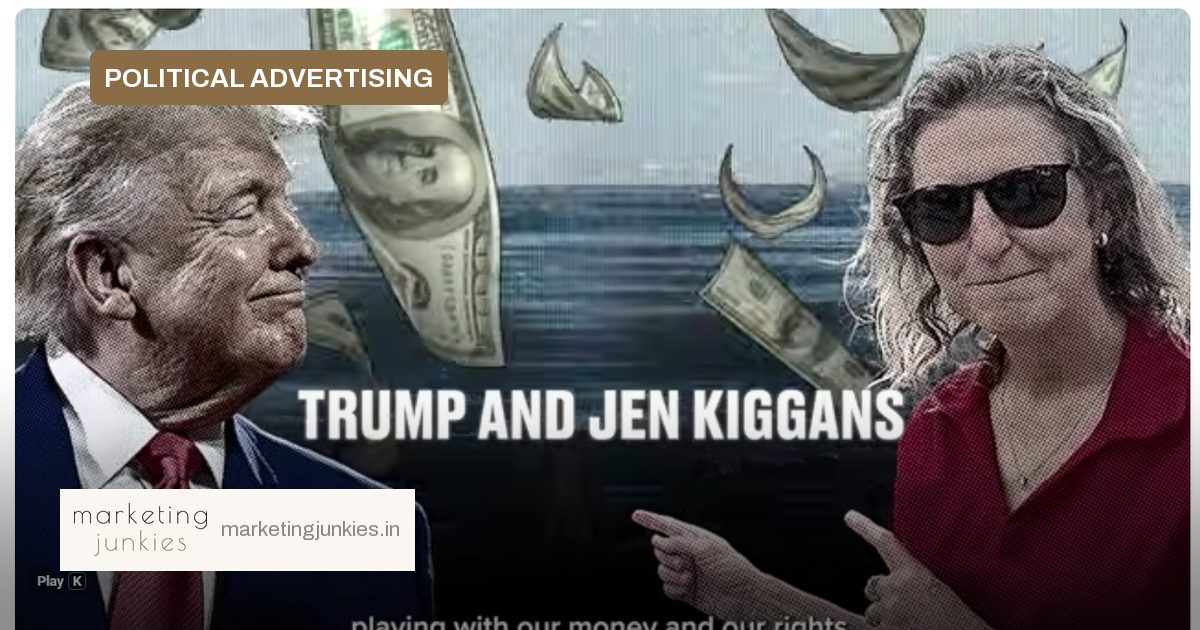
The Democratic Congressional Campaign Committee (DCCC) has begun a six-figure digital advertising effort in Virginia’s 2nd Congressional District, where Black voters make up approximately 25% of the electorate. The first spot, titled “Playing,” is running on YouTube and a range of other streaming platforms.
The ad uses a contrast strategy. It criticizes Jen Kiggans for aligning closely with former President Donald Trump and ties that alignment to higher health care costs and record fuel prices. At the same time, it presents Elaine Luria—a Navy veteran and former congresswoman—as a candidate who has worked to reduce prescription drug costs, raise military pay, and address corruption.
DCCC National Black Engagement Director Tierra Ward described the message in cost-focused terms, saying voters are ready to replace Kiggans and that Virginia families “deserve a leader like Elaine Luria” who will lower costs.
Why the audience targeting stands out
Political buyers have long treated audience segmentation as a core planning step, but this launch shows how sharp that segmentation has become. Instead of a district-wide or state-wide buy, the first ad is directed at a specific voting bloc within a single district. That mirrors how consumer brands increasingly build campaigns around defined customer segments rather than broad demographics.
For marketing professionals, the structure is familiar:
- Audience: Black voters in VA-02, a group large enough to influence the district outcome.
- Channel: YouTube and streaming video, where viewers can be reached programmatically and measured.
- Message: Cost-of-living issues, anchored in health care and fuel prices.
- Creative device: A clear contrast between two public records.
Streaming is becoming the political battleground
The decision to run the first ad on YouTube and other streaming platforms is another reminder that connected TV and digital video now sit at the center of political media plans. For brands, political cycles offer a visible test of what works on streaming: which formats hold attention, how to sequence messages, and when to shift budgets from linear TV to digital video.
This campaign is also a useful example of issue-led creative. Rather than relying only on party labels, the ad tries to connect electoral choice to everyday expenses—health care, gas, and military pay. That is the same jobs-to-be-done logic many product marketers use when they tie a feature to a consumer outcome.
What to watch next
For media planners and marketing students, the rollout is worth following. Digital political campaigns tend to evolve quickly: new ad variants, broader targeting, and additional platform investments often follow an initial launch. The VA-02 buy shows how a focused audience, a clear message, and streaming distribution can come together in one campaign.
It also highlights a broader lesson: when you begin with a specific audience and a specific objection, the media choices and creative direction become easier to defend.
Source: Blue Virginia