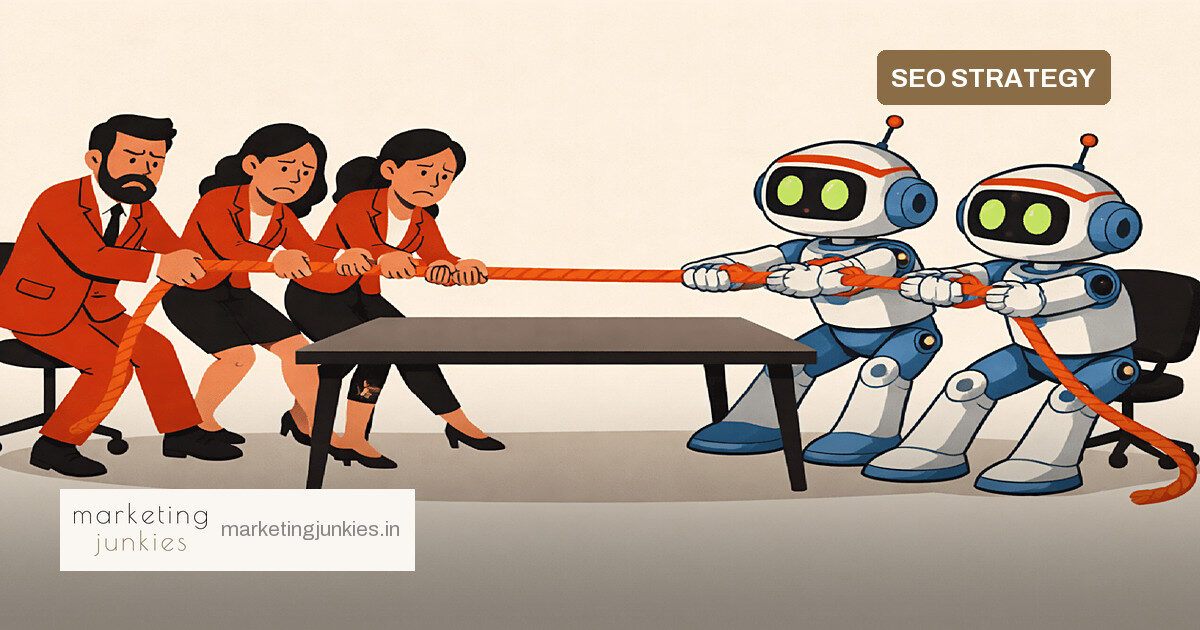
The push to appear in AI-generated search answers is dragging some teams back into an old habit: optimizing for the system instead of the person reading the page. The result is generic content, weaker differentiation and declining trust.
In a new MarTech analysis, a contributor argues that AI search visibility is useful — but not when it replaces original, valuable material. Google continues to warn against scaled content abuse and asks brands to publish content built on real-world experience, expert judgment and a clear point of view.
Human content still wins the top results
Recent research gives a clear warning. Graphite found that 86% of high-ranking Google pages were written by humans, while 14% were AI-generated. AI-generated pages also tended to rank lower than human-authored content.
Consumer trust is the deeper problem. Gartner reports that 65% of consumers believe brands produce too much AI-generated content in their marketing, and 57% say that content has made them less trusting of brand messaging. Separate research from The Harris Poll, presented by Quad, found that 80% of Americans say brands that feel human and imperfect stick with them more than AI-generated perfection.
Why repetition is the real citation killer
Some marketers assume more pages mean more chances to be cited. In practice, AI systems blend common information without citing every source. If a post simply repeats what is already in the top five results, an AI system has little reason to reference it.
That is why originality remains the stronger play. iPullRank research showed that when evidence was removed from SEO scenarios, many AI models still offered a confident diagnosis instead of admitting they lacked enough information. AI can accelerate research, briefs, outlines and transcription, but human judgment still needs to validate the work. Platforms are already signalling this: Anthropic’s usage policy now includes rules against deceptive campaigns and artificial activity.
A four-pillar fix: human-first SEO
The contributor suggests replacing the AI-hack chase with four familiar pillars:
- Experience: Publish firsthand lessons, implementation challenges and observations that AI cannot manufacture.
- Opinion: Take a position and explain why something happened and why it matters.
- Proof: Back claims with original data, customer stories, tests or internal research.
- Identity: Make real experts visible through bylines, bios, research and speaking work.
These pillars show up in practical use cases. One B2B client watched a competitor publish more than 300 AI-generated how-to guides, gain visibility, then see rankings and citations fall until the content was removed. Product pages can stand out by adding customer questions, use cases, testing results, comparisons and real reviews instead of relying on manufacturer descriptions. SaaS teams can replace repetitive “what is” and “how-to” pages with insights from implementation and customer success teams.
The takeaway for marketing teams is simple: before publishing, ask what this content says that no one else can. If AI could generate it from the top five results, it is probably not worth publishing.
Source: MarTech