
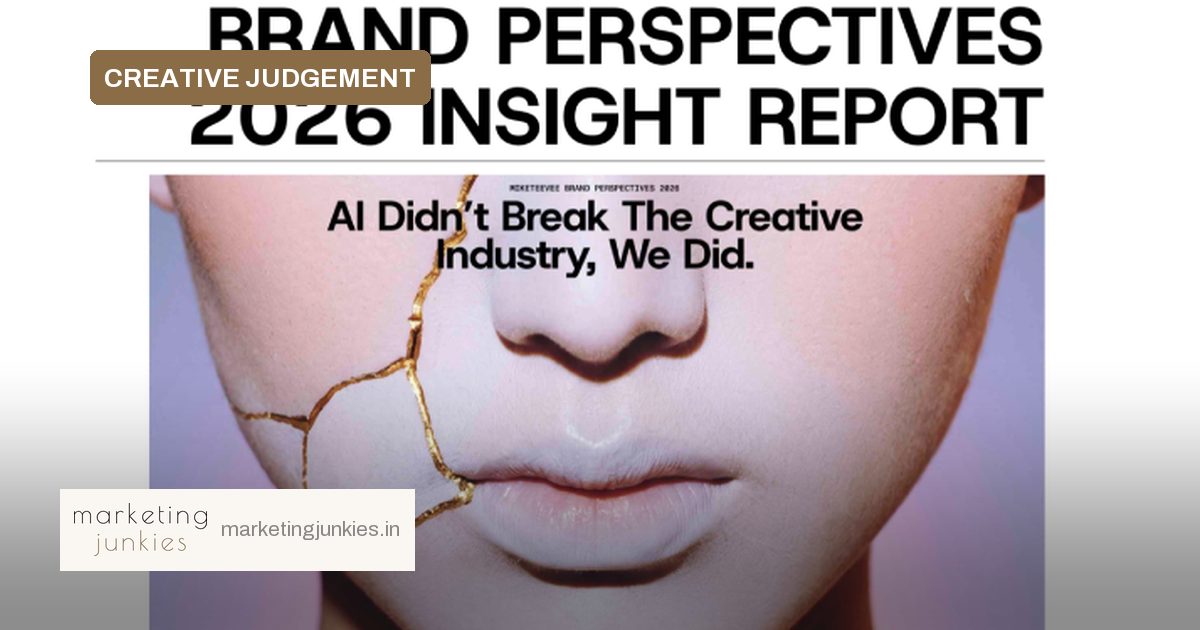
A new report from creative production partner MikeTeevee says AI has not created many of the challenges facing the creative industry—it has exposed and accelerated weaknesses that were already present. Brand Perspectives 2026, released on 19 September 2026, draws on interviews with senior in-house creative and marketing leaders from brands including HelloFresh, Wayfair, DoorDash, Canva, Intuit, O2 and Verizon.
The hidden cost of unlimited options
AI tools have collapsed the time and cost needed to produce creative variations. That sounds like an obvious win, but the report says it creates a new bottleneck: choosing which option is actually right.
“Some teams are suffering from real decision paralysis because they can now create an almost infinite number of variations at almost zero cost and in zero time,” says James Hurst, Executive Creative Director at HelloFresh.
When everything can be generated quickly, the scarce resource becomes judgement, not production capacity.
Sameness is the new risk
Wayfair’s Head of Creative & Promotions Mike Pearson raises a related challenge for brands that lean too heavily on shared tools and similar inputs.
“In a world where everyone can create more with the same tools, and often with the same inputs, how do you stop everything looking the same?”
That sameness risk puts more pressure on selection and brand standards. MikeTeevee founder Ellen Utrecht frames the shift clearly:
“The question for creative teams is no longer how many options they can produce. It’s how they decide which ideas deserve to exist.”
Why this matters for marketing teams
For marketing leaders and students, the report’s implication is practical: using AI to create more assets without a stronger filter can produce volume instead of value. Intuit CMO Thomas Ranese captures the operational tension.
“We’re all saying AI is making us more efficient, but everyone’s working twice as hard as they’ve ever worked.”
The report also flags a talent pipeline risk. Reducing junior creative roles may lower short-term costs, but it can weaken future leadership because entry-level roles are where taste, instinct and judgement are developed through experience.
A simple filter for AI-assisted creative
A practical takeaway is to treat AI as exploration, not final decision-making. Teams can apply a four-step filter:
- Generate broadly: Use AI to explore ideas and variations quickly.
- Filter against the brief: Screen options against brand standards, audience insight and creative criteria.
- Commit with human judgement: Give a named owner the final call.
- Learn from outcomes: Feed performance signals back into the next brief.
MikeTeevee’s conclusion is optimistic but clear: organisations that combine AI with talent development, creative standards and human judgement will gain the most. Speed and automation help, but they are not a substitute for taste.
Source: MediaNews4U