India’s quick commerce category didn’t win with a flashy ad. It won by turning a delivery promise into a complete retail positioning—one so simple that it justified a rebrand, attracted billions in funding, and pushed incumbents to follow.
The promise: 10 to 20 minutes, not hours
Before 2021, scheduled e-grocery delivered in hours or next day. That left a gap for urgent, small-basket needs: a forgotten ingredient, a daily essential, a last-minute purchase. The physical kirana store filled it.
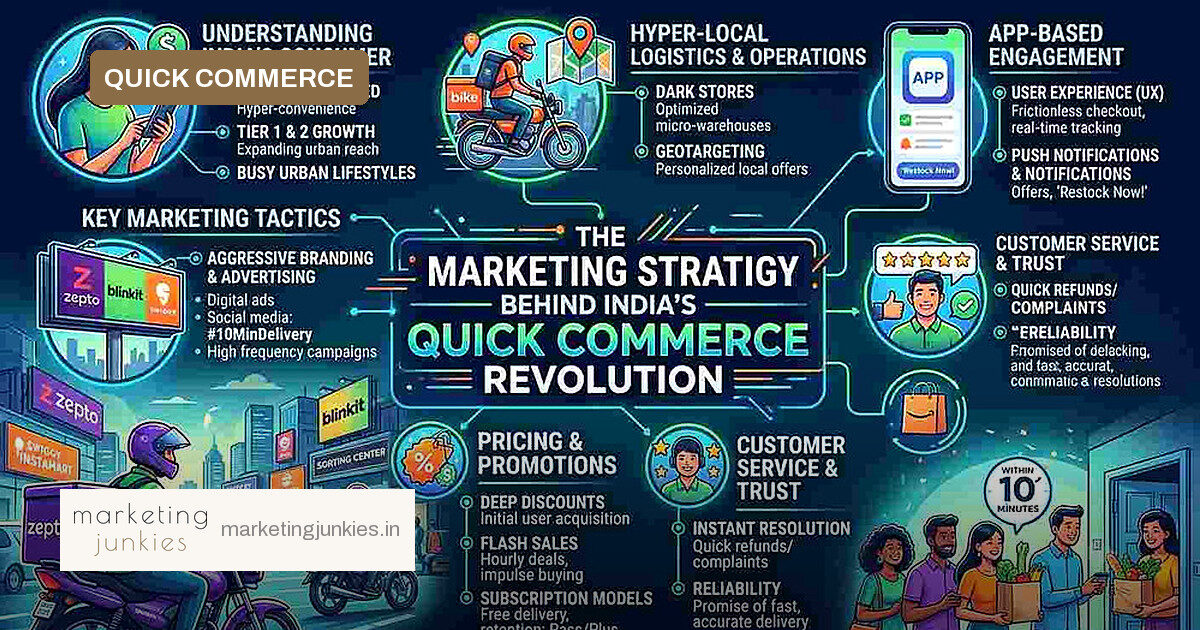
Grofers closed that gap with a rebrand to Blinkit in December 2021 and a 10-minute delivery promise across 12 cities. Zepto was built from inception on company-owned dark stores after its earlier kirana-partnership model failed. BigBasket’s BBnow followed in 2022, combining Tata-owned scale with instant delivery. Swiggy Instamart, launched in August 2020, grew as an in-house growth pillar.
What made it work
- One simple performance claim. Delivery time became the entire value proposition—no elaborate multi-attribute message.
- Milestones as media. Funding rounds, city-count disclosures and IPO narratives produced repeat visibility without heavy ad spend.
- Buy vs build entry. Zomato acquired Blinkit in 2022 in a deal valued at about US$568 million; Swiggy built Instamart in-house.
- Promise elasticity. The 10-minute promise stretched into prepared food with Zepto Cafe and electronics with BBnow’s iPhone deliveries.
The numbers that carried the story
Blinkit reported revenue of ₹5,206 crore (about US$540 million) for FY25 and reached 153 cities by March 2025. Zepto hit unicorn status in August 2023, climbed to a US$7 billion valuation in October 2025, and raised more than US$1.5 billion in total funding. Swiggy’s November 2024 IPO valued the company at about US$11.3 billion, with Instamart cited as a growth driver.
When the growth narrative moderates
Brokerage reports cited in trade press suggest sector-wide quick commerce growth slowed to under 20% sequentially in Q1 FY26. Blinkit and Instamart reported around 25% and 22% sequential growth respectively, while Zepto prioritised reducing cash burn. The lesson: a speed-led brand cannot ignore financial discipline forever.
The marketer’s take
If your category has a recurring, high-frequency need, one clearly communicated performance promise can reposition an entire brand. But the support system—investor communications, expansion disclosures, category extension news—does a lot of the brand-building. As the quick commerce market heads toward an estimated ₹1.08 lakh crore by 2026, the challenge shifts from selling speed to proving sustainability.
Source: MarkHub24