
Truth and Social Publication has found itself at the center of a notable book-to-screen story. The spiritual memoir Divine Detour That Changes My Life by Dr. Vishal Chaturvedi served as the inspiration for Hanuman Ansh, a recently released film that has received a strong response from audiences.
An unplanned stop with lasting audience impact
The memoir begins with an incident in 2006. While travelling towards Nainital, Dr. Chaturvedi’s car stopped near an unfamiliar temple. He later learned the site was Kainchi Dham, the ashram linked to Neem Karoli Baba. The moment became the foundation for the author’s spiritual practice and his emphasis on Hanuman bhakti.
The book is not framed as a conventional biography of Neem Karoli Baba. Instead, it is a personal exploration of Maharajji’s teachings and the author’s own experiences of devotion, seva and transformation. It also references Western seekers such as Ram Dass and Krishna Das, connecting Kainchi Dham to a wider global spiritual audience.
How a memoir turned into a wider media story
The journey from book to film shows a clear content pipeline:
- A personal spiritual experience becomes a memoir.
- The memoir helps build a community of more than 12,000 Hanuman devotees.
- The community and devotional theme create a ready audience for a film adaptation.
- The film brings the book’s themes back into mainstream visibility.
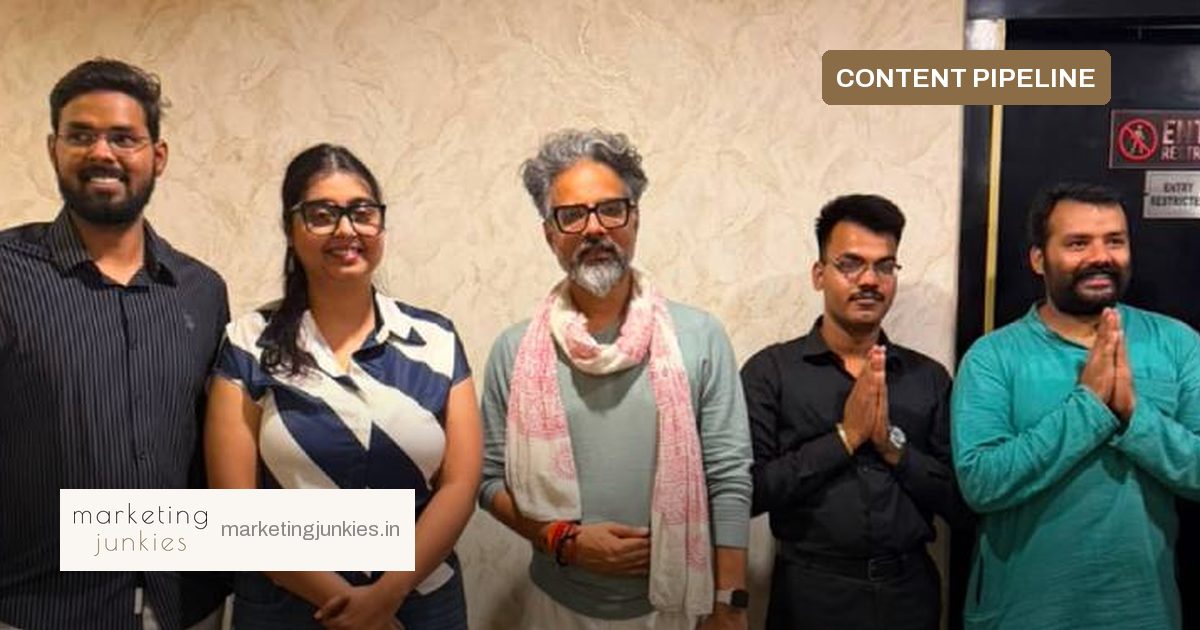
TS Publication and co-founder Tusharika Sharma supported the book and amplified its message through strategic communication and outreach. That pushed the story beyond a niche readership.
“Divine Detour is a powerful reminder that some of life’s most unexpected moments can become the turning points that define our journey,” Sharma said.
The book also highlights the teaching “love everyone, serve everyone,” a concept that has kept the narrative accessible across generations. That accessibility may be one reason the film has connected beyond the original readership.
What this signals for content marketers
For media and marketing teams, the bigger lesson is format expansion. A story with a clear emotional core, an active community and cultural relevance can move from publishing to cinema without losing its identity. The 12,000-strong devotee community gave Hanuman Ansh an organic audience base and a clear cultural context.
This does not suggest brands should chase every spiritual or faith-based trend. It suggests they should identify owned stories that already have community trust. When a narrative has both emotional capital and multiple format possibilities, it is easier to scale. For publishers and media houses, the sequence reinforces a simple framework: own a compelling story, build a community around it, then move into higher-reach formats once demand is visible.
The central message of the memoir is also a useful media planning principle: an unexpected turn is not always an obstacle. Sometimes it becomes the direction that defines the next phase.
Source: MediaNews4U