
As AI agents become more common in paid search, the question is shifting from “can they help?” to “how do we let them touch live budgets without catastrophic mistakes?” An Optmyzr article published by MarTech argues that the better question is not whether you trust AI, but what controls you build around it.
For PPC teams, the stakes are real: an agent that confidently misreads a partial dataset can pause campaigns, shift budgets, or add negative keywords based on a fraction of the account.
Three questions that matter more than trust
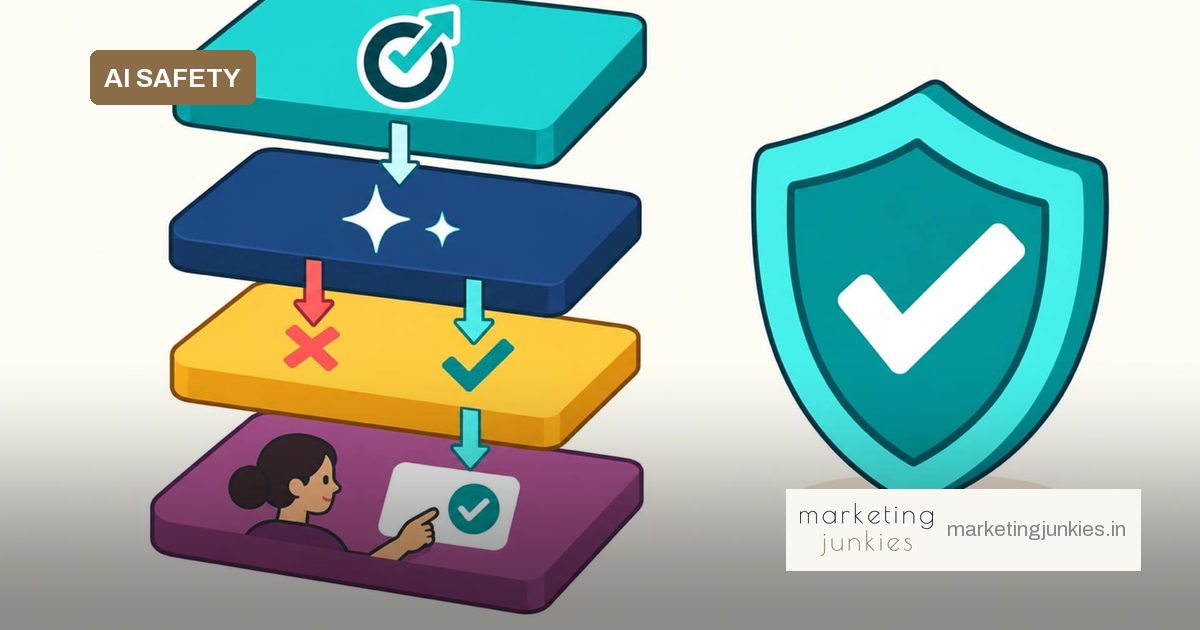
Optmyzr frames AI safety around three control questions: what can the agent see, what is it structurally prevented from doing, and who has to approve changes before they go live. Most teams answer the first reasonably well, but the second and third often remain vague.
- What can it see? A thin data layer invites confident guesses.
- What is it blocked from doing? Limits should live on the account, not in a prompt.
- Who approves? Every write should pass through a human review queue.
Layer 1: Ground the agent in complete data
The first safeguard is grounding. If an agent only sees a curated slice of Google Ads data, it will still answer questions fluently—and it will invent missing context without a tonal shift. Optmyzr’s guidance is to connect agents to the full query layer, GA4 alongside ad data, complete change history, consolidated negative keywords, auction insights, vertical benchmarks, multiple ad platforms, and a stored account profile.
Each gap in what the agent can see becomes a place where it fills in confidently wrong answers, especially on competitive questions and cross-platform budget decisions. Optmyzr’s MCP, for example, packages these sources and installs directly from the Claude directory.
Layer 2: Gate changes with account-level policies
The second layer moves beyond prompts. Account policies define what is never allowed—such as no bid increase above 10% in a single move, no budget shift beyond a threshold, or no competitor brand terms added. Because these rules live on the account rather than in the AI’s instructions, they apply to every actor: agents, scripts, juniors, and even senior marketers rushing through a change on a Friday night.
If someone needs to override a policy, that override should be deliberate and recorded, not an unnoticed bypass.
Layer 3: Keep a human in the loop for every write
The final layer changes the write path. Instead of allowing an agent to act directly, every proposed change becomes a draft request. Policies evaluate each row, a human reviews the exact change—such as a target ROAS moving from 200% to 220%—and only then does anything go live.
This creates an audit trail that goes beyond change history. Teams can later see what was proposed, why, what data supported it, and who approved it. For agencies, that record can become a credibility advantage when clients ask about past account changes.
Where to start
The layers compound, but they do not all need to be live on day one. Optmyzr suggests starting with grounding because it improves answer quality immediately, then adding policy controls if an agent can already make changes, and finally building the review queue so the system becomes something a team actually uses. The goal is not underpowered automation; it is a predictable setup where the findings can be exciting while the guardrails stay boring.
Source: MarTech