
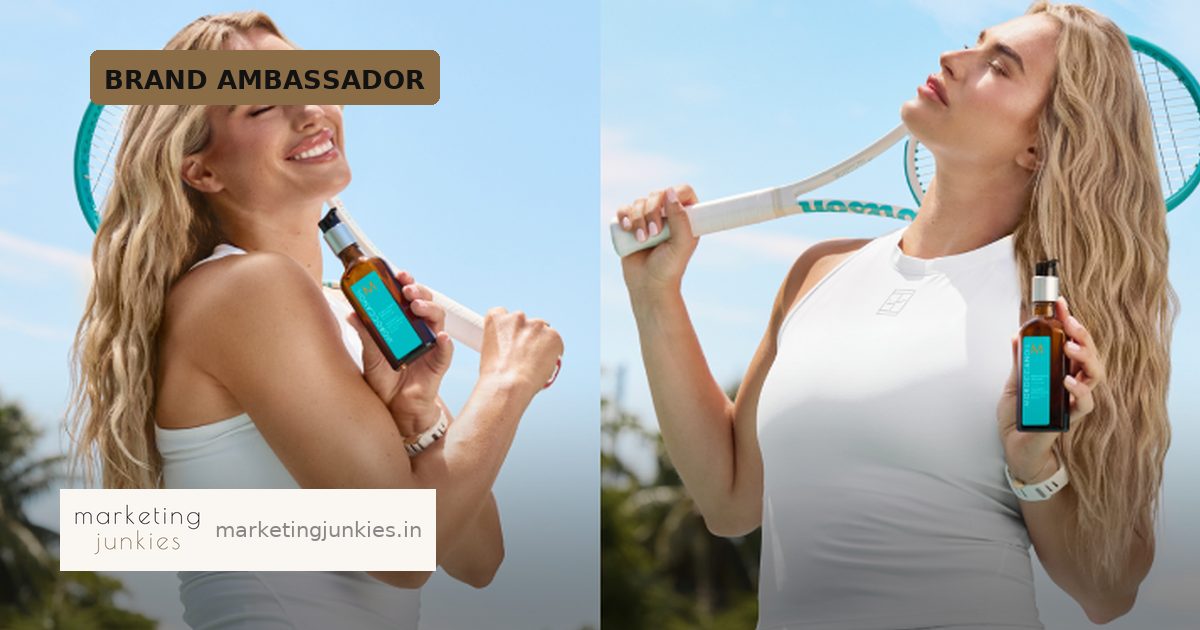
Haircare brand Moroccanoil has appointed professional tennis champion Aryna Sabalenka as its Global Brand Ambassador, a move that pushes the brand further into the space where beauty, sport and wellness overlap.
Sabalenka will front Moroccanoil’s global campaigns and appear in exclusive content built around the link between athletic performance and personal style. The partnership will also run across brand experiences and major tennis events.
Why tennis, and why now
This is not Moroccanoil’s first serve in the sport. The brand has previously been the Official Haircare Sponsor of the Miami Open, using the tournament as a platform to connect self-care with confidence and performance. Signing one of women’s tennis’s most visible players is the logical escalation: from event sponsorship to a named human face.
Marina Kirschner, Senior Vice President of Global Marketing at Moroccanoil, described the tie-up as “the perfect next match” as the brand’s relationship with tennis evolved, pointing to Sabalenka’s ability to connect with people alongside her athletic record.
Sabalenka, for her part, framed the deal around authenticity, saying confidence “changes everything” whether she is walking onto court in front of thousands of fans or getting ready for an event, and that she has used the brand’s products for years.
The sport-beauty crossover keeps growing
Athlete endorsements have long been the preserve of sportswear, energy drinks and watches. Beauty and personal care brands have been steadily muscling in, for a few practical reasons:
- Owned audiences. Top players carry large, engaged, global social followings that no single media buy replicates.
- Credible product context. Hair, skin and body care have an obvious functional story in a sweat-heavy, high-heat, high-camera-exposure environment.
- Year-round calendar. Tennis runs across continents almost all year, giving brands a rolling content and activation calendar rather than one seasonal spike.
- Female-led fandom. Women’s tennis remains one of the few global sports properties with genuine parity in star power and viewership appeal.
- Beyond-beauty positioning. Confidence, individuality and self-expression are easier to dramatise through an athlete than through a studio shoot.
What Indian marketers can take from it
India’s own sport-meets-personal-care playbook is expanding fast, with cricket and now kabaddi, football and emerging Olympic sports drawing grooming, deodorant and haircare money. The Moroccanoil-Sabalenka structure offers a useful template for how to build that beyond a logo on a boundary rope.
Three things worth noting:
1. Sponsor the property first, then the person. Moroccanoil earned category credibility in tennis through the Miami Open before attaching itself to a single athlete. That sequencing lowers the risk of the ambassador looking bolted on.
2. Prior product usage is the cheapest authenticity you can buy. Sabalenka’s claim that she has used the products for years is the kind of detail that survives audience scrutiny. Brands chasing celebrity reach often skip this check, then spend media budget papering over the mismatch.
3. Contract for content, not just appearances. The deal explicitly includes campaigns, immersive experiences and event presence. An ambassador who only shows up for a shoot leaves a brand with three assets a year; one embedded in a content pipeline feeds always-on social.
The measurement question
For marketers planning similar deals, the honest test is not follower count. It is whether the association shifts brand consideration in the categories and markets you actually sell in, and whether earned coverage plus organic reach materially reduces your cost per reach point versus paid media alone. Set that baseline before the signing announcement, not after.
For Moroccanoil, the ambition is broader than product demos: the brand says it wants to promote a vision of beauty built on confidence and self-expression. Whether that lands will depend less on the signing and more on what the two ship over the next 12 months.
Source: MediaNews4U