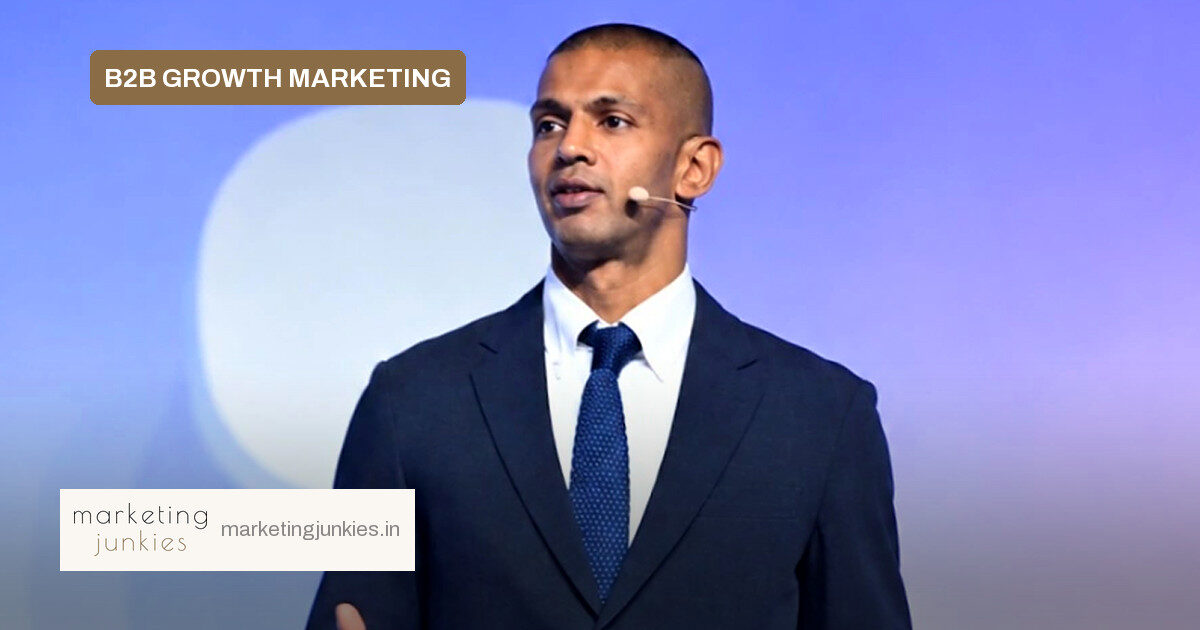
IBM has put a partner-led demand specialist in charge of its growth marketing for India South Asia. Santosh Kumar has taken over as head of growth marketing for the region, a move the company and its new leader are framing as a bet on India’s enterprise digital transformation.
Kumar’s appointment matters because it connects the dots between partner ecosystems and revenue pipeline. He joins from the APAC ecosystem marketing role, where he led a geographically spread team of field marketers working with resellers and independent software vendors. That brief covered partner recruitment and onboarding, demand generation and pipeline velocity, and it produced a business pipeline worth more than $1 billion.
A resume built on full-funnel demand
Kumar’s career runs through the modern B2B marketing stack. He started at Google in Hyderabad in 2007 as a marketing representative, joined IBM in 2010 as a campaign planner, and later led teams to build demand, leads and sales pipeline for IBM solutions.
At Algonomy, he set up a centralised demand generation function focusing on ROI through solution differentiation and account-based marketing. As CMO of AXISCADES, he worked with the CEO and board to align marketing with sales, relaunch the brand globally and bring inside sales under marketing to speed conversions.
Back at IBM in December 2020, he led transformation across people, process and technology stack, and as country demand strategy leader for India South Asia he helped drive 148 per cent year-on-year growth in the digital route.
The India mandate
Kumar says the timing could not be better because enterprises across India South Asia are accelerating their adoption of AI, hybrid cloud and automation. IBM’s portfolio is built around helping them do that at scale and with trust, and Kumar’s brief is to demonstrate that value through whichever route, medium or engagement clients prefer. That means digital demand generation, partner-led routes and field marketing all have to work together.
Why this matters for marketers
India’s enterprise buyers are moving quickly on AI, hybrid cloud and automation. IBM’s pitch is that it can help them adopt these technologies at scale and with trust. Putting Kumar in this seat signals that partner ecosystems and demand generation are treated as growth engines, not support functions.
The playbook here is clear:
- Treat partners and distributors as a demand channel, not just a route to market.
- Build account-based programmes around solution differentiation, not generic campaigns.
- Measure marketing against pipeline and funnel conversion, not just reach or leads.
Kumar’s own message to customers, partners and fellow IBMers is simple: “let’s connect.” That outward, outside-in posture is the same one he developed during his APAC years, when he learned to see IBM through the eyes of clients and partners.
The outlook for India South Asia
The region is a priority for global B2B brands because enterprise modernisation is accelerating. A growth marketing leader with Kumar’s pipeline background is likely to focus on sales alignment, partner recruitment and digital route conversion. For marketing professionals watching international tech firms, this move reinforces the value of full-funnel ownership and partner-led demand in complex B2B markets.
Source: Indian Television Dot Com