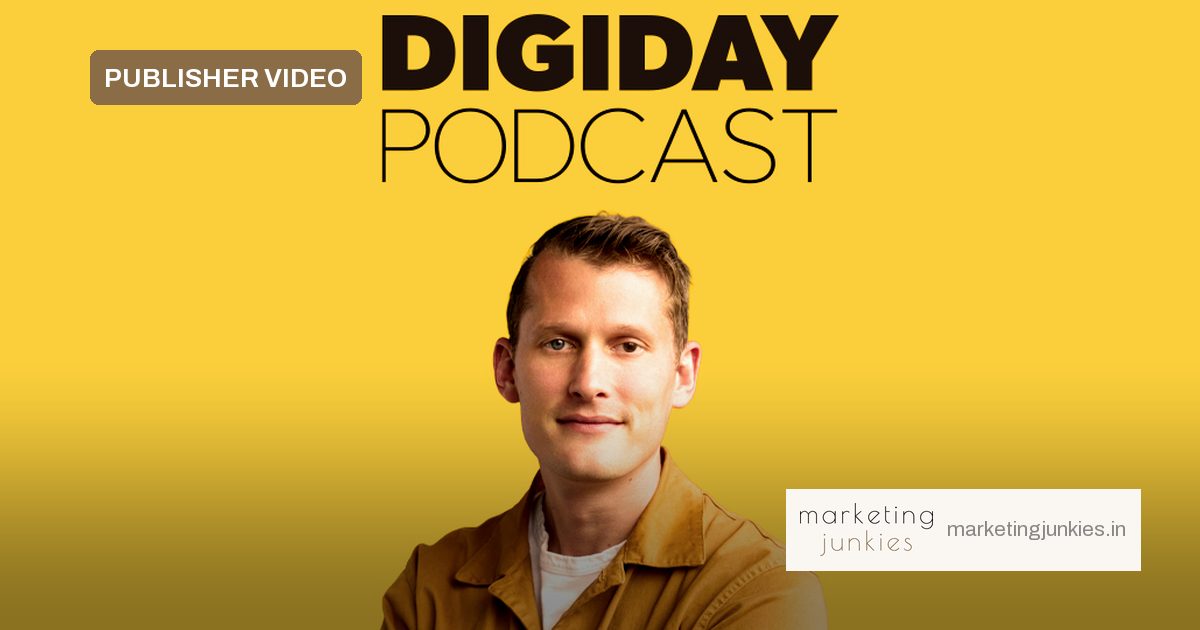
When Adam Banicki became Semafor’s head of video this summer, the title wasn’t new—but the job was. Rather than sitting inside the newsroom alone, Banicki now works across editorial and commercial teams, reporting to co-founder and editor-in-chief Ben Smith with a dotted line to chief commercial officer Rachel Oppenheim.
The shift, discussed during a live Digiday Podcast recording at the Digiday Publishing Summit on Sept. 16, puts video at the centre of Semafor’s effort to turn newsroom programming into revenue without letting sales dictate coverage.
A bridge between newsroom and revenue
Banicki describes the role as a two-way conduit. He stays in daily contact with Smith about newsroom activity, then brings programming ideas to the commercial side and asks how they can be packaged and monetised.
“What can we do with this? How do we build out a revenue model?”
In his first three months, Banicki concentrated on the commercial half: shaping go-to-market decks, thinking through pricing strategy and joining kickoff calls to help close video-related deals. He said the next phase will tilt toward production.
Four shows and a daily test bed
Semafor will launch a technology-focused show hosted by tech editor Reed Albergotti in October, bringing its portfolio to four shows. Banicki said a daily news show is planned “very soon.”
The daily format is expected to lean on reporter-to-reporter conversations, with room for outside guests such as a CEO when news breaks. The goal is to get more Semafor reporters on camera and use the daily show as a low-risk place to test ideas before scaling them into bigger formats.
What marketers can take away
- Video leadership is becoming a broader commercial role. Banicki’s remit signals that publishers want video executives who understand packaging, pricing and sales—not just production.
- Editorial drives ideas; commercial packages them. The newsroom decides what to cover, while the sales team works out how to monetise it, protecting credibility while creating sponsorship opportunities.
- Daily output is an experimentation engine. A recurring show lets teams test topics, formats and on-camera talent quickly and cheaply.
- Social video doesn’t have to be heavy. If a story is big and visually suited, Semafor can pull a reporter into the studio for a 15-20 minute social video after the morning standup.
The bigger picture
For publishers and brand-side content teams, Semafor’s approach is a useful framework: keep creative authority with the editorial side, then bring commercial stakeholders in early enough to shape sponsorship, distribution and measurement. That reduces friction and creates a clearer path from story idea to revenue.
Banicki’s move from Fortune, where he says he informally built a similar bridge before becoming general manager of video, suggests the hybrid role is becoming a formal career track in media—not a one-off experiment.
Source: Digiday