Indian hospitality is learning a new festive grammar. True Palate Hospitality, the parent of One8 Commune, Neuma and Pincode, closed FY26 at approximately ₹150 crore in revenue, up 19% year-on-year, and it is using the festive season to prove that premium dining wins on occasions, not price cuts.
The number behind the shift
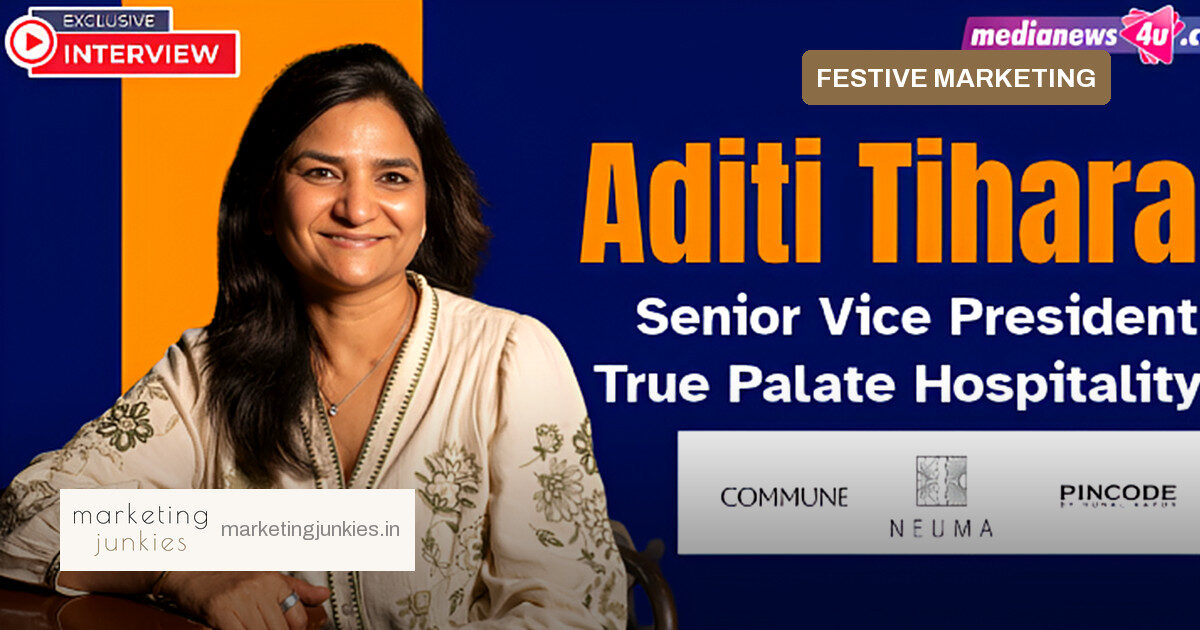
Aditi Tihara, Senior Vice President at True Palate, told MediaNews4U that the company has grown to 22 outlets across Delhi-NCR, Mumbai, Hyderabad, Kolkata, Goa, Jaipur, Indore, Pune, Ludhiana, Mohali and Dubai. Revenue grew with a 47% CAGR over FY22-FY26. The company is targeting ₹180 crore in FY27 and ₹225 crore in FY28.
Rather than adding restaurants for scale, True Palate says it builds brands around changing consumer expectations: design, music, culture, community and experience.
Festive marketing without discounting
The festive plan is built around live IP and city-specific moments. Commune Circus, curated by Karan Wahi, travels to Gurgaon on September 26, Hyderabad on October 10, Mumbai on October 30, and Neuma in Colaba on November 14. One8 Commune is positioned for group celebrations and music, Neuma for design-led premium occasions, and Pincode for contemporary Indian dining.
Tihara frames festive dining as an occasion-led purchase rather than a meal-led purchase. Guests plan earlier, especially for groups, and choose venue, ambience, entertainment and food together.
What marketers can borrow
- Compete on value, not price. Packages combine food, beverage and entertainment, protecting brand positioning.
- Programme the calendar, not just peak dates. Events run across the season with different reasons to visit.
- Localise the experience. Kolkata’s Durga Puja gets a Puja-inspired menu; other cities get programming rooted in local culture.
- Measure behaviour, not reach. Track reservations, footfall, average spend, repeat visits and organic conversation.
Occasion-led demand, not discount-led
The underlying framework is a shift in buying logic. A discount-led approach asks what the lowest price is; an occasion-led approach asks what a celebration needs. It bundles venue, menu, entertainment and atmosphere into one decision, which is why customers plan earlier and spend when the value is clear.
That shows in market selection too. Delhi-NCR and Mumbai bring group and corporate celebrations; Jaipur, Indore, Mohali and Ludhiana bring rising premium demand closer to home. Each market gets intensity based on dining occasions rather than population alone.
Creators and UGC as the invitation
Social content is meant to show what happens around the table: food, people, music, design and events. Creators from food, lifestyle, travel, fashion and entertainment are chosen for brand fit, not reach, and success is judged by reservations, sentiment and repeat visits. The idea is to make a guest want to be there.
Why this matters
For hospitality and consumer marketers, this is a pricing and content reset. Discounts may buy trial, but they train guests to wait for the sale. An occasion-led play packages the experience, lets creators and UGC carry proof, and turns the festive calendar into a series of reasons to step out.
Source: MediaNews4U