
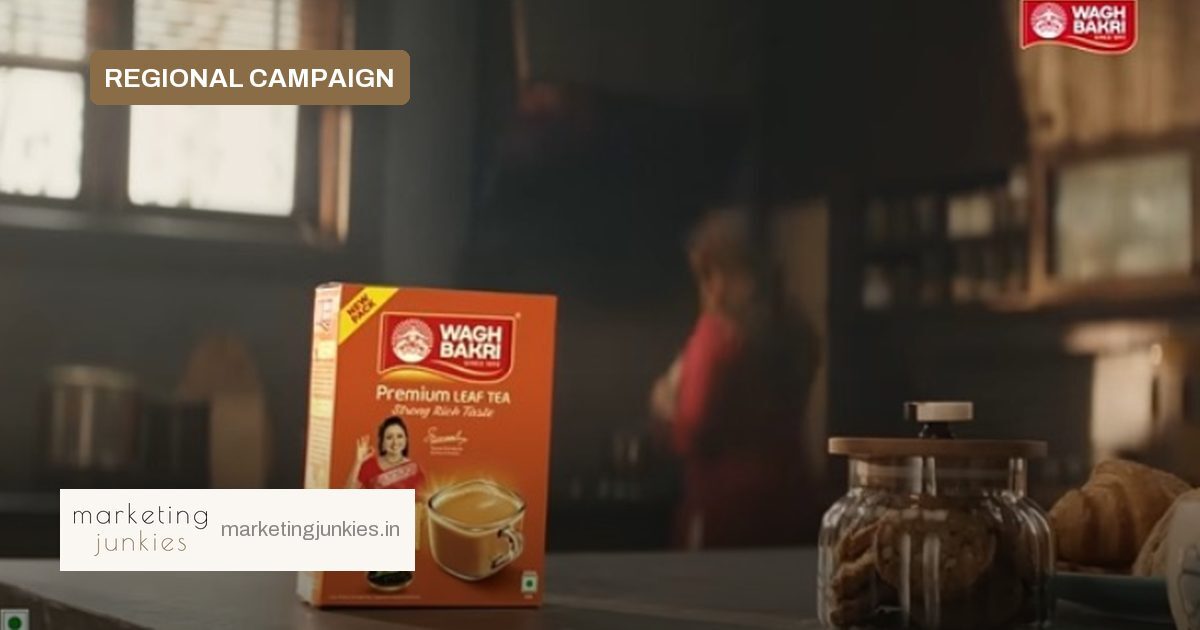
Wagh Bakri Tea Group has launched a new Karnataka-specific campaign for Wagh Bakri Premium Leaf, fronted by Kannada anchor and actor Anushree. Instead of taking a national television script and dubbing it, the campaign is built around two words that already carry meaning in the state: Kadak and Swadbhari.
From local slang to brand idea
In Karnataka, Kadak is widely used beyond tea. People describe cinema, style, food and personalities as Kadak when they are strong, impressive and full of character. Wagh Bakri paired that existing cultural meaning with Swadbhari, which brings warmth, richness and flavour into the narrative.
The result is a brand thought that positions Wagh Bakri Premium Leaf as a combination of bold Kadak taste and generous Swadbhari flavour. The campaign line, aimed at Kannadigas, frames the tea as the Kadak choice for people with Kadak taste.
Why the local casting choice matters
Anushree’s energetic and expressive screen persona is central to the communication. The brand is using her not just as a recognisable face but as someone whose personality matches the cultural code the campaign wants to borrow.
“There is something very ‘us’ about a Kadak, Swadbhari cup of tea,” Anushree said, explaining why the association felt familiar. Gaurav Parashar, Chief Marketing Officer at Wagh Bakri Tea Group, said that “Kadak and Swadbhari became the heart of that idea,” bringing together a cultural nuance and the taste experience of Premium Leaf.
The larger Karnataka play
Paras Desai, Executive Director of Wagh Bakri Tea Group, framed the campaign as part of a longer relationship-building effort. The brand entered Karnataka a few years ago and sees growth as winning over one consumer and one household at a time. The campaign is meant to make Premium Leaf feel more familiar, relevant and connected to the state.
Produced by FatFree Production, the format keeps Anushree at the centre of the communication while the product remains the story.
What marketers can reuse
The campaign is a useful example of regional localisation that starts with local meaning rather than translation. Marketers planning a state-specific push can follow a similar sequence:
- Find a word locals already use to praise things they admire.
- Connect a product benefit to the emotion that word already carries.
- Cast a talent whose public persona embodies that same cultural code.
- Keep the core brand and taste story central while localising the wrapper.
The point is not to force a brand word into a new market, but to borrow a word the market already owns and make the brand feel native.
Source: MediaNews4U