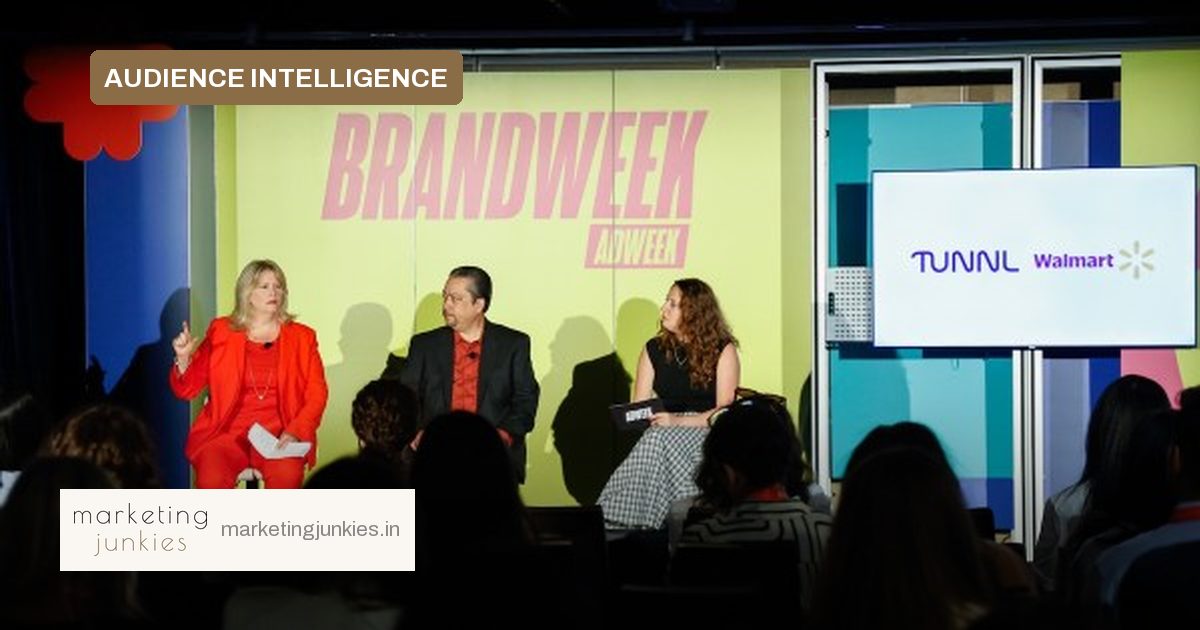
At Brandweek 2026, a fireside chat co-hosted with audience intelligence firm Tunnl explored a question that is becoming central for legacy retailers: how do you turn brand affinity into measurable business outcomes? The conversation, led by ADWEEK executive editor Alison Weissbrot, brought together Sara Fagen, co-founder and CEO of Tunnl, and Aaron Rios, group director of public and government affairs for Walmart.
Audience intelligence starts with local listening
Fagen described the current moment as a period of great disruption where trust is hard to come by. For a brand with Walmart’s footprint, that means local relevance cannot be an afterthought. Rios said a message in Arkansas is very different from one in the Northeast or the West. Those differences are often shaped by practical community needs, such as limited healthcare resources or exposure to natural disasters where Walmart’s pharmaceutical and emergency-response resources become part of the story.
“Even though they may know us as a consumer, it doesn’t mean they fully know all of the things that we’re doing,” Rios explained.
Turning goodwill into consistent customers
Walmart has used Texas as a test market because its population has shifted since the pandemic. New arrivals may bring very different perceptions of the brand, creating an opportunity to educate them and encourage more consistent shopping behavior. The goal is not to change the brand, but to close the gap between what communities already experience and what they know about Walmart’s role.
Fagen made the case for building goodwill before it is needed. “You want to build a bank of goodwill because sometimes things go wrong,” she said. “You want the community, particularly where you’re operating, to understand that this is a partner.”
What marketing teams can take away
The playbook is practical: audience research identifies key groups, surveys reveal perception gaps, and localized outreach puts proof of community partnership in front of the right stakeholders.
- Segment by local context: geography, community needs and media habits matter more than broad demographics.
- Close the perception gap: customers may know your logo without knowing your community impact.
- Build goodwill early: don’t wait for a recall, store controversy or crisis to start communicating.
- Measure affinity shifts: pair sentiment tracking with purchase or loyalty data to show business impact.
Fagen said the ultimate outcome is being top of mind “not just because the price is low, or it’s close to my house, but because that’s a partner in our community doing really good and positive work.” That is a useful test for any marketing leader evaluating whether brand-building efforts are designed to drive both trust and commercial value.
Source: Adweek