
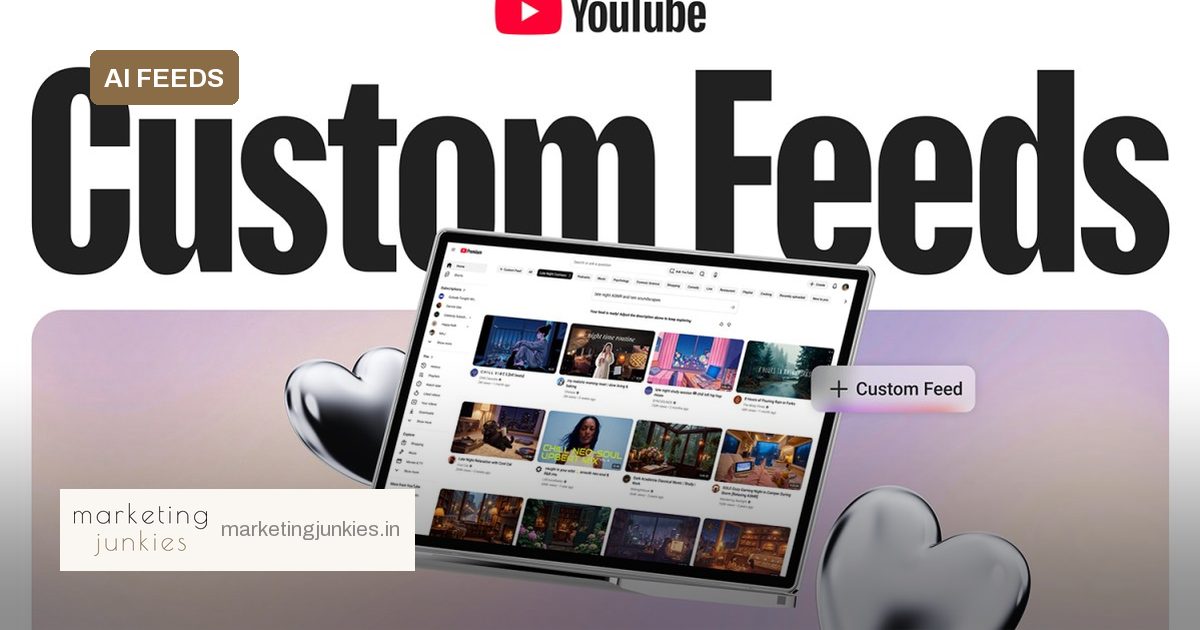
YouTube is giving viewers a new way to shape their own recommendations. At the Made On YouTube event on Wednesday, the company announced custom feeds, a Google Gemini-powered feature that lets people describe the video feed they want and pin it to the top of the YouTube home page.
The feature will roll out across YouTube on web and mobile starting next month, with support for creating multiple feeds. It will sit alongside, rather than replace, the main recommendations feed.
How custom feeds work
To build a feed, users type a prompt describing the kind of content they want. YouTube’s examples include a feed of video podcasts timed for a 30-minute train commute, or a feed of “relaxing commentary videos to unwind with.” Because the feature runs on Google’s Gemini AI model, prompts can be detailed: viewers can specify what to feature, what to exclude, what to prioritise, and what kind of tone or format they want.
Each generated feed appears in its own tab on the home page, so a viewer can move between a broad recommendations feed and a purpose-built feed without extra steps.
The broader shift to user-built feeds
YouTube is joining a movement that has been building across social platforms. Bluesky popularised custom feed-building as a differentiator from X and expanded it this year with Attie, an AI tool for easier feed creation. Meta’s Threads, Instagram, X and Spotify have also introduced feed-building features, many of them AI-powered.
YouTube’s framing is about scale and control. Emily Moxley, VP of product management for Viewer AI, noted that “there’s over 20 billion videos in the YouTube corpus,” making it hard to navigate by topic alone. Custom feeds let viewers start from intent—the job they want the content to do—rather than waiting for the main algorithm to infer it.
Why this matters for marketing teams
For brands, creators and agencies, custom feeds introduce a second discovery surface. A viewer could ask for “background-friendly explainers,” “short daily briefings” or “deep dives for a side project.” That puts more weight on format, length, tone and clear packaging than on topic keywords alone.
A simple framework is to treat each video as a job-to-be-done:
- Commute content: fits a fixed duration and can be consumed hands-free or with partial attention.
- Wind-down content: matches a mood or pace and needs a low-effort title and thumbnail.
- Briefing content: promises a quick, structured update and delivers on that in the first 30 seconds.
Marketers can then audit current content by job, tighten packaging cues, and watch whether YouTube later gives creators visibility into how videos appear inside user-built feeds.
What to watch next
The immediate rollout is consumer-facing, but it signals a direction for discovery and potentially for ad targeting. User-stated intent could become a clearer signal than passive engagement. The next milestones to watch are creator analytics for custom feeds, available prompt templates, and whether advertisers can reach viewers inside these self-described interest spaces.
Source: TechCrunch