
Zoom is following its biggest-ever global campaign with a sequel that again leans on Saturday Night Live talent—but this time the joke is on a boss who wants the product to fail.
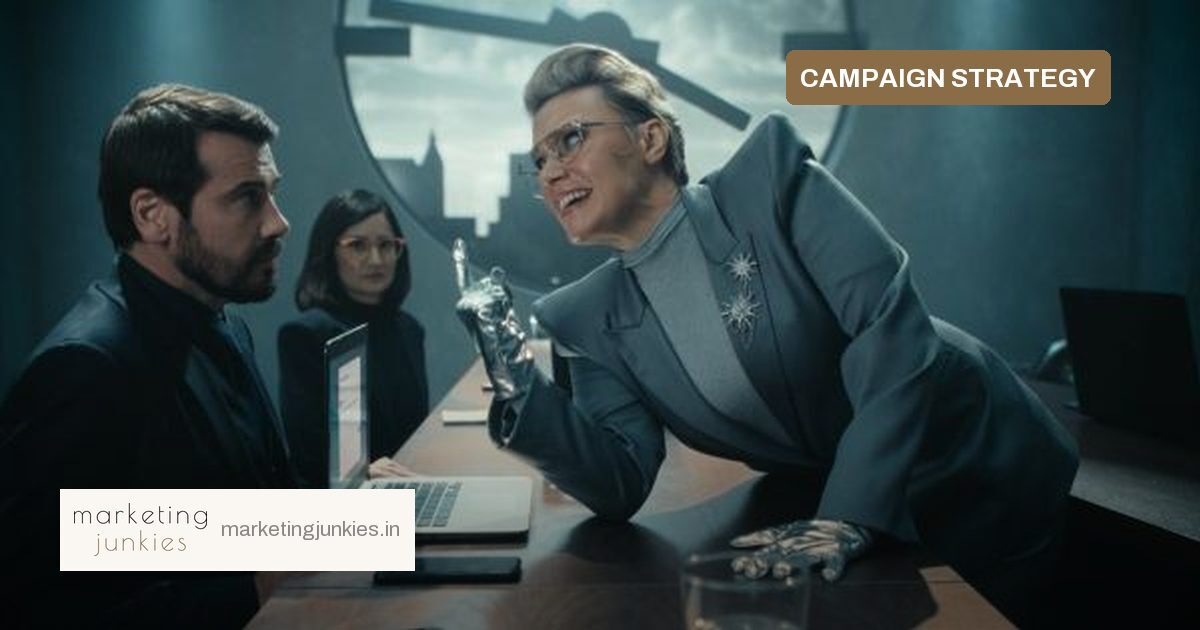
The new film, “Zoom Got it Done,” continues the story started in December by “I Use Zoom,” which cast Bowen Yang as a tyrannical IT boss. The sequel gives Kate McKinnon the villain role: a flamboyant, shiny-suited “evil CEO” who demands that her team find a way to destroy Zoom.
Every scheme backfires. Each attempt to undermine the platform becomes an opportunity for Zoom to show what it can do beyond video calls, including AI agents and automated note-taking. McKinnon’s character eventually moves from skeptic to advocate—the emotional arc Zoom’s team hopes audiences will follow.
The campaign will run through the NFL season on TV, CTV, out-of-home, digital and social channels.
Why the creative reset matters
When “Zoom Ahead” launched in December, it marked the first campaign from chief marketing officer Kim Storin and a deliberate attempt to change how buyers see the brand. Her dual brief: pitch Zoom as a one-stop AI-enterprise platform rather than a meetings app, and speak directly to the more than 300 million people who use Zoom daily—from freelancers to multinational corporations.
Storin brought in SNL talent and Colin Jost’s No Notes Productions to add lightness and separate Zoom from typical B2B advertising. That choice appears to be resonating. After the first ad, in which workers walked away from Yang’s character one by one, a customer wrote to Storin with a simple response: “Consider me standing on my desk.”
“That’s when I knew we’d broken through the noise and sparked the enthusiasm and advocacy we’d been hoping for,” she said. “Zoom Got it Done pushes further.”
Brand entertainment beyond the hero film
Zoom is treating the sequel as more than a one-off ad. The “Zoom Ahead” platform has been extended through out-of-home, social stunts and creator partnerships. The company is also leaning into what Jost calls “brandtainment”—content that blends advertising with entertainment—as No Notes co-creates campaigns for a growing list of brands.
That matters for marketing teams because brand entertainment can make a utility platform more memorable, but it still needs to carry product substance. Here, the jokes double as a feature tour: the villain’s plans repeatedly force Zoom to demonstrate its AI capabilities in a narrative context.
What marketers can take away
- Use humor as a positioning tool. Zoom believes its status as a cultural verb gives it permission to be playful in B2B—something competitors may not be able to copy easily.
- Turn skepticism into product storytelling. The “evil CEO” device lets Zoom show AI agents and note-taking without defaulting to a standard feature tour.
- Extend the idea across channels. OOH, social stunts and creator partnerships help the campaign outlive the hero film.
- Connect creative to commercial signals. Storin says AI perception has improved, and the push contributed to a 4.9% year-over-year Q2 revenue gain.
Zoom’s evolving platform pitch
The sequel lands as Zoom continues to add features that reach beyond meetings: AI tools can summarize discussions, draft documents and create meeting follow-ups. That roadmap makes the campaign’s “Zoom can do anything” joke more plausible for business buyers.
For marketers, the lesson is less about celebrity casting than about structure: a clear repositioning goal, a memorable creative device, repeated exposure across high-attention moments, and a measurable link back to business results.
Source: Adweek