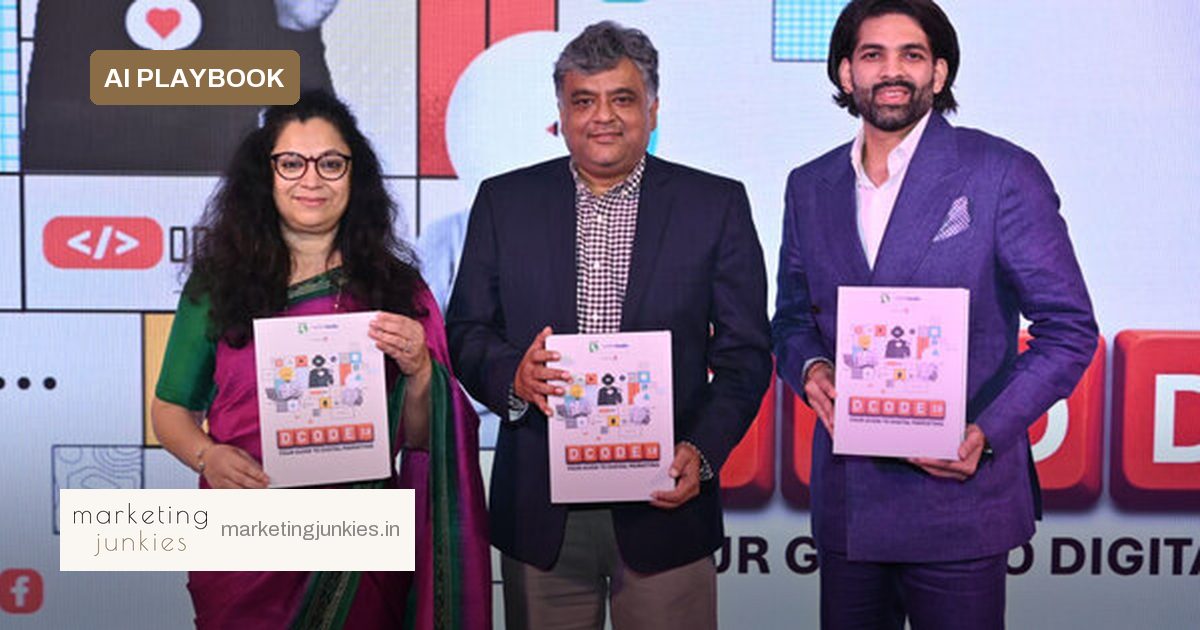
The Dharampal Satyapal Group, WPP Media and MICA have launched DCODE 2.0, an updated digital marketing guide that treats artificial intelligence as a working layer across the entire marketing ecosystem. The open-access playbook covers AI applications in search, paid media, performance marketing, content and creative, rather than presenting AI as a standalone topic.
What changed in the second edition
DCODE 2.0 builds on the first edition by adding MICA as an academic partner. DS Group contributes brand-side perspective, WPP Media brings media and agency expertise, and MICA adds learning and research depth. The collaboration is intended to make the guide relevant for industry practitioners and academic programmes alike.
The guide has also been reorganised for easier use. The Paid, Owned and Earned (POE) framework has been refreshed, and modules have been strengthened so that marketing teams can move more quickly from planning to execution.
AI as the new operating context
Rajeev Jain, Senior Vice President of Corporate Marketing at DS Group, said the pace of digital marketing change required practical guidance. “Digital marketing is evolving at an extraordinary pace while AI is fundamentally changing how marketers think, create, engage and measure,” he said.
WPP Media South Asia CEO Prasanth Kumar framed the shift as a move from fragmented digital channels to a more connected, intelligent and adaptive ecosystem. His point for marketers: AI’s value will depend on how well it is integrated across the consumer journey, from discovery and media to content, commerce and measurement.
MICA Director and CEO Jaya Deoras Deshmukh described the next stage as an “Age of Imagination,” where demand activation shifts from discovering existing demand to sensing unmet needs. That perspective reinforces why DCODE 2.0 pairs technology with human intuition instead of treating AI as a replacement for judgement.
The India numbers behind the launch
WPP Media’s TYNY 2025 report puts the market context in sharp focus:
- Total advertising revenue is projected to grow 9.7% in 2026 to Rs 2,01,891 Cr.
- Digital, including digital extensions of all media, is expected to account for 68.1% of total ad revenue.
- Commerce-led advertising is the fastest-growing digital segment at 24.2%.
- AI-powered search, voice and agentic discovery are projected to grow at 8%.
These shifts help explain why a practical, periodically updated guide matters. As digital becomes the default environment, marketers need frameworks that connect media, content and commerce rather than isolated channel plans.
How to use DCODE 2.0
The guide is aimed at corporate and agency marketing teams, digital practitioners, media planners and buyers, students, academic institutions and senior marketing professionals. For marketers, the useful starting point is the refreshed POE framework: plan paid, owned and earned activity as one connected system, with AI applied across each layer.
The comparison within digital is also telling. Commerce-led advertising is growing at 24.2%, more than twice the 11.1% projected for other digital channels. That suggests teams should prioritise retail media, quick commerce and social commerce as part of their digital strategy, while still balancing brand-building channels.
The resource is intended to evolve; DS Group says DCODE will be updated periodically to keep pace with new tools, technologies, industry practices and consumer behaviour.
Source: India Gazette